
生命价值

Search documents
生活是幸福而绵长的
Xin Lang Cai Jing· 2026-02-09 23:29
Group 1 - The article emphasizes the importance of living each day fully, reflecting on the idea that life is short and should not be wasted [1][4] - It discusses the balance between urgency in achieving goals and appreciating the journey of life, suggesting that true fulfillment comes from meaningful connections and experiences rather than just accomplishments [3][4] - The notion of sustainability in life is introduced, highlighting the need to invest in health and well-being for long-term benefits rather than immediate results [3] Group 2 - The article references influential figures like Steve Jobs and director Xie Jin, who remind us of the preciousness of life and the irreversible nature of time [4] - It encourages a mindset shift from a race for success to a more measured approach that values daily joys and relationships, suggesting that this perspective leads to a richer life experience [3][4] - The importance of believing in the future and the potential for happiness is underscored, indicating that each moment contributes to a larger, meaningful life narrative [4]
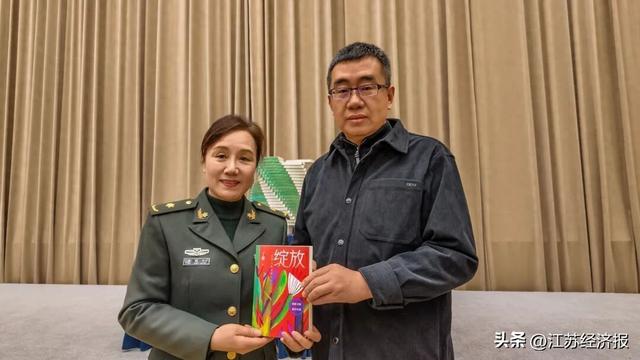
个体生命的交相辉映 ——丁捷长篇报告文学《绽放》在南京首发
Xin Lang Cai Jing· 2025-12-22 12:09
Core Perspective - The event marked the launch of Ding Jie’s long-form report literature "Bloom," highlighting the significance of the work in contemporary Chinese literature and its exploration of individual and collective experiences in the face of adversity [3][4][15]. Group 1: Author and Work Overview - Ding Jie is recognized as a "youthful prodigy" in literature, evolving from romantic themes to a stronger awareness of contemporary issues, with "Bloom" representing a new milestone in his report literature [3]. - "Bloom" intertwines the biography of military musician Yu Xiaodong with themes of education and personal growth, structured around her battle with cancer, showcasing her life before and after the diagnosis [3][6]. - The narrative employs a dual timeline and multiple perspectives, enhancing the portrayal of Yu Xiaodong and her surrounding community [3][6]. Group 2: Educational and Philosophical Themes - The book draws from Yu Xiaodong's experiences as a guzheng teacher in rural areas, emphasizing the transformative power of music in shaping children's lives and futures [6][9]. - It challenges traditional narratives of enlightenment and salvation, presenting a more egalitarian relationship between the educator and the community [10][14]. - The work prompts readers to reflect on the essence of life and the interconnectedness of individuals within their communities, particularly in the context of education and personal development [9][14]. Group 3: Literary Techniques and Structure - Ding Jie’s writing is noted for its depth and craftsmanship, employing a "three-prism structure" that juxtaposes Yu Xiaodong's personal growth with her teaching experiences [11][12]. - The chapter titles serve as narrative milestones, guiding the reader through the emotional and spiritual evolution of the characters [12]. - The integration of detailed life experiences and teaching moments creates a vivid and relatable portrayal of the characters, enhancing the overall impact of the narrative [8][12]. Group 4: Impact and Reception - The book has been praised for its ability to resonate with contemporary societal issues, providing a moral compass in a confusing era [14][15]. - It is seen as a successful demonstration of literature's role in addressing real-life challenges, offering insights into the values of love, sacrifice, and community [15][16]. - The collaborative nature of the work between Ding Jie and Yu Xiaodong is highlighted as a significant aspect of its emotional depth and authenticity [13][17].

真正理解生命的价值(民生观)
Ren Min Ri Bao· 2025-10-29 22:41
Group 1 - The aging phase may account for one-fourth of a person's lifespan, emphasizing the importance of how to spend this time meaningfully [1] - By the end of 2024, the average life expectancy in China is projected to reach 79 years, leading to a significant increase in the elderly population [1] - Many elderly individuals in their sixties, seventies, and even eighties are actively engaging in learning, work, and travel, challenging stereotypes about aging [1] Group 2 - Planning for a healthy, happy, and valuable old age can involve focusing on health, financial stability, and social relationships [1] - Increased awareness of health knowledge encourages individuals to prioritize health maintenance and exercise during their middle age to delay physiological decline [1] - Social support and innovative elderly care services are essential for enhancing the dignity and quality of life for older adults, benefiting society as a whole [2]