
生存临界点

Search documents
研究报告:全球温水珊瑚礁正越过生存临界点
Xin Hua She· 2025-10-14 06:01
Core Insights - The report led by the University of Exeter indicates that global warm-water coral reefs are crossing critical survival thresholds, with a significant risk of extinction if global warming trends are not reversed [1][2] - The study, titled "Global Critical Points Report," involved 160 researchers from 87 institutions across 23 countries, focusing on various cases of survival thresholds in the Earth's systems under current global warming trends [1] Group 1: Current Status of Coral Reefs - Warm-water coral reefs are experiencing an unprecedented survival crisis, with over 80% of corals showing signs of bleaching due to record-high ocean temperatures [2] - The global average surface temperature has increased by approximately 1.4 degrees Celsius compared to pre-industrial levels (1850-1900), pushing warm-water corals past their survival threshold [2] - Even if the temperature rise stabilizes at 1.5 degrees Celsius, most warm-water corals are "almost certain" to perish [2] Group 2: Future Predictions and Implications - If global warming continues, while some corals may evolve into more heat-resistant varieties, the majority will be replaced by simpler organisms like algae and sponges, leading to a less diverse ecosystem [2] - This ecological shift poses a disaster for millions of people who rely on coral reefs for their livelihoods and for approximately 1 million marine species [2] - The report's lead researcher warns that crossing the 1.5 degrees Celsius threshold will place the world in greater danger, potentially triggering more critical survival points and catastrophic chain reactions [2] Group 3: Positive Developments - The report also highlights some positive trends, such as the rapid adoption of solar energy and electric vehicles, which could lead to accelerated positive developments in combating climate change [3] - Coral bleaching, a phenomenon where corals lose their symbiotic algae due to environmental stress, can potentially be reversed if the stressors are reduced [3] - Various factors contribute to coral bleaching, with prolonged high sea temperatures being the primary cause [3]

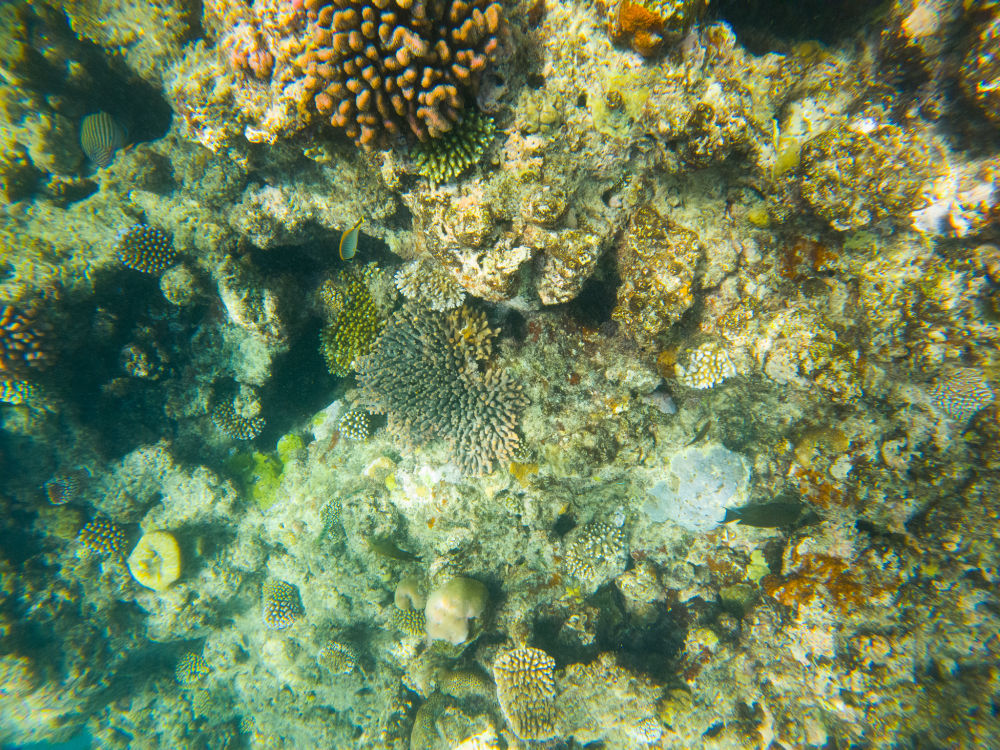
【特稿】报告:全球温水珊瑚礁正越过生存临界点
Xin Hua She· 2025-10-13 09:38
Core Insights - The report led by the University of Exeter indicates that global warm-water coral reefs are crossing critical survival thresholds, with a significant risk of extinction if global warming trends are not reversed [1][2] - The study, titled "Global Critical Points Report," involved 160 researchers from 87 institutions across 23 countries, focusing on various cases of survival thresholds in the Earth's system under current global warming trends [1] Group 1: Current Status of Coral Reefs - Warm-water coral reefs are experiencing an unprecedented survival crisis, with over 80% of corals showing signs of bleaching due to record-high ocean temperatures [1][2] - The average global surface temperature has increased by approximately 1.4 degrees Celsius compared to pre-industrial levels (1850-1900), pushing warm-water corals beyond their survival limits [1] Group 2: Future Projections - If global warming continues, while some corals may evolve into more heat-resistant varieties, most will be replaced by simpler organisms like algae and sponges, leading to a less diverse ecosystem [2] - The report emphasizes that crossing the 1.5 degrees Celsius threshold will place the world in greater danger, potentially triggering more survival thresholds and catastrophic chain reactions [2] Group 3: Positive Developments - The report also highlights some positive trends, such as the rapid adoption of solar energy and electric vehicles, which could lead to accelerated positive developments in combating climate change [2]