生态廊道建设

Search documents
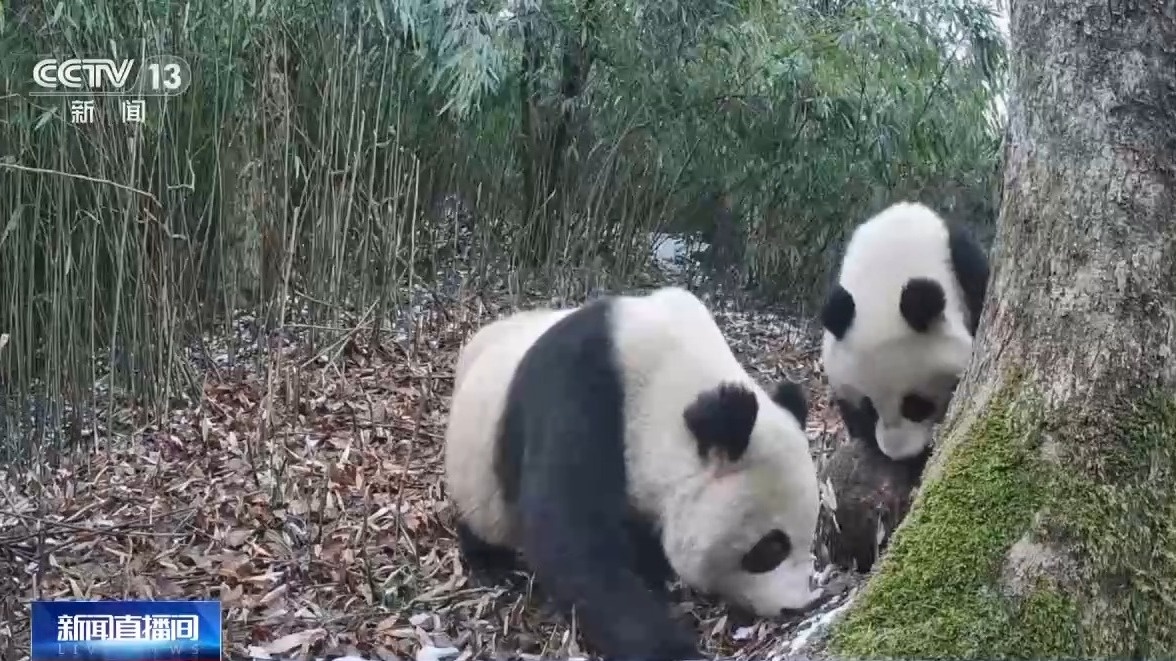
野生大熊猫为啥爱“遛弯”?答案就在长江上游这片山林里
Yang Shi Xin Wen Ke Hu Duan· 2026-01-12 02:13
Core Insights - The Giant Panda National Park, spanning Sichuan, Shaanxi, and Gansu provinces, has achieved a restorative growth in the panda population through ecological corridor construction, vegetation restoration, and scientific monitoring [1][5] - Sichuan province is exploring a balanced development path that integrates ecological protection with improvements in local livelihoods and the rise of specialty industries [1] Group 1 - The Giant Panda National Park covers an area of approximately 22,000 square kilometers, with Sichuan accounting for 88% of this area, housing around 1,227 wild giant pandas [5] - Over the past five years, 342,100 acres of habitat restoration and ecological corridor construction have been implemented to enhance habitat connectivity [5] - The park has recorded a rich biodiversity, including 870 species of vertebrates and 7,127 species of higher plants [7] Group 2 - Since 2019, there have been notable increases in panda activity frequency, with successful breeding observed, indicating positive ecological outcomes [7] - The local community in Longcangou Town, near the park's southern entrance, has seen a surge in tourism, transforming villagers from "ecological guardians" to "ecological beneficiaries" [7]

四川引大济岷工程建设启动
Ren Min Ri Bao· 2025-11-10 22:12
Core Viewpoint - The construction of the Yinda Jimi Water Diversion Project in Sichuan marks the largest investment and longest route in the province's water conservancy history, officially entering the construction phase [1] Summary by Relevant Sections Project Overview - The Yinda Jimi Project starts from the Luding Hydropower Station reservoir and extends to the Chengdu Plain, featuring a total water conveyance system of 261 kilometers, with a main line of 133 kilometers, a southern branch of 103 kilometers, and a northern branch of 25 kilometers, where over 58% of the route consists of tunnels [1] - The project is designed to divert 1.523 billion cubic meters of water annually, with an intake flow rate of 80 cubic meters per second, benefiting 34.13 million people across 43 counties in 8 cities, including Chengdu, Deyang, and Mianyang [1] Benefits and Impact - Upon completion, the project will create a dual water source network with the Dujiangyan water supply system, ending the Chengdu Plain's reliance on a single water source [1] - It will increase irrigated land by 1.79 million acres and improve irrigation on 5.91 million acres, reinforcing the irrigation security for the "Tianfu Granary" [1] - The project connects multiple rivers, enhancing regional water resource regulation and supporting ecological corridor construction in the Chengdu-Chongqing area, while also addressing water scarcity issues in Chengdu and Deyang, providing stable water sources for key industries such as electronics and equipment manufacturing [1]
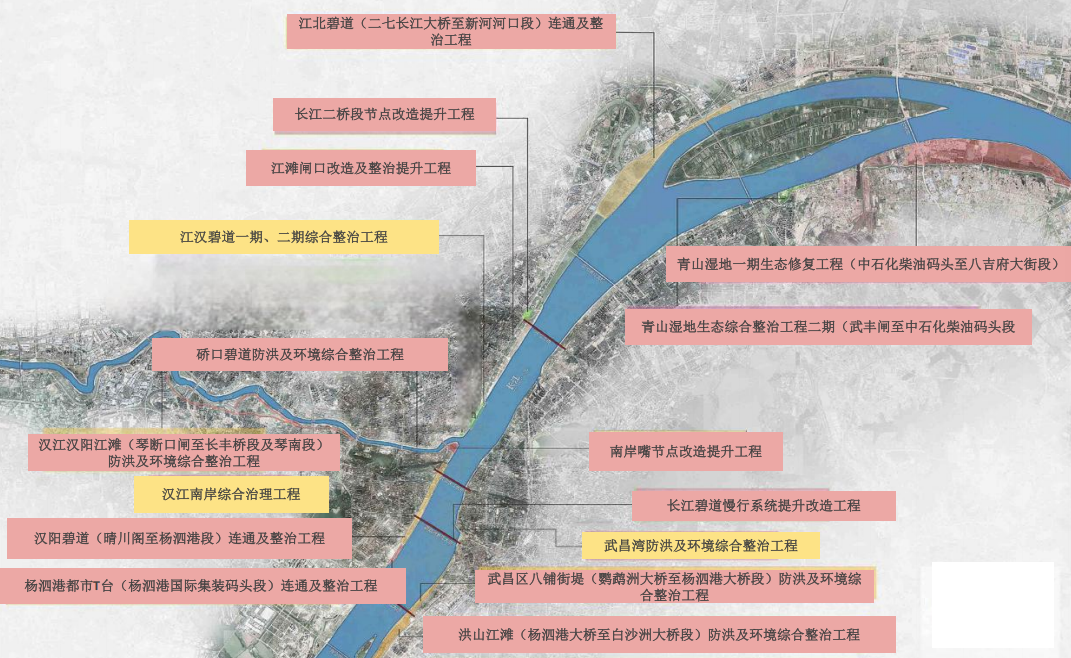
百里长江生态廊道建设收官,武汉三环线内两江四岸江滩全线贯通
Chang Jiang Ri Bao· 2025-09-28 02:26
Core Points - The construction of the Wuhan 100-mile Yangtze River Ecological Corridor has been largely completed after five years, connecting the riverbanks within the city's third ring road [1][2] - The completion of the Jianghan Greenway project and the Wuchang Bay flood control and environmental improvement project marks the removal of the last two "breakpoints" along the Yangtze and Han rivers, providing citizens with over 80 kilometers of continuous riverside access [2][4] Group 1 - The ecological corridor aims to enhance flood safety and urban aesthetics, with the first phase of the Hankou riverbank construction starting in February 2002 [2][5] - The project includes 16 sub-projects designed to address issues of disconnected riverbanks and insufficient landmark scenery and service facilities [5] - The transformation of abandoned cargo docks into recreational areas and the integration of historical cultural elements into the landscape are part of the ongoing development [5] Group 2 - Future planning and construction will focus on enhancing the connectivity between the riverbanks and the city, aiming for a harmonious integration of water, banks, beaches, cities, and people [5]
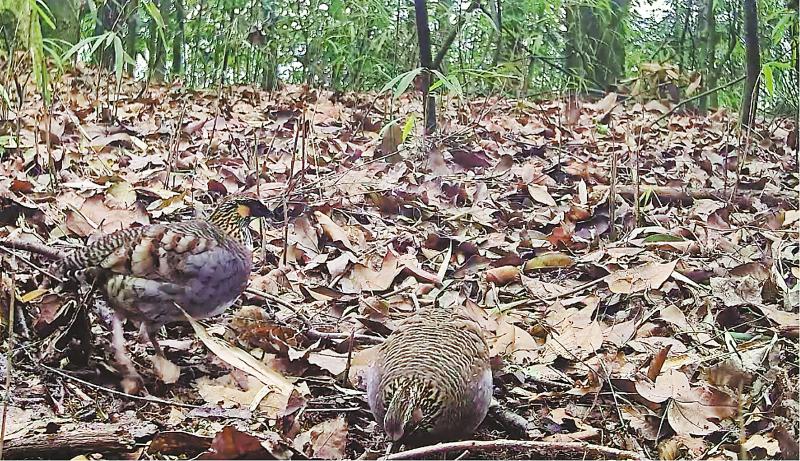
在全国首个四川山鹧鸪栖息地修复工程所在地——“鸟中大熊猫”有量身定制的家园
Si Chuan Ri Bao· 2025-08-13 00:24
Group 1 - The core focus is on the conservation and habitat restoration efforts for the Sichuan Hill Partridge, a critically endangered species endemic to southwestern China, particularly in Sichuan [6][7] - The Sichuan Hill Partridge population is currently estimated at around 2,200 individuals, with habitat area exceeding 6,000 square kilometers, showing significant growth compared to previous surveys [7] - The restoration project involves planting native species such as August bamboo and other local tree species over an area of 600 acres, specifically designed to enhance the habitat for the Sichuan Hill Partridge [5][8] Group 2 - The project aims to address the bottleneck in the species' distribution, as the Sichuan Hill Partridge primarily inhabits specific mountain forests between 800 and 2,500 meters in elevation, where August bamboo is crucial for its breeding [6][8] - The restoration efforts include selective logging of non-native species and planting of local flora to improve habitat quality, thereby providing food and shelter for the partridge [8][9] - Future plans include expanding the habitat restoration to adjacent areas, potentially increasing suitable habitat to 400 square kilometers and facilitating genetic exchange among partridge populations [9]
秦岭生态廊道守护生物多样“精彩” 勾勒人与自然和谐共生美好图景
Yang Shi Wang· 2025-06-30 08:30
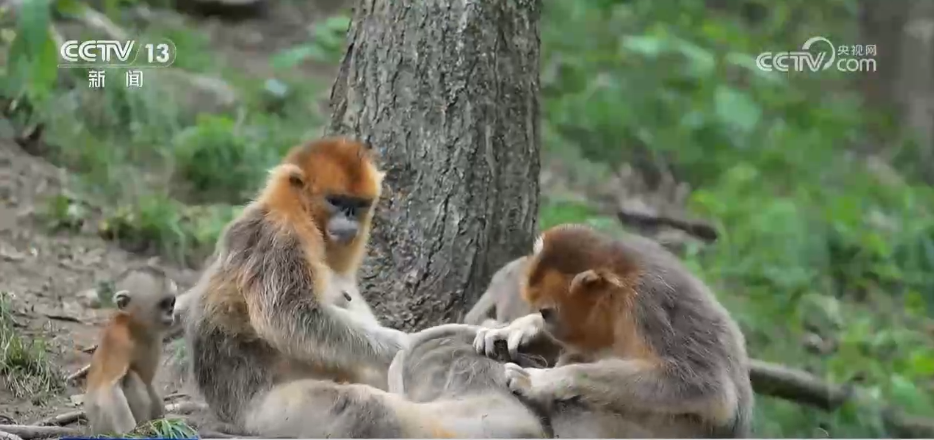
Core Viewpoint - The population of Sichuan golden monkeys in the Qinling Mountains has reached a new peak in newborns this year, indicating a stable growth trend in their population [1][5]. Group 1: Population Growth and Monitoring - The research team from Northwest University has established two observation stations with 20 observation points to monitor the Sichuan golden monkey population [5]. - The latest statistics show that the population of a single group of Sichuan golden monkeys in the Zhouzhi National Nature Reserve has exceeded 340 individuals, making it the largest known group in the Qinling region and nationwide [5]. Group 2: Ecological Corridor and Biodiversity - The "monkey road" in the Qinling core area has become a migration corridor for wildlife, originally built for logging but now facilitating genetic exchange among various species [5][9]. - The Zhouzhi National Nature Reserve was established primarily for the protection of the Sichuan golden monkey and is a key area for ecological corridor construction [7]. - The ecological corridor has not only benefited the golden monkey population but has also attracted other rare species, such as giant pandas and leopards, enhancing biodiversity in the region [9][11]. Group 3: Human-Wildlife Harmony - The ecological corridor represents a significant project for ecological protection, showcasing a vision of harmonious coexistence between humans and wildlife [11].
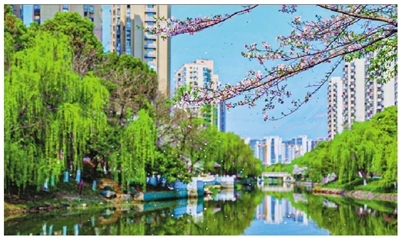
杭城又多一处诗意美景 快去下塘河生态廊道打卡
Hang Zhou Ri Bao· 2025-05-07 02:49
Core Points - The renovation of the Xiatang River ecological corridor has transformed it into a vibrant recreational area, featuring clear water, green banks, beautiful scenery, and a joyful atmosphere for residents [2][3] - Over 200 new trees, including cherry blossoms, peach trees, and crabapple trees, have been planted along the river, enhancing the aesthetic appeal and creating a picturesque environment [2] - The upgraded 4.5-kilometer permeable asphalt walkway provides an excellent path for walking and jogging, with features like embedded glow stones and a rainwater drainage system [2] - Seven "water-friendly points" have been established along a 200-meter section of the corridor, offering picnic spots and children's play areas that incorporate traditional cultural elements [3] - The overall goal of the renovation is to reconnect the river with the community, creating a "big garden" for residents to enjoy [3]