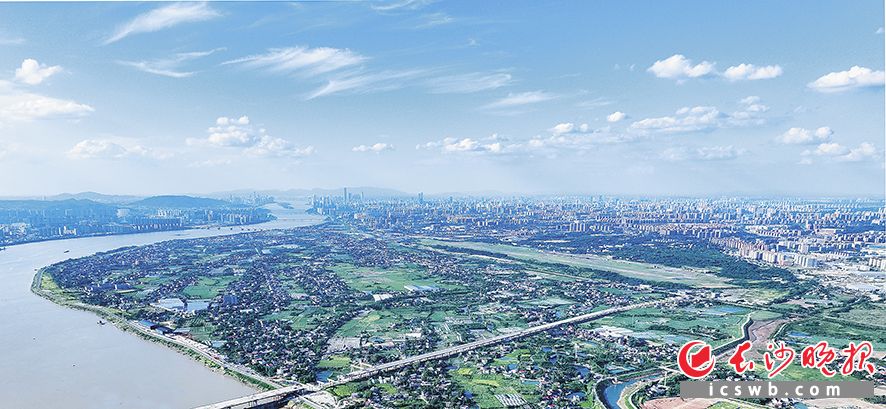
生态规划

Search documents
《长株潭生态绿心“多规合一”国土空间规划(2024—2035年)》获省政府批复
Chang Sha Wan Bao· 2026-01-30 04:00
Core Viewpoint - The "Chang-Zhu-Tan Ecological Green Heart 'Multi-Plan Integration' Land Space Planning (2024-2035)" has been approved by the provincial government, aiming to enhance ecological protection and sustainable development in the region. Group 1: Planning Framework - The "Green Heart Space Planning" is a provincial-level land space special plan that integrates the results of the "Three Zones and Three Lines" policy, establishing a spatial pattern of "one core, four corridors, three wedges, ten veins, and four areas with five clusters" [2][7]. - The "one core" focuses on the Shiyan Lake-Zhaoshan-Jiulang Mountain area, creating a central ecological engine and vibrant hub [3]. - The "four corridors" consist of a cross-shaped green corridor and two blue veins formed by the Xiangjiang and Liuyang rivers, reinforcing the ecological safety framework [4]. - The "three wedges" extend three mountain green wedges into the urban areas of the three cities [5]. - The "ten veins" connect ten water veins to the Xiangjiang and Liuyang rivers, allowing for an interwoven network of blue and green spaces [6]. Group 2: Development Principles - The planning process adheres to the principles of "zoning control and bottom-line constraints," categorizing core protection areas into "key conservation areas" and "ecological enhancement areas," while development areas are divided into "ecological function areas, agricultural function areas, and urban development areas" for differentiated management [7]. - The plan optimizes the three major spaces of arable land, forest land, and construction land, promoting comprehensive land remediation to increase forest area, improve arable land quality, and ensure efficient use of construction land [7]. - To maintain ecological limits, the plan strictly controls development intensity, capping total urban construction land within the ecological livability line (20%), with residential land accounting for about 30% of urban construction land and green space and open space making up no less than 12% [7]. Group 3: Implementation and Monitoring - The provincial natural resources department has addressed conflicts in data related to arable land, forests, and water resources through the "Green Heart Space Planning," establishing a monitoring platform for the implementation of the plan [9]. - The plan promotes a one-stop service for project access, land and forest approval, and planning permits, enhancing the efficiency and precision of governance in the Green Heart area [9].