
数智化治理

Search documents
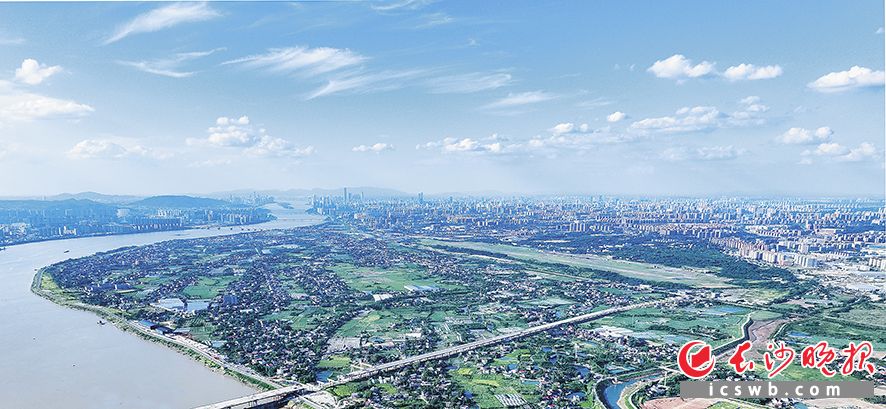
《长株潭生态绿心“多规合一”国土空间规划(2024—2035年)》获省政府批复
Chang Sha Wan Bao· 2026-01-30 04:00
Core Viewpoint - The "Chang-Zhu-Tan Ecological Green Heart 'Multi-Plan Integration' Land Space Planning (2024-2035)" has been approved by the provincial government, aiming to enhance ecological protection and sustainable development in the region. Group 1: Planning Framework - The "Green Heart Space Planning" is a provincial-level land space special plan that integrates the results of the "Three Zones and Three Lines" policy, establishing a spatial pattern of "one core, four corridors, three wedges, ten veins, and four areas with five clusters" [2][7]. - The "one core" focuses on the Shiyan Lake-Zhaoshan-Jiulang Mountain area, creating a central ecological engine and vibrant hub [3]. - The "four corridors" consist of a cross-shaped green corridor and two blue veins formed by the Xiangjiang and Liuyang rivers, reinforcing the ecological safety framework [4]. - The "three wedges" extend three mountain green wedges into the urban areas of the three cities [5]. - The "ten veins" connect ten water veins to the Xiangjiang and Liuyang rivers, allowing for an interwoven network of blue and green spaces [6]. Group 2: Development Principles - The planning process adheres to the principles of "zoning control and bottom-line constraints," categorizing core protection areas into "key conservation areas" and "ecological enhancement areas," while development areas are divided into "ecological function areas, agricultural function areas, and urban development areas" for differentiated management [7]. - The plan optimizes the three major spaces of arable land, forest land, and construction land, promoting comprehensive land remediation to increase forest area, improve arable land quality, and ensure efficient use of construction land [7]. - To maintain ecological limits, the plan strictly controls development intensity, capping total urban construction land within the ecological livability line (20%), with residential land accounting for about 30% of urban construction land and green space and open space making up no less than 12% [7]. Group 3: Implementation and Monitoring - The provincial natural resources department has addressed conflicts in data related to arable land, forests, and water resources through the "Green Heart Space Planning," establishing a monitoring platform for the implementation of the plan [9]. - The plan promotes a one-stop service for project access, land and forest approval, and planning permits, enhancing the efficiency and precision of governance in the Green Heart area [9].

杭州职业技术大学“职教升维”实践观察
Hang Zhou Ri Bao· 2026-01-20 03:32
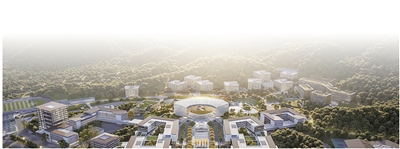
Core Viewpoint - Hangzhou Vocational Technical University (杭职大) is positioning itself as a leader in vocational education, actively enhancing its educational quality and integrating with industry to meet future demands [7][11]. Group 1: Achievements and Recognition - The university has been recognized nationally, being selected for the "Double High Plan" and achieving "excellent" ratings in performance evaluations, with its elevator engineering and clothing design programs ranked among high-level professional groups [9]. - Over the past five years, the university has received numerous accolades, including two national-level ideological and political demonstration courses and 20 projects recognized as model party organizations [8][9]. - The university has established a strong faculty, including 13 national-level teaching masters and five national teaching teams, contributing to its high teaching quality [9]. Group 2: Research and Industry Collaboration - The university has undertaken 116 national and provincial research projects, addressing key technological challenges in collaboration with leading enterprises, resulting in a total of 1.5 billion yuan in research and technical service revenue [9]. - It has created 58 technical service platforms and established a national-level industry-education integration entity, promoting a new model for practical education [10]. Group 3: Student Outcomes and Community Engagement - The employment rate of graduates remains high, with about two-thirds of students choosing to work in Hangzhou, and the satisfaction of employers with graduates is increasing [10]. - The university has provided training for 460,000 individuals and engaged in international cooperation, training 16,000 participants from over 40 countries along the Belt and Road [10]. Group 4: Future Plans and Strategic Development - The university is developing a new campus in the western part of Hangzhou, which will support a larger student body and enhance regional educational resources [12]. - It aims to deepen its integration with industry, focusing on practical training that aligns closely with production needs, exemplified by its dual-identity training model for students [13][14]. - The university is committed to enhancing the quality of vocational education and contributing to the development of a modern industrial ecosystem in Hangzhou [15].
锚定“十五五”城市发展目标,蕾奥规划以全链条能力领跑城市运营赛道
Quan Jing Wang· 2025-11-27 01:41
Core Insights - The article highlights the strategic shift in urban development in China towards enhancing existing urban resources and improving efficiency, as outlined in the "14th Five-Year Plan" [1] - The company, Lei'ao Planning, is positioned as a key player in urban operations, leveraging its comprehensive service capabilities and forward-looking strategic layout [1] Group 1: Policy Alignment - Lei'ao Planning has anticipated policy trends and adapted its services to align with the shift from "incremental expansion" to "stock operation" in urban development [1] - The company has established a three-in-one service system of "planning design + urban operation + smart city," which is highly compatible with the requirements for smart and refined urban operations under the "14th Five-Year Plan" [1] Group 2: Technological and Product Development - The company has developed the "Industry Radar" system, which utilizes a "five-chain integration" model to achieve precise matching of industrial elements, responding to policy demands for data application [2] - Lei'ao Planning's projects, such as the urban cognitive large model and "Park Universe," leverage AI technology to enhance urban governance, aligning with the direction of building a digital urban foundation and integrated public services [2] Group 3: Service Implementation - The company has created a closed-loop system of "top-level design - resource integration - financial support," which aligns with the policy requirement for a sustainable urban construction and operation financing system [2] - Lei'ao Planning provides comprehensive services from industrial positioning to smart design for projects like Nanjing Qilin Zhihang Low-altitude Economy Future City and Guangzhou High-end Electronic Information New Material Industrial Park [2] Group 4: National and International Expansion - Lei'ao Planning has established branches in 33 provinces across China, enabling rapid response to diverse urban operation needs [3] - The company collaborates with China Communications Construction and China Railway Construction to export Chinese smart city experiences to countries like Nigeria and Pakistan, gaining cross-scenario and cross-regional practical experience [3] - In 2024, Lei'ao Planning was recognized as the only Chinese company to win an annual award at the WAF World Architecture Festival, showcasing its technical strength and operational model on an international stage [3] Group 5: Future Outlook - As the "14th Five-Year Plan" approaches, Lei'ao Planning aims to transform policy requirements into actionable service capabilities, supporting the construction of modern urban environments through various initiatives [3]
侨银股份: 侨银城市管理股份有限公司相关债券2025年跟踪评级报告
Zheng Quan Zhi Xing· 2025-06-29 16:17
Core Viewpoint - The credit rating of Qiaoyin City Management Co., Ltd. has been downgraded from AA- to A+ due to a slowdown in business cash flow, high accounts receivable, and increasing debt levels, which have intensified the company's financial pressure [3][5][6]. Financial Performance - Total assets increased from 75.21 billion in 2023 to 82.91 billion in 2025 [3]. - The company's equity attributable to shareholders rose from 21.90 billion in 2023 to 25.03 billion in 2025 [3]. - Total debt increased from 40.04 billion in 2023 to 40.09 billion in 2025, with a debt-to-equity ratio of 66.88% [3][4]. - Net profit for 2025 is projected at 3.29 billion, up from 3.07 billion in 2024 [3]. Operational Challenges - The company faces significant cash flow pressure due to high accounts receivable, which grew by 23.96% year-on-year, leading to an increase in accounts receivable turnover days from 164.94 days in 2023 to 221.33 days in 2024 [5][17]. - The company is involved in 125 ongoing lawsuits, with a total amount of 174.05 million, which may impact its financial stability [5]. Market Position - Qiaoyin operates in the national sanitation service sector, covering over 100 cities across 26 provinces, with a backlog of contracts valued at 420 billion [4][17]. - The company has secured new contracts worth 52.22 billion in 2024, although this is a decrease from 60.34 billion in 2023 [15][17]. Industry Environment - The sanitation service market in China is projected to grow, with a market size of 3,251 billion in 2024, reflecting a year-on-year increase of 9.4% [11][12]. - The market is becoming increasingly competitive, with state-owned enterprises gaining market share, which may pressure profit margins for private companies like Qiaoyin [11][12]. Future Outlook - The credit rating agency maintains a stable outlook for the company, indicating that its existing contracts will support future business development [6]. - The company plans to raise up to 9 billion through a private placement to enhance its operational capabilities and address liquidity issues [9][18].
打通人、技、物堵点,让数智化平台更好助力基层治理
Zhong Guo Huan Jing Bao· 2025-05-28 08:32
Group 1 - The article emphasizes the importance of dynamic management in administrative law enforcement inspections related to enterprises, highlighting the need for higher standards in grassroots governance digitization [1] - The integration of AI technology is proposed to enhance data processing capabilities, allowing for efficient identification of potential issues and early warnings in environmental regulation [1][2] - The article suggests that the ecological environment governance should focus on three protective measures: human, technical, and material, to effectively address challenges in environmental management [1] Group 2 - In terms of "human defense," the article advocates for a unified enforcement platform that integrates various administrative functions, facilitating data sharing among departments to optimize regulatory processes [1][2] - For "technical defense," it encourages the development of tailored smart regulatory systems that utilize historical data and AI to predict risks and cover blind spots in environmental monitoring [2] - Regarding "material defense," the article stresses the importance of scientific scheduling of emergency resources and conducting drills to prepare for environmental incidents, ensuring rapid response to minimize secondary pollution [3]