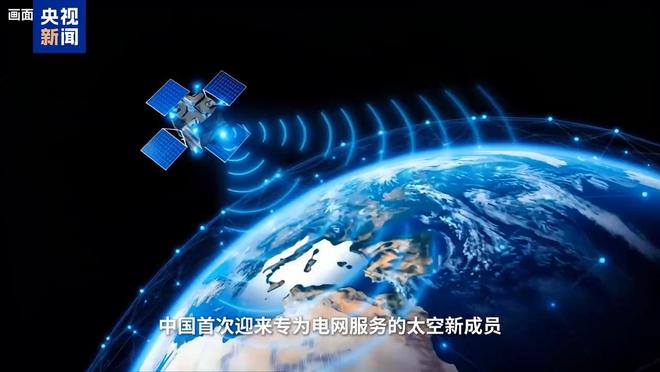
电力遥感监测网络

Search documents
媒体报道︱探访我国成功入轨电力行业首颗遥感卫星
国家能源局· 2025-12-11 01:50
Core Viewpoint - China has launched its first dedicated satellite for power grid services, marking a significant advancement in the monitoring and management of electrical infrastructure [3][5]. Group 1: Purpose and Need for the Satellite - The dedicated satellite is designed to address the challenges faced by ultra-high voltage projects in extreme environments, such as high altitudes, severe cold, and strong seismic activity [5]. - The satellite aims to enhance the construction management, operation, maintenance, and disaster prevention of power grids [5]. Group 2: Technological Innovations - The satellite features three core technologies that distinguish it from traditional meteorological and oceanic satellites [5]. - It has improved spatial resolution, allowing it to clearly identify targets the size of an A3 paper from over 500 kilometers above the Earth [8]. - The satellite innovatively breaks away from the traditional north-south flight pattern, enabling continuous observation along an east-west trajectory, covering over 200 kilometers of transmission lines in a single pass [10]. - It employs "multi-angle stereoscopic imaging and intelligent fusion processing" technology, facilitating rapid decimeter-level 3D modeling for precise data support in grid planning and obstacle management [12]. Group 3: Future Developments - Following its launch, the satellite will collaborate with ground receiving stations and data processing centers to establish a comprehensive power remote sensing monitoring network, covering 19 business scenarios [15]. - The construction of a satellite constellation for power grids is expected to significantly enhance high-precision three-dimensional observation capabilities across the entire grid [15].

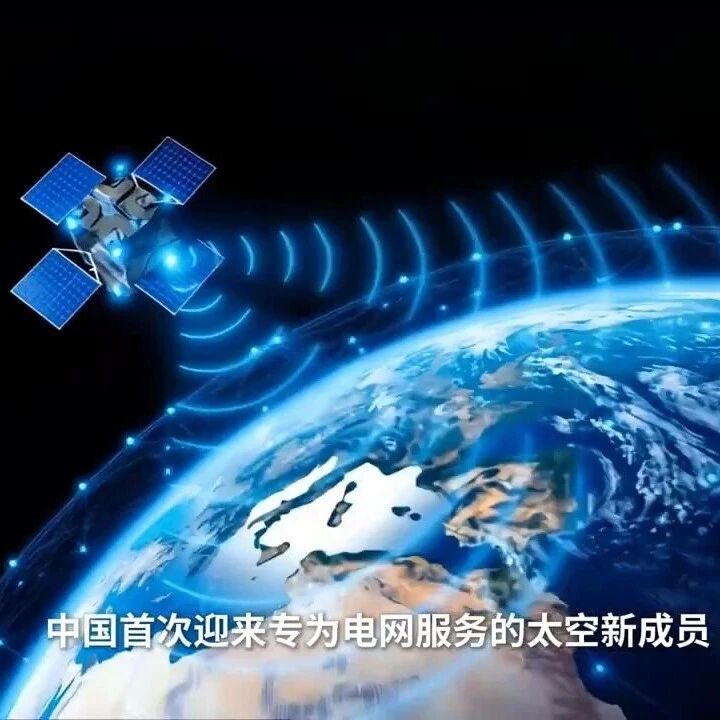
电网也有 “太空眼”?这颗专属卫星藏着三大绝技!
Huan Qiu Wang Zi Xun· 2025-12-10 13:03
Core Viewpoint - The successful launch of the "Electric Power Engineering" satellite marks China's first dedicated satellite for power grid services, addressing the challenges faced in high-altitude, extreme cold, and seismic areas for power transmission lines [1][3]. Group 1: Purpose and Need - The need for a dedicated satellite arises from the increasing complexity of managing and operating power grids in challenging environments, necessitating advanced monitoring capabilities [5]. - The satellite is designed to enhance the efficiency of monitoring the "West-to-East Power Transmission" project by providing continuous observation over transmission corridors exceeding 200 kilometers [7]. Group 2: Technological Innovations - The satellite features three core technologies that differentiate it from traditional satellites, including the ability to conduct long strip observations along the east-west direction [5]. - It boasts improved spatial resolution, allowing it to identify targets on the ground as small as the size of an A3 paper from an altitude of over 500 kilometers [8]. Group 3: Future Developments - The satellite will utilize "multi-angle stereoscopic imaging and intelligent fusion processing" technology to create precise three-dimensional models, supporting power grid planning and vegetation management [10]. - Following its launch, the satellite will work in conjunction with ground stations and data processing centers to establish a comprehensive power remote sensing monitoring network, enhancing high-precision three-dimensional observation capabilities across various operational scenarios [10].