磁导率

Search documents
1J87软磁合金弹性模量和熔点解说
Sou Hu Cai Jing· 2026-02-03 09:45
Core Viewpoint - The 1J87 soft magnetic alloy demonstrates competitive mechanical rigidity and controllable melting point, making it suitable for applications requiring high magnetic permeability and medium to high-temperature stability [9] Group 1: Material Properties - The typical elastic modulus of 1J87 soft magnetic alloy is around 205 GPa, with a measured range of 190–210 GPa [1] - The melting point of 1J87 soft magnetic alloy ranges from approximately 1380°C to 1430°C, with distinct characteristics of partial melting [1] - Initial magnetic permeability is about 8000, with coercivity around 0.6 A/m [4] Group 2: Comparative Analysis - In terms of magnetic permeability and cost, 1J87 soft magnetic alloy outperforms conventional low-silicon iron but is more expensive than low-cost Fe-based materials [5] - 1J87 soft magnetic alloy maintains better elastic modulus stability after high-temperature annealing compared to some high-Ni alloys, but its magnetic permeability may decrease after deep cryogenic processing [5] - Three measured comparisons (elastic modulus, melting point, initial magnetic permeability) follow ASTM E1875 and GB/T 228.1-2010 testing methods for cross-validation [5] Group 3: Microstructural Analysis - The elastic modulus of 1J87 soft magnetic alloy is directly related to its microstructural composition, grain size, and residual stress [6] - The presence of trace impurities (S, P) can lower the local melting temperature and increase the width of the eutectic region, leading to double peaks in DSC curves [6] Group 4: Process Comparison - Process Route A (vacuum induction melting + casting + high-temperature annealing) offers uniform composition and low gas content, ensuring good consistency in elastic modulus and melting point [7] - Process Route B (powder metallurgy + hot isostatic pressing) can achieve finer grain structures and higher magnetic permeability, but cost and grain boundary control are contentious points [7] - Decision-making for process selection involves input requirements (high magnetic permeability, high-temperature stability, low cost) and scoring based on project weight [7] Group 5: Common Misconceptions - Misconception 1: Relying solely on chemical composition to determine elastic modulus while neglecting the impact of heat treatment history [8] - Misconception 2: Extrapolating room temperature magnetic permeability data to high-temperature conditions without considering the coupling effects of demagnetization and phase changes [8] - Misconception 3: Selecting materials based only on raw material market prices without considering process value-added costs and failure rates [8]

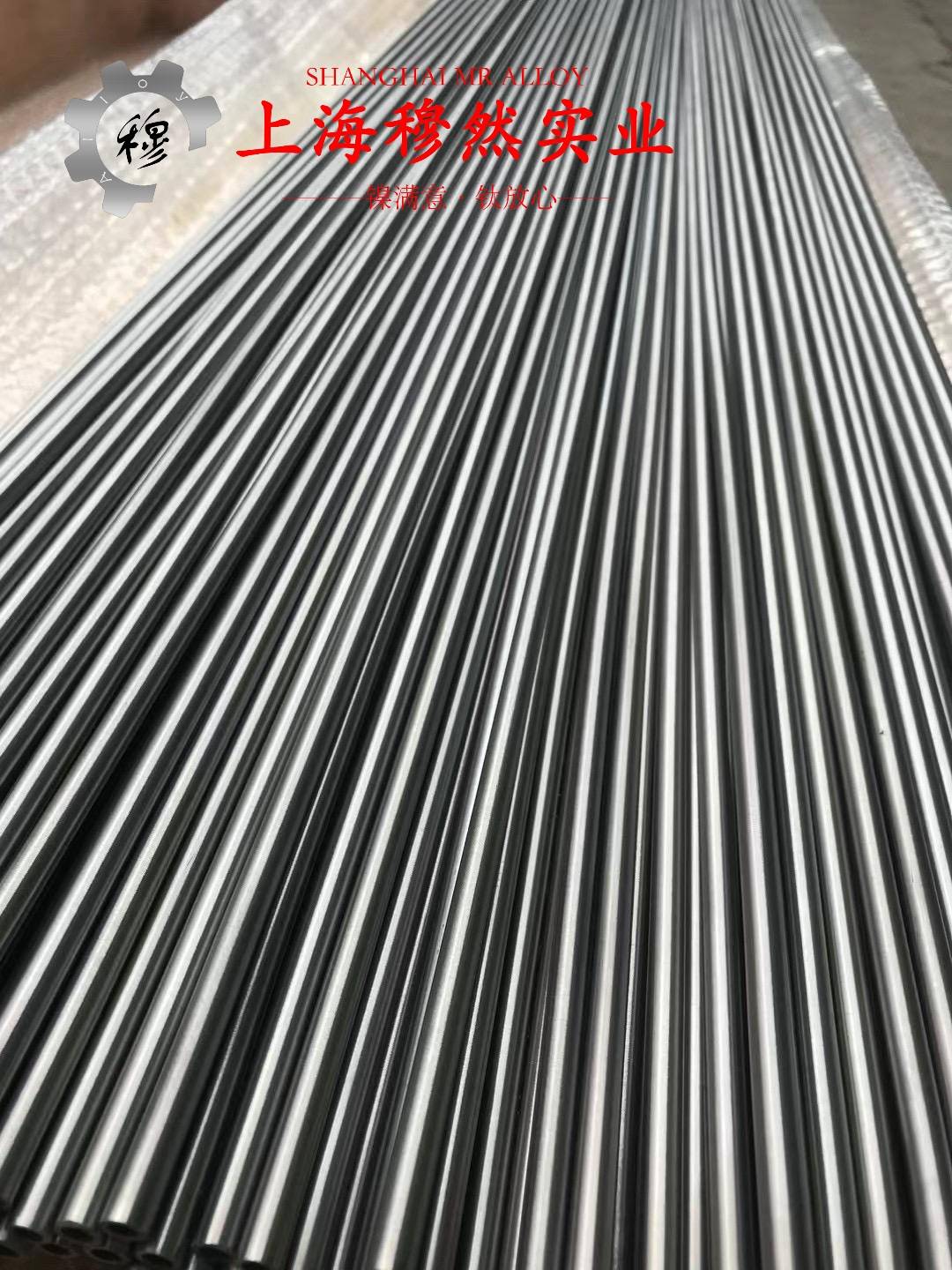
1J80精密软磁铁镍合金管材的材料参数百科
Sou Hu Cai Jing· 2025-10-05 00:51
Core Insights - The article focuses on the material parameters of 1J80 precision soft magnetic nickel alloy tubing, emphasizing its stability and adaptability in magnetic components [1][4]. Material Composition - The chemical composition of 1J80 consists of Ni 78–82% and Fe 18–22%, with trace elements like Si, Mn, and Cu adjusted according to processing formulas [3][4]. Magnetic Performance - The magnetic permeability (μr) can be observed in the range of 8000–12000 at room temperature, with low hysteresis loss and good stability at low frequencies [3][4]. - The coercivity (Hc) fluctuates in low magnetic fields, while the saturation magnetic flux density (Bs) is approximately 0.8–1.0 T, varying with grain size and annealing state [3][4]. Mechanical and Geometric Properties - The tubing has an outer diameter ranging from 6 to 50 mm and a wall thickness of 0.5 to 2.5 mm, with surface roughness meeting process requirements to minimize magnetic losses [3][4]. Heat Treatment - Key heat treatment involves annealing at temperatures around 900–1000°C in a nitrogen-hydrogen or neutral atmosphere, with a hold time of 1–2 hours followed by slow cooling to achieve uniform grain structure and reduce residual stress [5]. Processing and Surface Treatment - Post-extrusion or rolling, re-heat treatment is necessary to control grain growth, and ordered surface treatment can reduce magnetic losses caused by microscopic defects [5]. Standards and Quality Control - The article references ASTM E1444/E1444M for non-destructive testing and AMS 2750D for aerospace heat treatment and temperature control standards, which should be followed during material processing [5]. - Non-destructive testing should be employed to eliminate defects, cracks, and surface imperfections to ensure consistent magnetic permeability within the design range [5]. Cost Structure - The cost of 1J80 is influenced by LME (London Metal Exchange) pricing and domestic market trends from sources like Shanghai Nonferrous Metals Network, providing a comprehensive view of material procurement and process cost fluctuations [5].