社会时钟理论

Search documents
招聘放宽至45岁释放什么信号?
创业邦· 2025-06-12 12:50
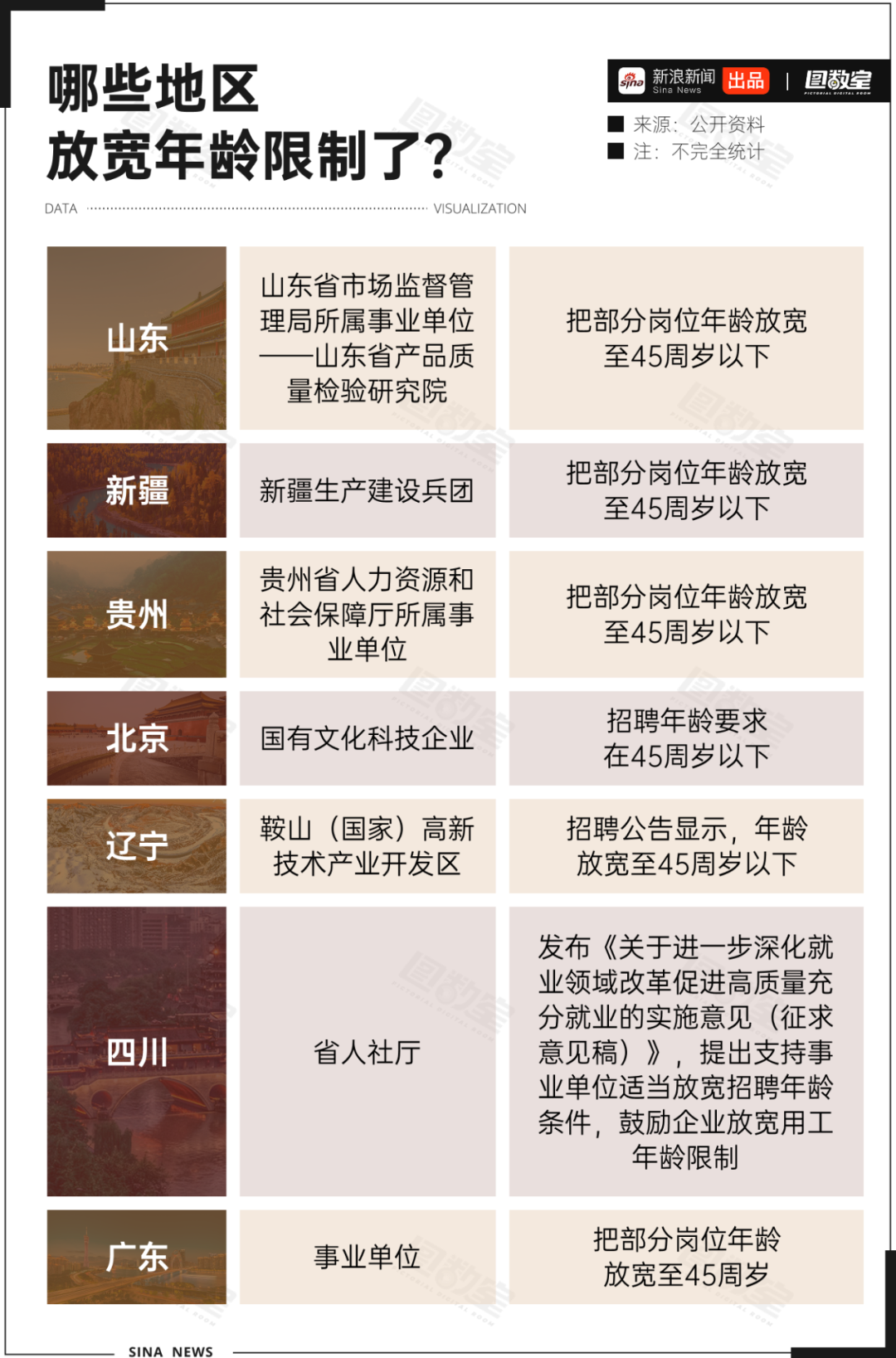
Core Viewpoint - The article discusses the gradual relaxation of age restrictions in recruitment across various regions in China, indicating a shift in the perception of older workers in the job market, particularly those aged 35 and above [4][6][22]. Summary by Sections Age Limit Relaxation - Regions such as Shandong, Xinjiang, Beijing, and Henan have implemented policies to remove age restrictions in recruitment, allowing some positions to be open to candidates up to 45 years old [6][7]. - Specific examples include Shandong's market supervision bureau and cultural technology enterprises in Beijing, which have adjusted their age requirements [7]. Demographic Trends - The average age of the labor force in China has increased from 32.25 years in 1985 to 39.72 years in 2022, reflecting an aging workforce [8]. - The employment population aged 30-49 accounts for over 50% of the total workforce, with the 30-39 age group being the largest at 27.6% [10]. Labor Market Changes - The total labor force aged 16-59 peaked at 930 million in 2012 and has since declined to 860 million in 2023, indicating a shift in the age structure of the workforce [12]. - The proportion of workers aged 45-64 has increased significantly, from 27.3% in 2000 to 41.91% in 2022, highlighting the importance of older workers in the labor market [12]. Global Context - A global report predicts that by 2030, 150 million jobs will be held by older workers (aged 55 and above), indicating a worldwide trend towards the inclusion of older employees [14]. Changing Perceptions of Age - The traditional view of the "golden age" for workers has shifted downward to around 35 years, but this trend is expected to reverse, with the "golden age" potentially rising to 45-50 years by 2035 [19]. - The concept of a "social clock" suggests that societal expectations have historically placed pressure on individuals to achieve certain milestones by age 35, but this perception is beginning to change [21][22].


招聘放宽至45岁释放什么信号?
Hu Xiu· 2025-06-11 09:07
Core Points - The "invisible red line" of age 35 has historically created anxiety for older job seekers in the workplace [1][4] - Recent changes in policies across various regions in China are loosening age restrictions for hiring, with some positions now open to candidates up to 45 years old [2][5] - The labor market is transitioning towards a more inclusive and rational approach, valuing experience and older workers [3][8] Group 1: Age Restrictions in Hiring - Regions such as Shandong, Xinjiang, Beijing, and Henan have implemented policies to eliminate age limits in recruitment for public sector jobs [5][7] - The average age of the labor force in China has increased from 32.25 years in 1985 to 39.72 years in 2022 [7] Group 2: Demographics and Labor Market Trends - The demographic shift shows that individuals aged 30 to 49 make up over 50% of the employed population, with the 30-39 age group at 27.6% and the 40-49 age group at 25.1% [11] - The total labor force aged 16-59 peaked at 930 million in 2012 and has since declined to 860 million in 2023, indicating an aging workforce [13] Group 3: Value of Experience - Older job seekers possess unique advantages, combining extensive industry experience with peak physical and execution capabilities [8] - The labor market is moving from a "quantity dividend" to a "quality dividend," with older workers becoming a crucial part of the workforce [14][23] Group 4: Changing Perceptions of Age - The traditional view of the "golden age" for employment has shifted downward to 35 years over the past three decades, but this trend may be reversing [19][24] - Research suggests that the age-income curve in China may increase, with the "golden age" for employment potentially rising to 45-50 years by 2035 [24]