神经传信微观密码

Search documents
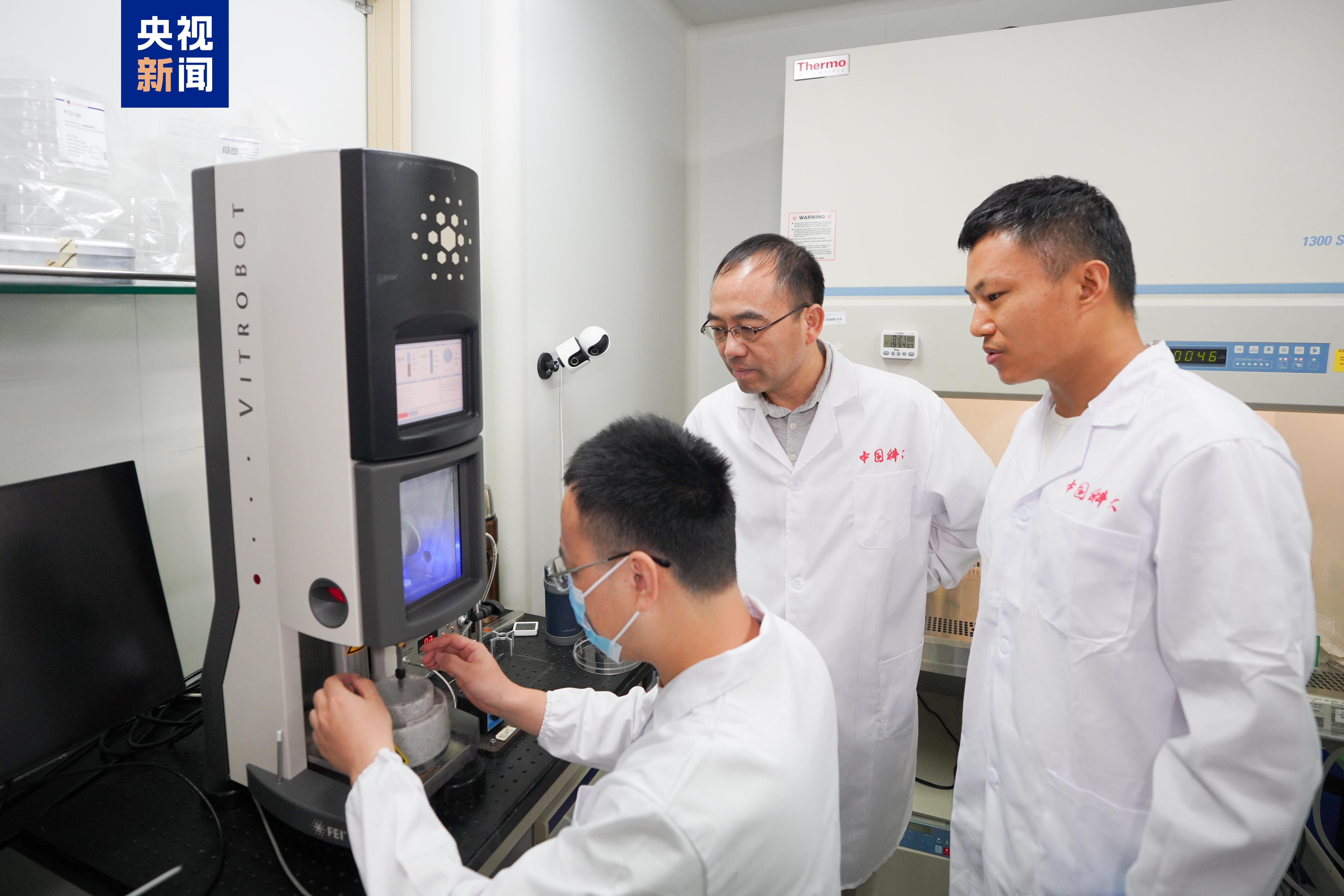
实现毫秒级“动态定格” 中国科大破解神经传信“微观密码”
Yang Shi Xin Wen· 2025-10-17 04:31
Core Viewpoint - The research team led by Professor Bi Guoqiang from the University of Science and Technology of China has developed a millisecond time-resolved cryo-electron microscopy technique that reveals the "microcode" for efficient information transmission in the brain, addressing a key controversy in neuroscience that has persisted for half a century [1][5]. Group 1: Research Breakthrough - The study published in the journal "Science" presents a significant breakthrough in understanding synaptic transmission mechanisms, which are crucial for brain function [1][5]. - The research resolves the long-standing debate between the "full fusion" and "kiss-and-run" models of synaptic vesicle release, which has been a major issue in neuroscience since the 1970s [5][7]. Group 2: Methodology - The research team combined optogenetic stimulation with an in situ rapid freezing method to achieve millisecond-level "dynamic snapshots" of synaptic transmission processes [5][7]. - By expressing light-sensitive proteins in neurons and using lasers to trigger action potentials, the team was able to capture structural snapshots of vesicle release at different stages, ranging from 4 milliseconds to 300 milliseconds [7]. Group 3: Findings - The analysis of over a thousand high-resolution three-dimensional structural data sets revealed that vesicle release and rapid recycling occur in three distinct stages: the formation of a nanoscale fusion pore ("kiss"), rapid shrinkage of the vesicle ("shrinkage"), and the majority of vesicles being recycled via "escape," with a minority undergoing "full fusion" [7]. - The intermediate shrinkage stage is identified as critical for providing the structural basis for efficient and high-fidelity signal transmission in neural synapses [7]. Group 4: Implications - This research offers new insights into the mechanisms of neural information processing and related brain functions and diseases [7]. - The development of time-resolved cryo-electron microscopy technology provides an innovative platform for studying other rapid biological processes, such as viral invasion and cellular secretion [7].