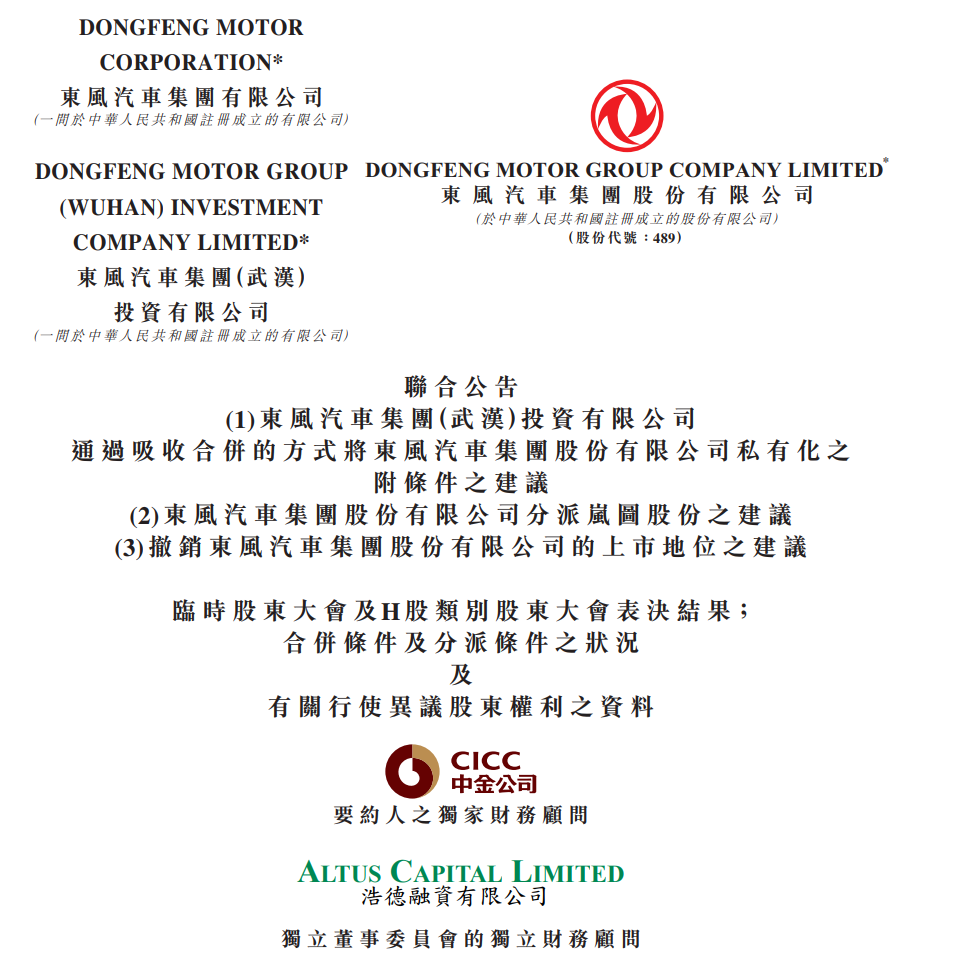
私有化+分拆上市

Search documents
东风集团股份资本重组方案高票通过,一项“腾笼换鸟”式的央企改革样本
Di Yi Cai Jing· 2026-03-10 12:40
Core Viewpoint - Dongfeng Group has successfully passed a resolution for privatization and the introduction of Lantu Automotive to the Hong Kong Stock Exchange, marking a significant step towards 100% state-owned control and a milestone in the reform of state-owned enterprises [1][5]. Group 1: Privatization and Market Strategy - The privatization of Dongfeng Group is a strategic move to address low market valuations of its traditional business, which has hindered the development of new ventures [6]. - Prior to the announcement of the capital restructuring plan, Dongfeng Group's price-to-book ratio was only 0.25, significantly below the industry average, indicating a market undervaluation of its assets [6]. - The plan involves a combination of "share distribution + absorption merger," allowing shareholders to receive shares in Lantu while Dongfeng Group achieves 100% state control [9]. Group 2: Lantu Automotive's Growth and Market Position - Lantu Automotive is set to become the first high-end new energy vehicle company from a central state-owned enterprise to list on the Hong Kong Stock Exchange, with its listing expected to enhance its financing capabilities and market valuation [6][20]. - Lantu's sales are projected to grow from 50,285 units in 2023 to 150,169 units by 2025, with a compound annual growth rate of 73%, significantly outpacing industry growth [10]. - The company achieved a net profit of 1.02 billion yuan in 2025, marking its first profitable year, with a gross margin of 20.9%, positioning it among the industry's leaders [10]. Group 3: Implications for State-Owned Enterprises - The privatization and subsequent listing of Lantu serve as a model for other state-owned enterprises facing similar valuation challenges, demonstrating a viable path for strategic transformation [13]. - The approach of "privatization + spin-off listing" allows for the separation of high-growth assets from undervalued parent companies, optimizing capital structure and enhancing resource allocation efficiency [13]. - Dongfeng's recent reforms and capital operations reflect a broader trend among state-owned enterprises to leverage market tools for upgrading the new energy sector, aligning with national strategic goals [14].