空间环境对哺乳动物的影响

Search documents
【央视新闻】“航天小鼠”和地面小鼠行为有啥差异?空间小鼠实验为人类驻留太空奠定科学基础
Yang Shi Xin Wen· 2025-12-29 03:02
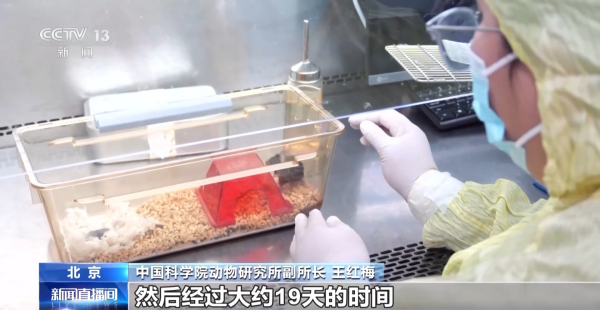
Core Viewpoint - The experiment involving "space mice" marks China's first scientific study of small mammals in a space station environment, demonstrating that the space environment has minimal impact on the reproductive capabilities of these mice [2][16]. Group 1: Experiment Overview - Four experimental mice traveled to the Chinese space station aboard the Shenzhou 21 mission and returned with two of them having successfully bred a litter of nine offspring [2][4]. - The surviving offspring include three males and three females, all in good health and being cared for by their mother [6]. Group 2: Behavioral Observations - Initial observations indicate behavioral differences between space-returned mice and ground mice, particularly in nurturing behaviors towards their offspring [9][11]. - Space mice exhibit a stronger protective instinct towards their young, while ground mice display less caution [13][17]. Group 3: Research Goals and Future Plans - The research aims to understand physiological changes in mammals due to space conditions and to determine if they can reproduce in space [19][21]. - Future experiments will involve sending pregnant mice into space to observe if they can give birth in a microgravity environment [19][23].