
空间生命科学研究

Search documents
“太空小鼠”出征记
Zhong Guo Qing Nian Bao· 2025-11-04 23:28
Core Insights - The successful launch of the Shenzhou 21 manned spacecraft on October 31 marks the first time that mice have been sent to the Chinese space station for in-orbit life science experiments, addressing key scientific challenges related to long-term survival and reproduction of mammals in space [2][5][7]. Group 1: Mission Objectives and Scientific Importance - The primary goal of the mission is to ensure the mice survive the journey to and from the space station, while exploring their physiological and adaptive responses to the space environment [7][11]. - The research aims to provide scientific evidence on how space conditions affect living organisms, ultimately serving human space exploration needs [7][11]. Group 2: Selection and Training of Mice - A rigorous selection process was implemented, where over 300 mice were screened, and only 4 of the best candidates were chosen to accompany astronauts to the space station [11][14]. - The selected mice belong to the C57BL/6 strain, known for its genetic uniformity, which is beneficial for scientific data collection [11][14]. Group 3: Technological Innovations in Space Research - The space station employs a specialized small mammal breeding device that supports automatic feeding and monitoring, ensuring optimal living conditions for the mice [16]. - The device includes features for environmental control and waste management, which are crucial for maintaining a clean and safe habitat for the mice in microgravity [16].

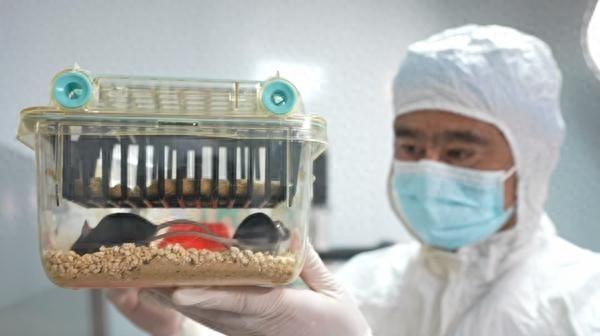
神舟二十一号|4只小鼠已选定!我国首次送小鼠进入“太空家园”
Xin Hua She· 2025-10-31 06:52
Core Points - The upcoming Shenzhou-21 mission will mark the first time that mice are sent to China's space station for scientific experiments [1] - Four mice, two males and two females of the C57BL/6 strain, were selected from a pool of 48 candidates for the mission [1] - The primary focus of the experiment is to study the effects of microgravity and confined space on the behavior and physiological responses of the mice [1] Group 1 - The selected mice will be housed in two experimental units and will undergo a series of behavioral and physiological assessments during their time in space [1] - The selection process involved rigorous criteria, including growth curves and physiological indicators, to ensure genetic uniformity and minimal individual differences [1] - The experiment aims to explore the adaptive changes and stress responses of multiple organ systems in a space environment, which could provide insights into the effects of space on mammals [1] Group 2 - The living conditions for the mice in space will be carefully controlled, including a lighting schedule that mimics Earth’s day-night cycle and specialized food to meet their dietary needs [2] - The space station has previously hosted other small organisms like zebrafish and fruit flies, indicating a broader commitment to life sciences and material sciences in microgravity [2] - The Shenzhou-21 mission will also include 27 new scientific and application projects during the astronauts' time in orbit [3]