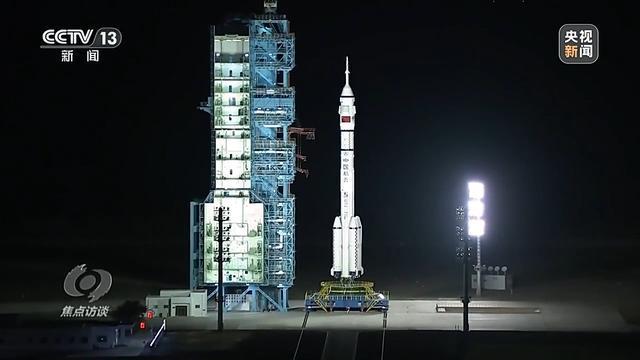
空间小型哺乳动物饲养装置

Search documents
【新华网】神舟出差返回后 “太空鼠”当妈妈啦!
Xin Hua She· 2025-12-29 03:02
Core Viewpoint - The successful birth of nine baby mice from a female mouse that returned from space marks a significant achievement in China's space research, demonstrating the feasibility of conducting mammalian experiments in space and providing valuable data for future studies [1][2]. Group 1: Space Experiment Overview - Four experimental mice were launched aboard the Shenzhou 21 spacecraft and conducted survival and adaptation experiments in a space environment [1]. - The mission faced challenges, including a temporary food shortage due to adjustments in the Shenzhou 20 return plan, which required rapid emergency responses from the ground research team [1]. Group 2: Emergency Response and Adaptation - The ground team quickly initiated an emergency response mechanism, evaluating various potential food substitutes and ultimately selecting soybean milk for the mice [1]. - The team also addressed the mice's drinking needs by utilizing a water supply interface in the space breeding device, ensuring the mice had access to water during the mission [1]. Group 3: Data Support and Monitoring - An AI behavior analysis system was developed to track the mice's movements, eating, and sleeping patterns, providing critical data to support emergency decision-making [2]. - The successful recovery of the mice after their return to Earth on November 14 and their subsequent transport to Beijing on November 18 highlights the comprehensive technical solution for conducting mammalian space experiments [2]. Group 4: Research Implications - The mother mouse exhibited normal nurturing behavior, and the vitality of the baby mice was reported to be good, indicating that short-term space flight did not negatively impact the reproductive capabilities of the mice [2]. - This mission provides invaluable samples for studying the effects of space environments on early mammalian development, laying a solid foundation for future large-scale mammalian space science experiments [2].

太空小鼠生仔啦
Xin Lang Cai Jing· 2025-12-28 22:35
Core Insights - The successful breeding of mice in space and their subsequent offspring provide valuable insights into the effects of space environments on mammalian reproduction and development [1][2][4]. Group 1: Space Experiment Results - One female mouse successfully became pregnant after returning to Earth, with the birth of 9 offspring, of which 6 survived, indicating a normal survival rate [1][2]. - The behavior of the space-returned mice showed significant differences compared to the control group, particularly in maternal instincts, as they preferred to give birth in a designated shelter and exhibited heightened protective behaviors [2][3]. Group 2: Research Methodology - The selection process for the experimental mice involved rigorous screening over 60 days, narrowing down from 300 candidates to 4 mice, ensuring their adaptability to the space environment [3]. - A specialized habitat was developed to control environmental factors such as oxygen levels, temperature, humidity, and lighting, ensuring the safety of both the mice and astronauts [3]. Group 3: Future Research Plans - Ongoing research will monitor the health and behavior of the returned mice and their offspring, focusing on physiological changes, metabolic levels, reproductive capabilities, and potential genetic impacts across generations [4][5]. - The study aims to provide insights into human health and the development of effective protective strategies for space travel, enhancing the understanding of the implications of space environments on reproduction and growth [5].
神舟出差返回后 “太空鼠”当妈妈啦!
Xin Hua She· 2025-12-27 00:03
Core Insights - The successful birth of nine baby mice from a female mouse that returned from space marks a significant achievement in China's space research, demonstrating the ability to conduct mammalian space experiments and recover samples [1][2] - The experiment faced challenges, including a food supply issue due to adjustments in the Shenzhou 20 return plan, which required rapid response and adaptation from the ground research team [1][2] Group 1: Experiment Overview - Four experimental mice were launched aboard the Shenzhou 21 spacecraft on October 31 and were housed in a specialized facility on the Chinese space station [1] - The female mouse successfully gave birth to nine pups, with six currently surviving, indicating a normal survival rate [1] Group 2: Emergency Response - The ground research team initiated an emergency response to address the food supply issue, evaluating various potential food alternatives and ultimately selecting soybean milk for the mice [1][2] - An AI behavior analysis system was utilized to monitor the mice's activities, providing critical data for decision-making regarding food consumption [2] Group 3: Research Significance - This mission represents China's first complete process of mammalian space experiments, from preparation to in-orbit experimentation and sample recovery, laying a solid foundation for future large-scale mammalian space science experiments [2] - The research indicates that short-term space flight does not negatively impact the reproductive capabilities of mice, providing valuable samples for studying the effects of space environments on early mammalian development [2]
“太空小鼠”出征记
Zhong Guo Qing Nian Bao· 2025-11-04 23:28
Core Insights - The successful launch of the Shenzhou 21 manned spacecraft on October 31 marks the first time that mice have been sent to the Chinese space station for in-orbit life science experiments, addressing key scientific challenges related to long-term survival and reproduction of mammals in space [2][5][7]. Group 1: Mission Objectives and Scientific Importance - The primary goal of the mission is to ensure the mice survive the journey to and from the space station, while exploring their physiological and adaptive responses to the space environment [7][11]. - The research aims to provide scientific evidence on how space conditions affect living organisms, ultimately serving human space exploration needs [7][11]. Group 2: Selection and Training of Mice - A rigorous selection process was implemented, where over 300 mice were screened, and only 4 of the best candidates were chosen to accompany astronauts to the space station [11][14]. - The selected mice belong to the C57BL/6 strain, known for its genetic uniformity, which is beneficial for scientific data collection [11][14]. Group 3: Technological Innovations in Space Research - The space station employs a specialized small mammal breeding device that supports automatic feeding and monitoring, ensuring optimal living conditions for the mice [16]. - The device includes features for environmental control and waste management, which are crucial for maintaining a clean and safe habitat for the mice in microgravity [16].

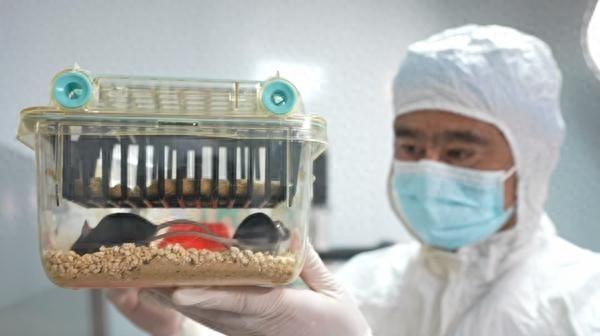
层层选拔、垃圾收集、营养均衡、漂浮睡觉……中科院专家解读我国首次哺乳动物空间科学实验
Xin Hua She· 2025-11-03 16:36
Core Points - The article discusses China's first mammal space science experiment, where four mice were sent to the Chinese space station for research purposes [1][2]. Group 1: Experiment Overview - The experiment involves four C57BL/6 mice, known for their genetic uniformity, which are crucial for scientific data collection [1][2]. - The mice underwent a rigorous selection process, including various tests to assess their physical and cognitive abilities, resulting in 100 candidates before selecting the final four [2]. - The selected mice will be monitored for their physiological responses to the space environment, contributing to understanding how living organisms adapt to space conditions [2][3]. Group 2: Living Conditions and Adaptation - The "space small mammal feeding device" was developed to ensure a comfortable living environment for the mice, with controlled temperature, humidity, and oxygen levels [3][4]. - Initial observations indicate that the mice are adapting well to microgravity, displaying active behavior and normal eating habits [3][4]. - The feeding mechanism is designed to accommodate the unique challenges of space, ensuring that the mice can access food and water effectively [4].
焦点访谈丨中国航天奏响新乐章 神二十一有接力更有突破!
Huan Qiu Wang Zi Xun· 2025-11-02 04:29
Core Points - The successful docking of Shenzhou 21 with the Chinese space station marks the 7th "space meeting" in China's space history, utilizing a new 3.5-hour autonomous rapid docking technology [1][4][14] - The docking process was divided into two phases: remote guidance and close guidance, with significant improvements in speed and precision [3][6][8] - The Shenzhou 21 mission involved three astronauts from different specialties, highlighting the collaborative nature of the crew [16] Group 1 - The Shenzhou 21 mission achieved a significant reduction in docking time from the previous 6.5 hours to 3.5 hours, enhancing operational efficiency [4][6][14] - The mission's success is attributed to nearly 20 technical improvements in the Long March 2F rocket, which increased the accuracy of launch and orbit insertion [8][11] - The new docking time allows for greater flexibility in mission planning and emergency response, addressing previous constraints related to solar angles [14][11] Group 2 - The Shenzhou 21 mission included the first-ever space experiment with mice, aimed at studying the effects of microgravity on biological systems [18][29] - The mission will conduct 27 scientific and application projects, including research on lithium-ion batteries for future space missions [29][31] - The advancements in China's manned space program reflect a significant increase in technological self-reliance and innovation, with plans for future missions including the new Dream Boat spacecraft [33][31]