网状网络

Search documents
行业聚焦:全球摩托车蓝牙通讯设备市场头部企业份额调研(附Top10 厂商名单)
QYResearch· 2025-09-28 04:23
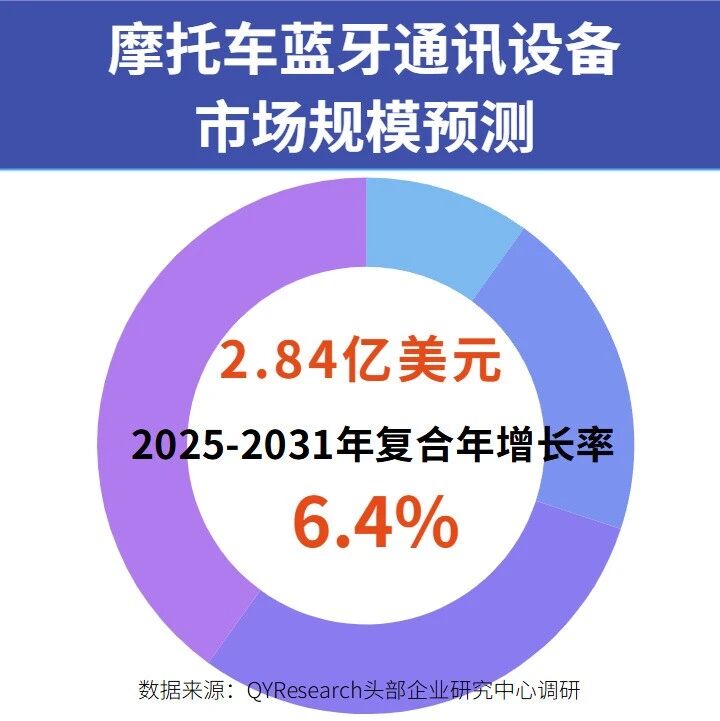
Core Viewpoint - The motorcycle Bluetooth communication device market is experiencing strong growth driven by increasing demand from both recreational and professional riders who prioritize road safety, convenience, and connectivity. The market is projected to grow from $183 million in 2024 to $284 million by 2031, with a compound annual growth rate (CAGR) of 6.4% from 2025 to 2031 [3]. Market Overview - The motorcycle Bluetooth communication devices facilitate wireless communication between riders and external devices like smartphones and GPS, enhancing safety and convenience during rides. These devices are often integrated into helmets and offer features such as noise cancellation, hands-free operation, and multi-rider communication capabilities [1][3]. - The market is currently dominated by well-known brands that provide products with advanced features such as long battery life and waterproof capabilities [3]. Industry Development Trends - Enhanced Connectivity Features: The integration of advanced connectivity technologies, such as mesh networks, allows for more flexible communication among riders, especially in group settings [5]. - Increasing Popularity of Voice Control: Voice control functionalities are evolving, enabling riders to use voice commands for various tasks, thereby minimizing distractions [6]. - Advanced Audio Technology: Manufacturers are investing in better noise-cancellation algorithms to improve audio quality in noisy riding environments [6]. Industry Opportunities - Growing Community of Motorcycle Enthusiasts: The rise in group riding and touring activities has increased the demand for communication devices among riders [7]. - Popularity of Adventure Riding: Adventure riders often travel to remote areas where maintaining communication is crucial for safety, making Bluetooth communication devices essential [7]. - Increasing Safety Awareness: More riders are seeking hands-free communication solutions to reduce distractions and enhance safety on the road [7]. Industry Challenges - High Production Costs: The manufacturing of high-quality Bluetooth communication devices involves significant costs due to the use of advanced components, which can lead to higher retail prices [8]. - Battery Life and Charging Issues: Current battery technology often falls short, requiring frequent recharging, which can be inconvenient for long-distance riders [10]. - Connectivity and Compatibility Issues: Ensuring stable connections under various riding conditions remains a challenge, with potential compatibility issues between different brands of devices and smartphones [10]. Future Outlook - The industry is expected to evolve towards more compact and integrated designs, leveraging advancements in Bluetooth technology and AI voice assistants to enhance usability. The market is anticipated to expand further, particularly in urban transportation and tourism, despite challenges such as price pressure and regulatory compliance [12].