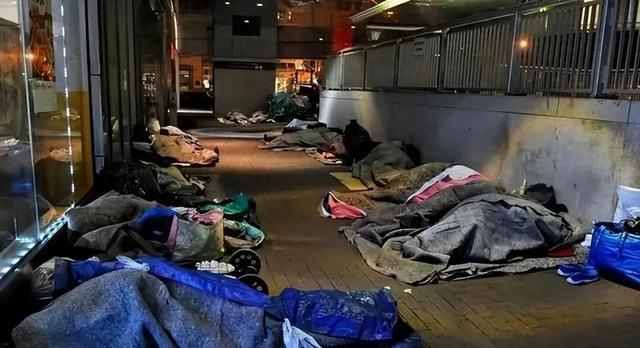
美国人的斩杀线

Search documents
中国为什么没有美国的“斩杀线”?
Xin Lang Cai Jing· 2025-12-25 11:11
Core Viewpoint - The concept of the "kill line" in the U.S. reflects a critical threshold in personal or family finances, where falling below this line can lead to homelessness, affecting even seemingly stable middle-class individuals [1][3]. Housing - In the U.S., individuals must consistently pay property taxes whether they own or rent, and failure to do so can result in losing their fixed address, which in turn complicates job searches and access to social services [3][5]. - The cycle of unemployment and housing instability creates a situation where individuals may end up homeless due to a lack of stable housing and job opportunities [5]. Employment - The U.S. employment system allows for arbitrary layoffs without compensation, and unemployment benefits are insufficient, averaging only $400 per week for a maximum of 26 weeks, which does not cover basic living expenses [6]. - A significant portion of the U.S. population, 37%, cannot afford an emergency fund of $400, indicating that a single unexpected event can lead to financial collapse [6]. Healthcare - The high cost of healthcare in the U.S. can lead to financial ruin, with emergency services costing thousands and ordinary surgeries tens of thousands of dollars, leaving uninsured individuals vulnerable [7][9]. - Without health insurance, individuals face severe risks, as minor illnesses can escalate into life-threatening conditions [9]. Comparison with China - China has established a multi-layered safety net to prevent poverty, characterized by early detection and intervention for at-risk populations across housing, employment, healthcare, and elderly care [10][15]. - The Chinese system emphasizes a collective approach to welfare, ensuring that even those in difficult situations have support, contrasting sharply with the U.S. "kill line" phenomenon [10][16].