资本主义制度

Search documents
美国斩杀线的真相:活着,就是为了给资本交生存税
Sou Hu Cai Jing· 2025-12-28 14:00
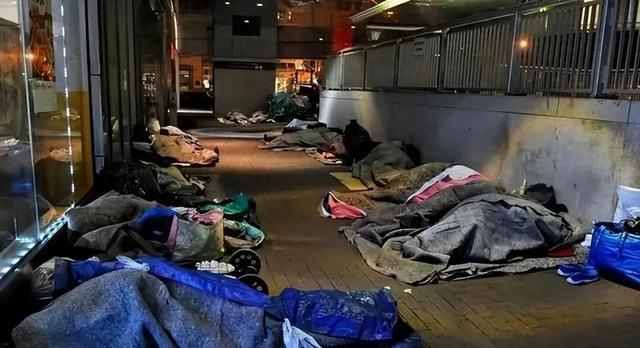
Group 1 - The concept of the "kill line" in the U.S. reflects the idea that survival is contingent upon paying taxes and expenses, which are likened to a survival tax imposed by capitalists [3][6][18] - Essential expenditures such as healthcare, insurance, education, and housing account for 60% to 80% of living costs for ordinary Americans, creating a financial burden that is difficult to escape [3][4] - The financial, insurance, and real estate sectors, collectively referred to as the FIRE industries, have seen significant growth, with their value-added share of U.S. GDP rising from 10.4% in 1947 to 20.36% in 2007, and employment in these sectors increasing nearly fourfold over 60 years [7] Group 2 - The wealth distribution in the U.S. is severely imbalanced, with safety nets intended to protect ordinary citizens instead benefiting the wealthy, leading to increased financial strain on the lower classes [6][9] - The rising number of homeless individuals in the U.S. correlates with the increasing wealth of the upper class, exemplifying the K-shaped recovery where the rich get richer while the poor suffer [13] - As of Q3 2025, U.S. household debt has surpassed $15 trillion, with a delinquency rate of 4.49%, indicating an underlying debt crisis among lower-income households [14]


中国为什么没有美国的“斩杀线”?
Xin Lang Cai Jing· 2025-12-25 11:11
Core Viewpoint - The concept of the "kill line" in the U.S. reflects a critical threshold in personal or family finances, where falling below this line can lead to homelessness, affecting even seemingly stable middle-class individuals [1][3]. Housing - In the U.S., individuals must consistently pay property taxes whether they own or rent, and failure to do so can result in losing their fixed address, which in turn complicates job searches and access to social services [3][5]. - The cycle of unemployment and housing instability creates a situation where individuals may end up homeless due to a lack of stable housing and job opportunities [5]. Employment - The U.S. employment system allows for arbitrary layoffs without compensation, and unemployment benefits are insufficient, averaging only $400 per week for a maximum of 26 weeks, which does not cover basic living expenses [6]. - A significant portion of the U.S. population, 37%, cannot afford an emergency fund of $400, indicating that a single unexpected event can lead to financial collapse [6]. Healthcare - The high cost of healthcare in the U.S. can lead to financial ruin, with emergency services costing thousands and ordinary surgeries tens of thousands of dollars, leaving uninsured individuals vulnerable [7][9]. - Without health insurance, individuals face severe risks, as minor illnesses can escalate into life-threatening conditions [9]. Comparison with China - China has established a multi-layered safety net to prevent poverty, characterized by early detection and intervention for at-risk populations across housing, employment, healthcare, and elderly care [10][15]. - The Chinese system emphasizes a collective approach to welfare, ensuring that even those in difficult situations have support, contrasting sharply with the U.S. "kill line" phenomenon [10][16].
人工智能时代,需要怎样的“好制度”?
Hu Xiu· 2025-07-25 02:26
Group 1 - The article discusses the evolution of economic thought regarding "good institutions," highlighting the shift from Keynesianism to neoliberalism and the implications of this shift on the understanding of capitalism and alternative models like the "Chinese model" [2][4][5] - The 2024 Nobel Prize in Economics was awarded to three American new institutional economists for their research on how institutions form and affect economic prosperity, sparking widespread debate in the domestic academic community [4][2] - The concept of "good institutions" is simplified to "efficient institutions," with historical perspectives from Adam Smith to Marx influencing the discourse on what constitutes a good institution [4][5][6] Group 2 - The article identifies three core questions surrounding the understanding of good institutions: what they are, what goals they should pursue, and how they come into existence [6][8][9] - New institutional economists argue that good institutions should be inclusive economic and political systems, a view that may not necessarily apply to non-Western contexts like China [9][10] - The article critiques the historical narratives constructed by new institutional economists, suggesting that their emphasis on property rights as the cornerstone of economic success overlooks other significant factors [12][13][14] Group 3 - The discussion extends to the challenges posed by artificial intelligence and technological advancements, which may exacerbate issues of unemployment and income distribution, echoing Keynes's concerns [20][27][28] - The article emphasizes the need for a re-evaluation of what constitutes a good institution in light of contemporary economic challenges, particularly regarding short-term issues like employment and income inequality [29][31][34] - It concludes that understanding good institutions requires a focus on both historical context and the evolving economic landscape, advocating for reforms that address the dual concerns of unemployment and inequitable distribution [30][32][34]