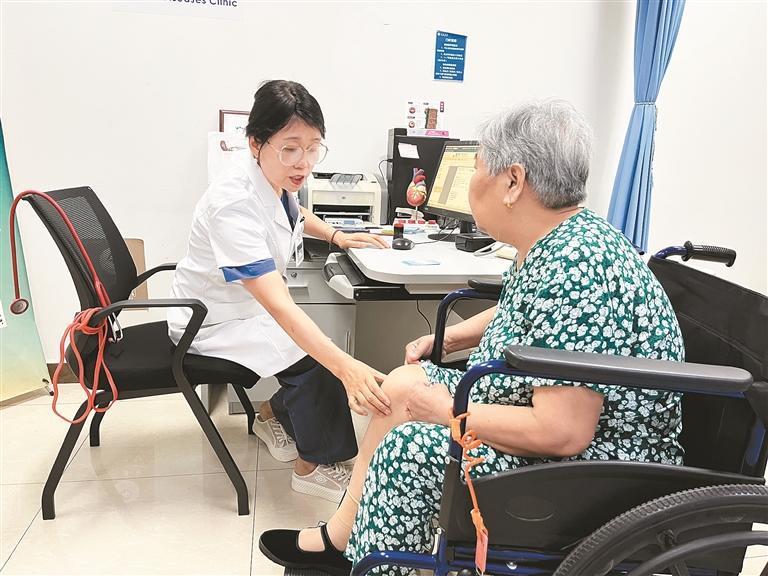
老年医学科

Search documents
老年医学科更懂老年人
He Nan Ri Bao· 2025-11-02 23:35
Core Insights - The aging population in China is projected to exceed 310 million by the end of 2024, accounting for approximately 22% of the total population, indicating a transition into a moderately aging society [1] - The establishment of geriatric medicine departments in hospitals is being accelerated to address the healthcare needs of the elderly [1][5] Summary by Sections Geriatric Medicine Department - The geriatric medicine department is designed to treat elderly patients with multiple chronic conditions and geriatric syndromes, as outlined in the "Guidelines for the Construction and Management of Geriatric Medicine Departments (2025 Edition)" [1] - This department offers a comprehensive approach to treatment, focusing on the coordination of care for conditions such as cardiovascular diseases, diabetes, and hypertension [2] Treatment Approach - The treatment philosophy in geriatric medicine emphasizes holistic care, addressing the complexities of elderly patients who often suffer from multiple ailments [2][3] - Individualized treatment plans are developed based on comprehensive assessments, taking into account the unique health status and needs of each patient [3] Role of Traditional Chinese Medicine - Traditional Chinese medicine (TCM) plays a significant role in treating and preventing diseases in the elderly, utilizing methods such as herbal remedies and acupuncture to restore balance and alleviate symptoms [4][5] - The geriatric medicine department is experiencing high demand, with many elderly patients seeking care specifically from these specialized units [5]
托举起老年人对健康晚年的深切期待
Xi An Ri Bao· 2025-07-18 02:18
Core Viewpoint - The establishment of geriatric medicine departments is crucial in addressing the healthcare needs of the aging population in China, particularly as the number of elderly individuals with multiple chronic conditions continues to rise [2][5][12]. Summary by Sections Aging Population and Health Needs - By the end of 2024, the population aged 60 and above in China is expected to reach 310.31 million, with 80% suffering from at least one chronic disease and 50% from three or more [2]. - The complexity of geriatric diseases necessitates a "one-stop" integrated treatment approach to avoid the burden of multiple hospital visits [2]. Importance of Geriatric Medicine Departments - The establishment of geriatric medicine departments with comprehensive and generalist advantages is essential [3]. - A goal has been set for 80% of secondary and higher-level hospitals to establish geriatric medicine departments by the end of 2027 [3]. Operational Benefits of Geriatric Medicine Departments - Geriatric medicine departments provide a one-stop diagnosis and treatment service, reducing the need for elderly patients to visit multiple departments [8]. - Personalized treatment plans are developed through a specialized assessment checklist that includes over 20 indicators specific to elderly patients [9]. - Integrated care from medical to nursing services ensures that elderly patients receive comprehensive support tailored to their needs [10]. Growth and Development of Geriatric Medicine Departments - As of now, 80% of secondary and higher public hospitals have established geriatric medicine departments, with all tertiary hospitals having done so [12]. - The newly established geriatric medicine department at Yanta District Traditional Chinese Medicine Hospital has seen a steady increase in patient volume, indicating a growing recognition of the need for such services [11]. Strategies for Enhancing Awareness and Service Delivery - There is a need to improve public awareness of geriatric medicine departments to better meet the healthcare demands of the elderly [12]. - A "three-in-one" development approach is suggested, which includes enhancing professional recognition, optimizing service chains, and solidifying talent foundations in geriatric medicine [13].