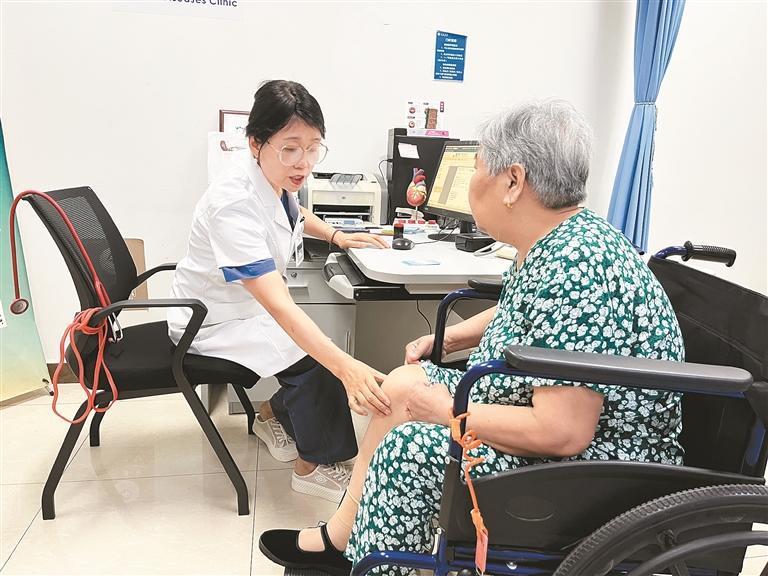
老年医学科诊疗服务

Search documents
全省各市县以履职实效检验深入贯彻中央八项规定精神学习教育成果
Hai Nan Ri Bao· 2025-08-06 03:04
Core Points - The article discusses the implementation of the Central Eight Regulations in Hainan Province, focusing on improving public services and addressing community issues through effective governance and collaboration among various departments [2][3]. Group 1: Infrastructure Improvements - The opening of the Creative Road project has significantly improved traffic flow between key areas, reducing travel time from 20 minutes to just 5 minutes for local residents [2]. - Another project, the Toutang Road, has also been completed, connecting previously isolated areas and enhancing accessibility for families and students [3]. Group 2: Social Security and Welfare - The city of Wanning has successfully resolved long-standing social security issues for former employees affected by the industrial reform, ensuring that 131 individuals have completed their pension contributions [4]. - A dedicated task force was established to assist individuals in navigating the complexities of their pension records and to ensure that no one is left behind in the process [4]. Group 3: Healthcare Services - The establishment of the Geriatric Medicine Department at Qiongzhong Li and Miao Autonomous County People's Hospital addresses the healthcare needs of the aging population, providing specialized services for elderly patients [5]. - The department has achieved over 80% bed occupancy within a month of opening, indicating a strong demand for its services and a successful implementation of a comprehensive care model [5].
托举起老年人对健康晚年的深切期待
Xi An Ri Bao· 2025-07-18 02:18
Core Viewpoint - The establishment of geriatric medicine departments is crucial in addressing the healthcare needs of the aging population in China, particularly as the number of elderly individuals with multiple chronic conditions continues to rise [2][5][12]. Summary by Sections Aging Population and Health Needs - By the end of 2024, the population aged 60 and above in China is expected to reach 310.31 million, with 80% suffering from at least one chronic disease and 50% from three or more [2]. - The complexity of geriatric diseases necessitates a "one-stop" integrated treatment approach to avoid the burden of multiple hospital visits [2]. Importance of Geriatric Medicine Departments - The establishment of geriatric medicine departments with comprehensive and generalist advantages is essential [3]. - A goal has been set for 80% of secondary and higher-level hospitals to establish geriatric medicine departments by the end of 2027 [3]. Operational Benefits of Geriatric Medicine Departments - Geriatric medicine departments provide a one-stop diagnosis and treatment service, reducing the need for elderly patients to visit multiple departments [8]. - Personalized treatment plans are developed through a specialized assessment checklist that includes over 20 indicators specific to elderly patients [9]. - Integrated care from medical to nursing services ensures that elderly patients receive comprehensive support tailored to their needs [10]. Growth and Development of Geriatric Medicine Departments - As of now, 80% of secondary and higher public hospitals have established geriatric medicine departments, with all tertiary hospitals having done so [12]. - The newly established geriatric medicine department at Yanta District Traditional Chinese Medicine Hospital has seen a steady increase in patient volume, indicating a growing recognition of the need for such services [11]. Strategies for Enhancing Awareness and Service Delivery - There is a need to improve public awareness of geriatric medicine departments to better meet the healthcare demands of the elderly [12]. - A "three-in-one" development approach is suggested, which includes enhancing professional recognition, optimizing service chains, and solidifying talent foundations in geriatric medicine [13].