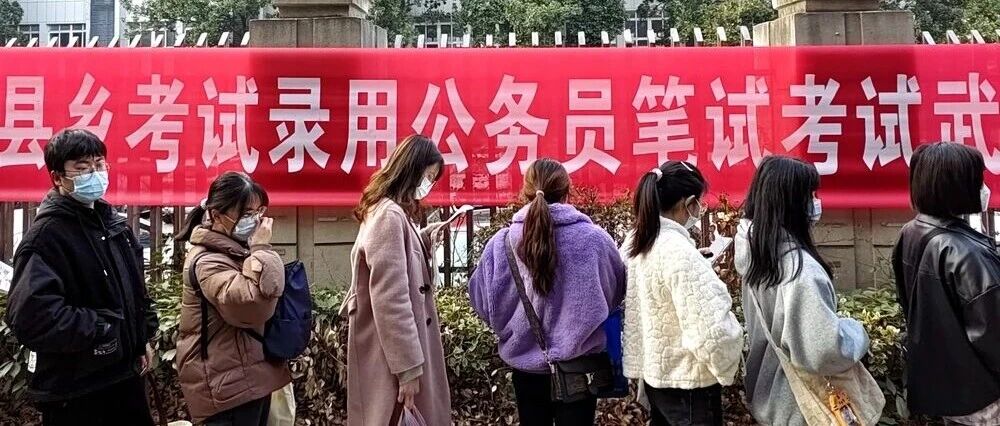
考公年龄放宽

Search documents
考公救不了“失意”中年人
虎嗅APP· 2026-01-18 13:33
Core Viewpoint - The article discusses the recent policy change allowing individuals up to 38 years old to take the national civil service examination, providing a new opportunity for middle-aged candidates who have been previously excluded from the system due to age restrictions [5][20]. Group 1: Policy Change and Its Impact - The age limit for the national civil service examination has been raised to 38 years, with even higher limits for recent master's and doctoral graduates [5][20]. - This policy shift has created a sense of hope among middle-aged individuals who have long aspired to secure stable government jobs, which are perceived as more secure compared to private sector employment [6][20]. Group 2: Personal Stories of Candidates - Zhang Qi, a 38-year-old, is investing significantly in preparation for the civil service exam, reflecting the desperation and determination of many in his age group [10][20]. - Zhao Tianle, who has been a temporary worker for 13 years, sees this opportunity as a chance to escape his precarious employment situation [11][20]. - Wu Yang, previously employed in media and tech, faces financial pressures and views the civil service as a potential refuge from instability [25][20]. Group 3: Challenges Faced by Candidates - The competition is fierce, with over 371.8 million applicants for the 2026 exam and a record low acceptance rate of 98:1, making it particularly challenging for older candidates [23][20]. - More than 67% of available positions are still limited to recent graduates, leaving older candidates to compete for a smaller pool of jobs [23][20]. Group 4: The Psychological and Physical Toll - Candidates like Wu Yang and others experience significant stress and health issues due to the intense preparation and competition, with concerns about passing medical examinations becoming a source of anxiety [46][47]. - The article highlights the physical and mental challenges faced by older candidates, including declining memory and increased difficulty in studying compared to their younger counterparts [34][36]. Group 5: Societal Implications - The policy change is seen as a response to the aging population and labor market dynamics in China, reflecting a broader societal shift towards inclusivity in employment opportunities [50][20]. - The article suggests that this change may serve as a catalyst for addressing age discrimination in the job market, potentially altering perceptions of older workers [50][20].