肠道微生物群和代谢产物研究

Search documents
香港中文大学于君团队发现肝病防治新突破
Zhong Guo Jin Rong Xin Xi Wang· 2025-07-15 02:56
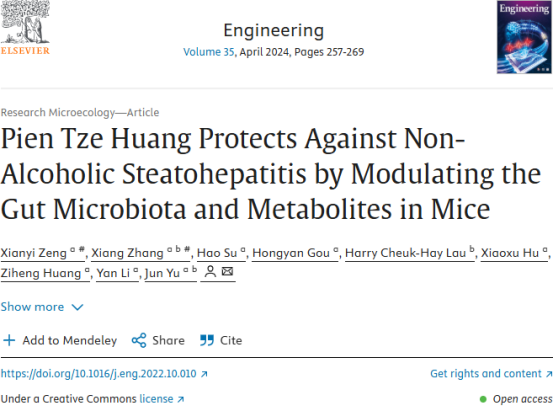
Core Insights - The research conducted by Professor Yu Jun's team at the Chinese University of Hong Kong focuses on the effects of Pien Tze Huang in preventing and treating non-alcoholic steatohepatitis (NASH) through modulation of gut microbiota and metabolites in mice [1][3] Group 1: Health Issue Overview - Non-alcoholic fatty liver disease (NAFLD) is a significant global health issue, affecting 25% of the world's population, with an even higher prevalence of 34% in Asian populations [3] - Approximately 20% of NAFLD patients may progress to more severe NASH, for which there are currently no effective treatments [3] Group 2: Traditional Medicine Focus - Traditional Chinese medicine, particularly Pien Tze Huang, is gaining attention due to its multi-target and multi-pathway mechanisms, with key ingredients including Panax notoginseng, musk, bezoar, and snake bile [3] Group 3: Research Findings - The study evaluates the role of Pien Tze Huang in the prevention and treatment of NASH, elucidating its effects on gut microbiota distribution and gut barrier function improvement in NASH models [3] - Metagenomic sequencing of mouse fecal samples revealed that Pien Tze Huang can restore gut microbiota imbalance and improve gut barrier function in mice with fatty liver disease [3] - The results indicate that Pien Tze Huang effectively prevents the progression of NASH induced by high-fat and high-cholesterol diets, significantly inhibiting liver damage, triglyceride accumulation, and lipid peroxidation [3] - Additionally, Pien Tze Huang significantly improves fatty degeneration and liver damage in mice [3]