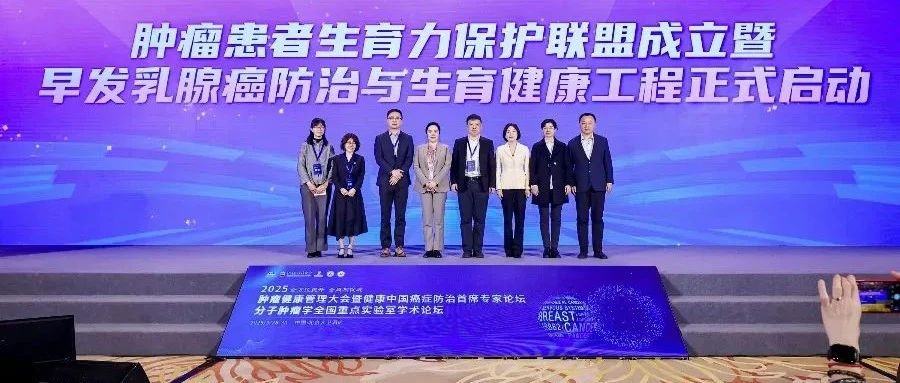
肿瘤患者生育力保护

Search documents
科普| 年轻乳腺癌患者有生育需求但不敢生,乳腺癌到底是否会遗传
Di Yi Cai Jing· 2025-04-23 09:03
Core Insights - There is a significant gap between the desire for childbirth among young breast cancer patients and the actual birth rates, with over 50% expressing a desire to have children but only about 5% achieving this [1] - Breast cancer is the most common malignant tumor among women in China, with 357,200 new cases reported in 2022, accounting for 15.6% of all new cancer cases [1] - Young breast cancer patients, defined as those under 40, represent approximately 14.9% of all breast cancer cases in China, with those under 35 making up 6.5% [1] Fertility Concerns - Many breast cancer patients fear tumor recurrence and potential genetic transmission to their children, leading to reluctance in pursuing childbirth [2] - Chemotherapy and endocrine therapy can lead to ovarian failure and infertility, with treatments lasting from 5 to 15 years, impacting patients' ability to conceive later in life [2] - The hereditary aspect of breast cancer is often misunderstood, as only 5% to 10% of cases are truly hereditary, and the risk of passing on the disease is not as high as perceived [2] Fertility Preservation - There is a critical time window for fertility preservation, ideally within 1-2 weeks post-surgery and before chemotherapy begins, where techniques like vitrification can be employed to save embryos, eggs, or ovarian tissue [3] - The success rate for pregnancies using frozen embryos from women under 35 can reach 50%, comparable to rates for those facing infertility [3] - Integrated communication between fertility specialists and oncology teams is essential for assessing ovarian function and developing fertility protection plans alongside cancer treatment [3] Awareness and Advocacy - There is a notable lack of awareness regarding fertility preservation among cancer patients, necessitating a collective effort from government, professionals, media, and the public to promote reproductive health and cancer prevention [4] - The importance of incorporating reproductive health into cancer health literacy initiatives is emphasized, aiming to reduce risks associated with breast cancer and enhance public understanding of both cancer and reproductive health [4]
50%乳腺癌女性想当妈,为何只有5%成功?国家出手,重要联盟成立!
21世纪经济报道· 2025-03-31 15:26
Core Viewpoint - The establishment of the Tumor Patient Fertility Protection Alliance and the launch of the Early-Onset Breast Cancer Prevention and Fertility Health Project signify a shift in cancer treatment in China from merely addressing the disease to a comprehensive health management approach throughout the patient's life cycle [4][19]. Group 1: Background and Statistics - In 2022, China reported 357,200 new breast cancer cases, making it the second most common cancer among women [6][24]. - The proportion of young breast cancer patients in China is rising, with the median age of onset being approximately 15 years younger than in the United States [6][24]. - Over 50% of young patients express a desire for fertility, yet the pregnancy rate is less than 5% [6][24]. Group 2: Alliance and Initiatives - The Tumor Patient Fertility Protection Alliance aims to provide comprehensive fertility protection support for cancer patients, integrating expertise from various medical fields [2][7]. - The Early-Onset Breast Cancer Prevention and Fertility Health Project will focus on collaboration among academia, the public, and patients, promoting awareness of early diagnosis and fertility protection [2][19]. Group 3: Multidisciplinary Approach - A multidisciplinary treatment model is advocated to enhance the quality of life and survival rates for cancer patients, particularly in the context of fertility protection [11][19]. - Experts from various fields, including oncology, reproductive medicine, and psychology, are collaborating to create a supportive network for patients [11][19]. Group 4: Policy and Social Support - The "Healthy China Action - Cancer Prevention Action Implementation Plan (2023-2030)" emphasizes the need for comprehensive health management for cancer patients [6]. - Recent government measures aim to create a supportive environment for fertility and population development, highlighting the importance of societal involvement in health initiatives [6][7]. Group 5: Future Directions - The initiative aims to establish a national network for fertility protection among cancer patients, with clinical guidelines and educational programs to raise awareness [17][19]. - The project seeks to integrate cancer biology advancements into broader health management strategies, addressing both cancer treatment and fertility needs [17][19].