能源系统智能化

Search documents
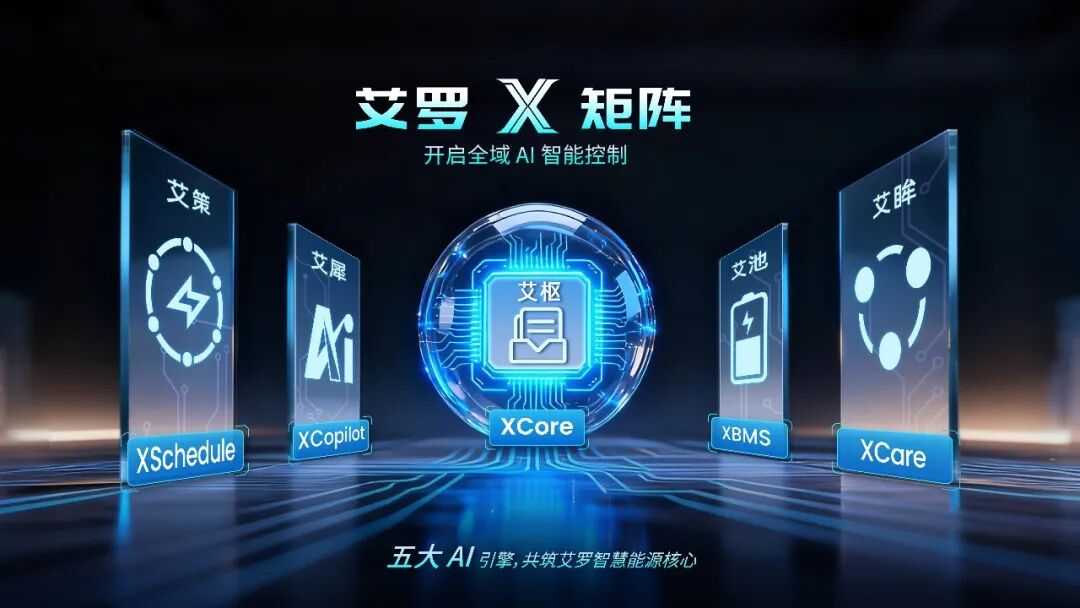
深入解析艾罗AI能源矩阵:五大引擎如何让能源系统会“思考”
Xin Lang Cai Jing· 2025-12-11 10:11
Core Insights - The article discusses the unprecedented complexity facing energy systems in Europe due to the increasing penetration of distributed energy resources and storage systems, highlighting the inadequacy of traditional scheduling and operational strategies to meet current digital energy demands [1][25]. Group 1: AI Energy Matrix Overview - The company has introduced a new AI Energy Matrix that consists of five core intelligent modules designed to create a "learnable, optimizable, and predictable" energy system [2][26]. - The five modules include AI Battery Management (AiChi), AI Energy Scheduling (AiCe), AI Intelligent Assistant (AiXi), AI Intelligent Operations (AiMou), and AI Knowledge Base (AiShu) [2][26]. Group 2: AI Battery Management (AiChi) - AiChi enhances battery management by transitioning from control logic to machine intelligence, addressing the limitations of traditional threshold-based and experience-based judgments [5][28]. - It achieves a State of Charge (SOC) and State of Health (SOH) accuracy of less than 3%, enabling smarter charge and discharge control and extending battery life by over 10% [6][29]. - The AI-based monitoring at the cell level improves balancing efficiency by 20%, allowing a system like the ESS-TRENE liquid-cooled 125kW/261kWh to recover approximately 1000 kWh of usable energy annually [7][30]. Group 3: AI Energy Scheduling (AiCe) - AiCe represents a significant leap in energy scheduling, moving from rule-based execution to strategic decision-making, and is designed for both residential and commercial applications [11][33]. - It features a dual-engine architecture combining cloud-based high-precision computation with edge-based autonomous operation, resulting in up to a 50% increase in return on investment compared to static scheduling methods [13][35]. Group 4: AI Intelligent Assistant (AiXi) - AiXi is a large language model-based assistant aimed at making complex systems understandable and operable, providing real-time dynamic system diagrams and visual fault diagnosis processes [14][36]. - It evolves into a personal energy manager that learns from user behavior, simplifies decision-making, and supports user participation in virtual power plants [16][38]. Group 5: AI Intelligent Operations (AiMou) - AiMou focuses on predictive maintenance and proactive system management throughout the photovoltaic lifecycle, featuring AI Arc Fault Protection Technology (AFCI) and intelligent IV curve diagnostics [18][39]. - The intelligent IV curve diagnostic system can assess the health of a large-scale solar plant in minutes, significantly reducing labor input by over 50% [39]. - The AFCI technology achieves a response time of 0.5 seconds with an accuracy rate exceeding 99%, greatly reducing fire hazards by over 75% compared to traditional methods [40][41]. Group 6: AI Knowledge Base (AiShu) - AiShu serves as the foundational "brain" of the matrix, responsible for aggregating telemetry data, recording long-term operational behavior, and analyzing fault evolution [20][42]. - It ensures that the entire energy matrix not only functions but also evolves, enhancing the capabilities of the other modules [21][42]. Group 7: Future of Energy Systems - The next generation of energy systems will prioritize intelligence over capacity, with the AI Energy Matrix showcasing the future direction of the photovoltaic and storage industry [22][43]. - The value brought by this transformation includes improved predictability from battery to system, smarter operations from scheduling to maintenance, and enhanced efficiency from installation to operation [24][43].