
自然崇拜

Search documents
好雨知时节
Xin Lang Cai Jing· 2026-02-26 19:41
Core Viewpoint - The articles reflect on the significance of the Rain Water solar term, emphasizing its cultural and agricultural importance in rural life, as well as the emotional connection to nature and the changing seasons. Group 1: Cultural Significance - The Rain Water solar term is associated with ancient wisdom and natural reverence, highlighting the importance of water in nurturing life and agriculture [1] - Traditional practices, such as careful water collection and rituals of gratitude, illustrate the deep-rooted cultural significance of this period in rural communities [1] Group 2: Agricultural Practices - The arrival of the Rain Water solar term signals the need for timely agricultural activities, such as fertilizing oilseed rape and managing water in wheat fields to prevent flooding [2] - The community collaborates during this busy season, with neighbors assisting each other in farming tasks, showcasing a strong sense of communal support [3] Group 3: Emotional Connection - The articles evoke nostalgia for the simplicity and beauty of rural life, where the rain is not just a weather phenomenon but a vital force that connects people to their land and heritage [3] - The sensory experiences associated with the Rain Water season, such as the smell of wet soil and the taste of seasonal dishes, reinforce the emotional ties to one's homeland [3]
三星堆博物馆首个艺术特展开启
Xin Lang Cai Jing· 2026-02-13 18:33
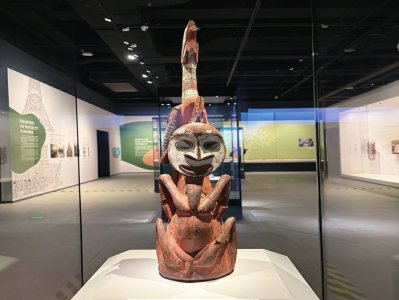
Core Viewpoint - The exhibition "Floating on the Blue Sea" at the Sanxingdui Museum showcases 171 significant artworks from Oceania, emphasizing the deep connections between humans, nature, and cultural beliefs, and aims to foster understanding of shared human wisdom through cultural dialogue [5][8]. Group 1: Exhibition Overview - The exhibition, which opened on February 12, is the first art special exhibition at the Sanxingdui Museum and the second international artifact exhibition following "The Journey of Ancient Greece" [5]. - It features 171 pieces of Oceania art, including 40 items that are leaving France for the first time, such as the double-hulled canoe and roof finial sculptures [5][6]. Group 2: Thematic Structure - The exhibition is structured around four main themes: "Sailing into the Deep Blue," "Smoke and Fire of Mountains and Seas," "Intersection of Heaven and Sea," and "Light of the Reefs," which collectively decode the civilization's narrative [6][7]. - Each section focuses on different aspects of Oceania culture, such as migration, social life, spiritual connections, and identity formation [6][7]. Group 3: Highlighted Artifacts - A key highlight of the exhibition is the dogai, a canoe prow sculpture considered a "treasure" of the Quai Branly Museum, symbolizing the spiritual beliefs of the Torres Strait Islanders [8]. - The exhibition aims to draw parallels between the spiritual communication in both the Sanxingdui and Oceania cultures, despite their geographical distance [8]. Group 4: Visitor Experience - The exhibition is designed to immerse visitors in the oceanic culture through thematic colors and artifacts, allowing them to experience the life of islanders [8]. - The exhibition will run until May 20, providing ample opportunity for public engagement [9].

通天“神作”:三星堆人的自然、图腾与祖先崇拜
Jing Ji Guan Cha Bao· 2025-12-16 04:46
Core Viewpoint - The article discusses the unique cultural significance of the Sanxingdui archaeological site, highlighting its religious artifacts and the complex belief systems of the ancient civilization that created them [1]. Group 1: Archaeological Findings - The Sanxingdui site has revealed eight burial pits containing a wealth of bronze, jade, and ivory artifacts, with distinct characteristics that allow them to be categorized into two groups [2][3]. - The burial pits show evidence of intentional burning, with many artifacts charred or deformed, suggesting a ritualistic context rather than a violent burial [4]. - The artifacts' stratified arrangement within the pits indicates a systematic approach to their burial, closely linked to ritual practices [5]. Group 2: Ritual Significance - Experts largely agree that the burial pits are associated with sacrificial activities, rather than being the result of a violent conflict [6][7]. - The concept of "yi mai" (burial for sacrifice) is referenced, indicating a cultural practice of interring offerings as part of religious ceremonies [5]. - Different interpretations exist regarding the nature of the pits, with some experts categorizing them as direct products of sacrificial activities, while others view them as burial sites for sacrificial artifacts [6]. Group 3: Belief Systems - The Sanxingdui culture exhibits three primary forms of worship: nature, totem, and ancestor worship, reflecting a rich spiritual life [8]. - Nature worship is exemplified by artifacts such as the bronze sacred tree and sun-shaped vessels, indicating a deep reverence for natural elements [9]. - Ancestor worship is represented by the unique "Zongmu" masks, which are believed to connect the living with their ancestors [10]. Group 4: Artistic Expression - The bronze sacred tree, standing at 396 cm, is noted as the largest of its kind discovered, symbolizing a connection between the earthly and divine realms [11]. - The intricate design of the sacred tree, featuring multiple branches and symbolic elements, showcases the advanced bronze casting techniques and artistic imagination of the Sanxingdui civilization [12].