
自由联合协定(COFA)

Search documents
特朗普再次威胁“采取行动”,欧洲多国声援丹麦和格陵兰岛
第一财经· 2026-01-11 15:06
Core Viewpoint - Greenland's political leaders have unitedly stated that "Greenlanders do not want to become Americans," emphasizing their desire for self-determination and rejecting any notion of being sold or transferred to the United States [3][9]. Group 1: Political Reactions - U.S. President Trump has expressed a strong desire to acquire Greenland, suggesting both negotiation and military options, although the latter is considered less likely [4][5]. - The European Union, along with the UK and Germany, has voiced support for Denmark and Greenland, asserting that any changes regarding Greenland's status should be decided by Greenland and Denmark [4][5]. - A recent poll indicated that approximately 85% of Greenlanders oppose the idea of selling Greenland to the U.S. [11]. Group 2: Historical Context - The U.S. has a history of acquiring territories, with past attempts to purchase Greenland dating back to the 19th century, including proposals from various U.S. administrations that were ultimately rejected [10]. - The 1951 agreement between the U.S. and Denmark allows for a significant U.S. military presence in Greenland, which could facilitate a potential takeover with minimal resistance [13]. Group 3: Legal and Diplomatic Considerations - Greenland is legally part of Denmark and has a high degree of autonomy, meaning any sale would require the consent of the Greenlandic people [10][14]. - The potential for a "Compact of Free Association" (COFA) would necessitate Greenland's separation from Denmark, which is currently not feasible under existing legal frameworks [14]. - Any military action by the U.S. to annex Greenland would violate NATO treaties, leading to severe geopolitical consequences [12][13].

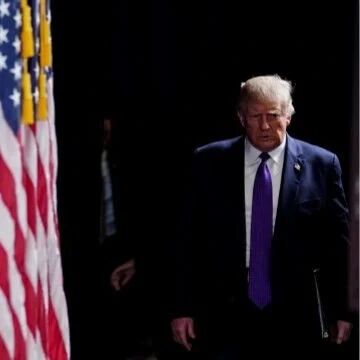
特朗普再次威胁“采取行动”,欧洲多国声援丹麦和格陵兰岛
Di Yi Cai Jing· 2026-01-11 12:32
Core Viewpoint - Greenland's political leaders have expressed a strong desire for the U.S. to cease its "disrespect" towards Greenland, emphasizing that they do not wish to become American citizens [1][5]. Group 1: Political Reactions - Greenland's political leaders issued a joint statement asserting that the future of Greenland should be determined by its people, urging the U.S. to stop its disrespectful actions [1][5]. - The EU, along with the UK and Germany, has voiced support for Denmark and Greenland, stating that any changes regarding Greenland's status should be decided by Greenland and Denmark [1][2]. - The U.S. Secretary of State indicated that President Trump prefers to purchase Greenland rather than invade it, although Greenland and Denmark have reiterated that Greenland is "not for sale" [5][6]. Group 2: Historical Context - President Trump's interest in acquiring Greenland is not unprecedented; historical attempts to purchase Greenland date back to the 19th century, including proposals from U.S. administrations in 1946 and 1955 that were ultimately rejected by Denmark [6][8]. - The U.S. has previously purchased territories from Denmark, such as the U.S. Virgin Islands in 1917, indicating a historical precedent for such transactions [6][8]. Group 3: Military Presence and Implications - The U.S. maintains a significant military presence in Greenland, with a base established under a 1951 agreement allowing for additional defense areas [8]. - Analysts suggest that if the U.S. were to attempt to occupy Greenland, it could do so with minimal resistance, raising concerns about potential violations of NATO agreements [8][9]. - Discussions are ongoing regarding a potential "Compact of Free Association" (COFA) that would require Greenland to separate from Denmark, which is currently not legally feasible [9].
执意拿下格陵兰岛?从增兵到吞并,美国摆在桌面上的三个选项
Jin Shi Shu Ju· 2026-01-08 06:27
Core Viewpoint - The U.S. government is exploring various options regarding Greenland, including increasing military presence and potentially acquiring the territory, despite Denmark's reluctance [1][5]. Group 1: Current Options - Denmark prefers to enhance U.S. presence in Greenland under the existing defense agreement from 1951, which previously allowed for around 15,000 U.S. troops during WWII, but has since dwindled to fewer than 200 at the Pituffik space base [2]. - Danish officials have frequently offered opportunities for the U.S. to establish more military bases on the island, but responses have been lukewarm [2]. - There is a possibility of a new defense agreement that could include more bases or even the transformation of bases into U.S. territory, similar to the UK's military bases in Cyprus [2]. Group 2: Independence and Its Implications - A majority of Greenlanders support independence from Copenhagen, especially if economic conditions improve, but only 6% favor becoming part of the U.S., with 85% opposing it [3]. - Some U.S. officials view Greenland's independence as a challenge and an opportunity, suggesting that the U.S. should provide a security umbrella to prevent potential threats from Russia [3]. - The Compact of Free Association (COFA) has supporters in Greenland, but many are cautious about exchanging one dependency for another [4]. Group 3: Concerns Over Military Action - Danish officials are taking Trump's refusal to rule out military action seriously, acknowledging that a military invasion could be straightforward due to the limited Danish military presence on the island [5]. - Danish Prime Minister Mette Frederiksen has expressed concerns that any U.S. military action would have significant repercussions for NATO and post-WWII European security [5]. - There are fears that Trump's interest in Greenland may stem from a desire for territorial expansion, reflecting his background as a real estate mogul [5][6].