航空工业自主创新

Search documents
从初教-5到教-10 看“中国教练机摇篮”如何托举蓝天梦想
Yang Shi Xin Wen· 2025-08-01 08:29
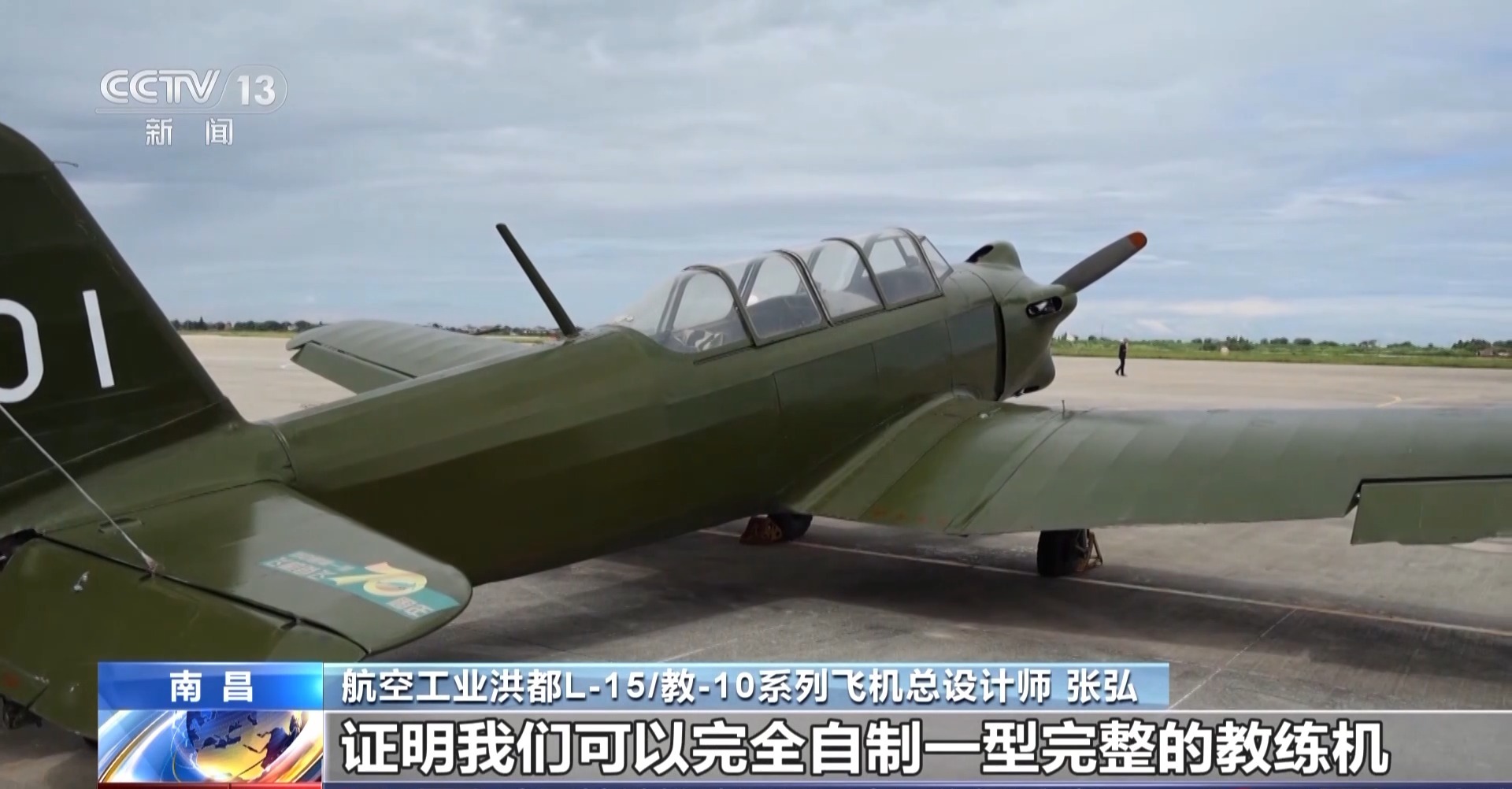
Core Viewpoint - The article highlights the historical significance of Nanchang in China's aviation industry, marking it as the birthplace of the first domestically produced aircraft, the Initial Training Aircraft-5 (初教-5), and tracing the evolution of Chinese trainer aircraft from 初教-5 to 教-10, showcasing the advancements in China's aviation capabilities over the decades [1][11]. Summary by Sections Historical Significance - Nanchang is recognized as the cradle of the People's Army and the birthplace of China's first self-made aircraft, 初教-5, which first flew on July 3, 1954, initiating the development of China's aviation industry [1]. - The evolution of trainer aircraft in China is chronicled, emphasizing the transition from 初教-5 to 教-10, which reflects the progress made in the aviation sector [1][11]. Development of Trainer Aircraft - The Initial Training Aircraft-5 (初教-5) served as a foundation for China's commitment to developing new trainer aircraft, leading to the successful first flight of 初教-6 in 1958, which remains in service today and has been exported to multiple countries [3][11]. - The 教-8, which first flew on November 21, 1990, is currently the main trainer for fighter pilots in China, filling a gap in the domestic market for general-purpose basic trainer aircraft [7][11]. Technological Advancements - The L-15 prototype, which first flew on March 13, 2006, marked a generational leap in China's trainer aircraft, leading to the development of 教-10, showcasing the continuous innovation in the aviation industry [11]. - The article emphasizes the performance and capabilities of the 初教-6, which is still operational and plays a crucial role in training pilots, demonstrating its enduring legacy in the aviation field [12][18]. Pilot Training Experience - The article describes a firsthand experience of flying the 初教-6, highlighting its excellent maneuverability and performance during various flight maneuvers, which are essential for pilot training [14][16]. - The interaction between the pilot and the aircraft is noted as intuitive, reflecting the design's effectiveness in training future aviators [16][18].

“近战小王子”教-10教练机生产线首度公开 一探究竟
Yang Shi Xin Wen· 2025-08-01 02:32
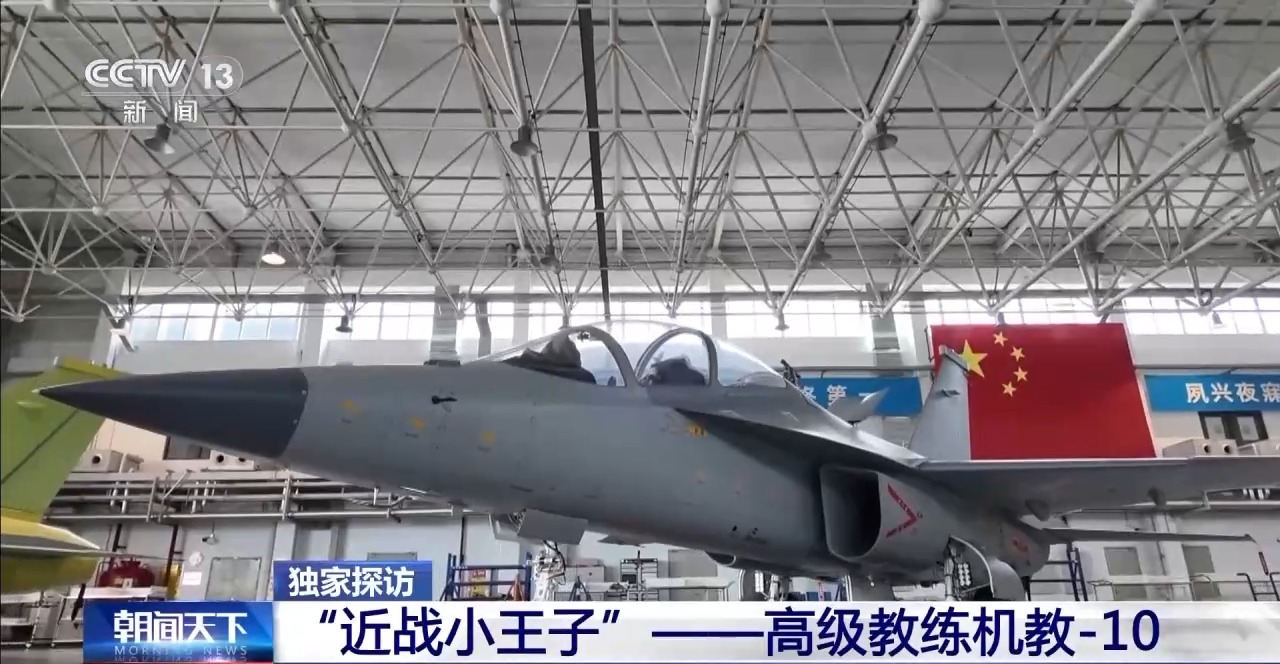
Group 1 - The core viewpoint of the articles highlights the significance of the CJ-10 advanced trainer aircraft, marking a milestone in China's aviation industry and its capabilities in manufacturing advanced trainer jets [2][11][29] - The CJ-10 is designed for training pilots of fourth-generation fighter jets and is referred to as "Little J-10" due to its advanced features and combat capabilities [4][8] - The aircraft features a dual-engine design, a blended wing-body configuration, and a digital fly-by-wire control system, enhancing its maneuverability and performance [6][10] Group 2 - The CJ-10 has a payload capacity of 3.5 tons, with six external hardpoints for weaponry, allowing it to perform combat missions in addition to training [10][8] - The production line for the CJ-10 employs a pulsed production method, transitioning from traditional fixed workstations to a more efficient flow-based system [18][20] - The development of an embedded training system for the CJ-10 allows for low-cost tactical training by simulating combat environments, addressing the challenges of training without advanced systems found in fighter jets [23][25][29]