
草畜一体化

Search documents
草原减负 牧民增收
Xin Lang Cai Jing· 2026-01-06 22:38
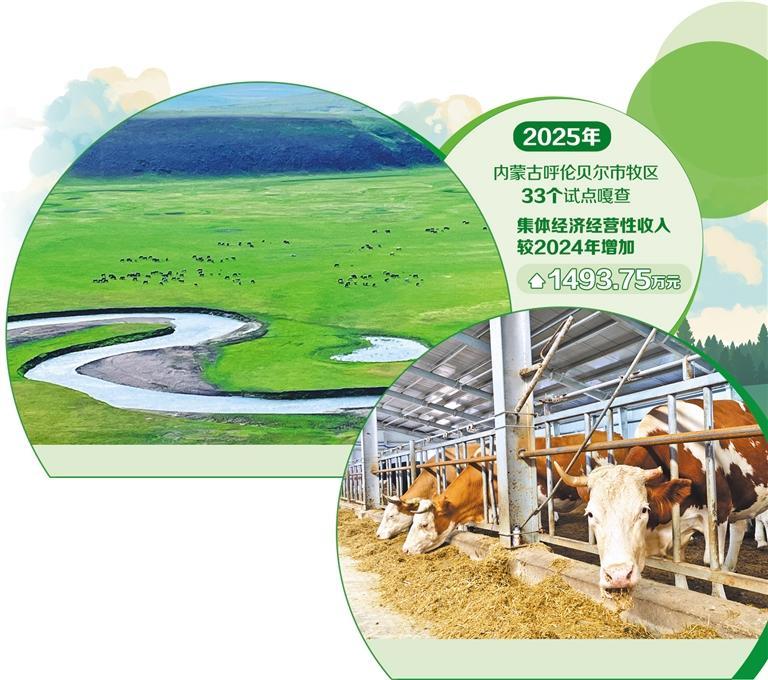
Core Insights - The article discusses the ecological challenges faced by the Hulunbuir grasslands in Inner Mongolia, particularly due to traditional grazing practices and historical overgrazing, leading to grassland degradation and loss of biodiversity [2] - Hulunbuir City is implementing a "1+N+M" work system to address overgrazing issues and promote the transformation and upgrading of traditional animal husbandry [2][9] Group 1: Innovative Feeding Methods - The key to solving overgrazing issues lies in ensuring a stable supply of forage. Hulunbuir City is focusing on improving forage supply to support livestock production [2] - Hulunbuir Mengyuan Agricultural and Animal Husbandry Group Co., Ltd. processes 250,000 tons of straw and 200,000 tons of total mixed rations annually, which are favored by local herders due to lower costs and higher digestibility compared to traditional feeding methods [3][4] - The cost of traditional forage has decreased from approximately 20 yuan per head per day to about 9 yuan, effectively addressing seasonal forage shortages [4] Group 2: Upgrading Infrastructure and Equipment - Many farms are upgrading their facilities and equipment related to total mixed rations, transitioning to more intensive and large-scale farming models [5] - The use of modern equipment and techniques has led to faster growth rates and increased meat yield in livestock, while also reducing costs and avoiding overgrazing [5] Group 3: Expanding Sales Channels - Initiatives such as the "I have a sheep on the grassland" subscription campaign have successfully secured over 1,300 orders, while direct sales points have been established in popular tourist areas [6] - The establishment of a livestock information big data traceability platform allows buyers to access comprehensive production and health records, enhancing market transparency [6] Group 4: Socialized Service System - The "three-in-one" organization model has been developed to assist herders in selling local agricultural products, reducing intermediaries and enhancing market access [7] - A comprehensive service network has been established, including 21 organizations and 160 grid members, to support local farmers and herders [7] Group 5: Resource Transformation and Economic Growth - The "three transformations" reform aims to convert resources into assets, with collective economic income projected to increase significantly from 160,000 yuan in 2021 to 1.53 million yuan in 2024 [8] - The city is focusing on ecological restoration and sustainable development, with a complete work framework established to address overgrazing and promote the livestock industry [9]

革命老区滩羊产业正青春
Zhong Guo Qing Nian Bao· 2025-08-02 01:10
Core Viewpoint - The article highlights the historical significance and current development of the sheep farming industry in Yanchi County, Ningxia, emphasizing its evolution from a wartime necessity to a modern economic driver [1][2][3] Historical Context - During the period from 1938 to 1943, the military and civilians in the Shaanxi-Gansu-Ningxia border area transported 12.5 billion kilograms of salt from Yanchi County, which played a crucial role in breaking the economic blockade and supporting the anti-Japanese war effort [2] - The development of animal husbandry, particularly sheep farming, was significant during the anti-Japanese war, with the number of sheep increasing from 48,000 in 1936 to 157,000 by 1945 [2] Current Industry Development - The sheep farming industry in Yanchi County has modernized, with approximately 8,400 households engaged in sheep farming, a total sheep population of 3.3 million, and an output of 1.95 million sheep for slaughter in 2024 [3] - The introduction of innovative feeding practices, including the use of compound feed and traditional Chinese medicinal herbs, has improved the quality of sheep meat [3] - The establishment of a cold chain logistics system has reduced transportation costs by 30%, facilitating the distribution of sheep meat and products to major cities [3]