药品追溯管理

Search documents
行业聚焦:全球药品追溯码扫码一体机行业头部生产商市场份额及排名调查
QYResearch· 2026-01-16 03:24
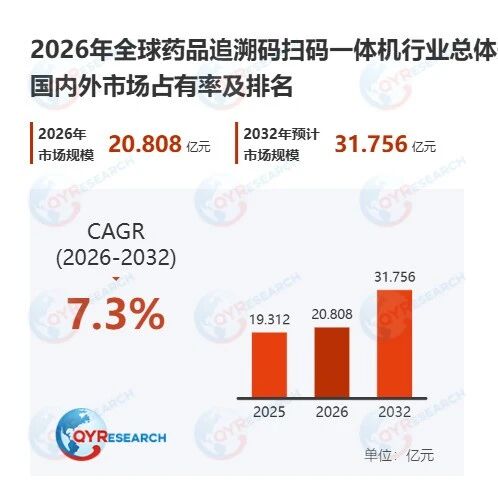
Core Viewpoint - The article discusses the pharmaceutical traceability code scanning all-in-one machine, highlighting its importance in ensuring drug quality and compliance with traceability regulations in the pharmaceutical industry [2][9]. Market Size and Industry Landscape - According to QYResearch, the global market for pharmaceutical traceability code scanning all-in-one machines is projected to reach USD 470 million by 2032, with a compound annual growth rate (CAGR) of 7.3% in the coming years [3]. - Major manufacturers in the global market include Soman Technology, SUPOIN, iData, Shenzhen Youbuxun Technology Co., Ltd., and others [5][6]. Industry Chain Analysis - The industry chain consists of upstream hardware component suppliers, software developers, midstream device manufacturers, and downstream pharmaceutical distributors and retail pharmacies [8]. Industry Policy Analysis - Recent regulatory policies in China and the U.S. are accelerating the adoption of traceability code scanning devices, increasing demand for compliant integrated devices [9]. Trends in Smart Functionality - The integration of advanced AI capabilities for automatic error correction and IoT-based device monitoring is enhancing the efficiency and accuracy of scanning machines [10]. - The expansion of multi-modal code recognition capabilities allows devices to read various formats, improving their utility in logistics [10]. Industry Development Opportunities - Regulatory-driven demand for compliant devices is creating a significant market opportunity, especially in underdeveloped regions [12]. - The shift towards smart upgrades is prompting existing users to replace outdated devices with advanced models [12]. - Opportunities exist to extend the application of these devices to adjacent regulatory fields, such as medical devices and health supplements [12]. Data Value Extraction and Collaborative Service Opportunities - The ability of scanning devices to collect vast amounts of drug flow data presents opportunities for collaboration with pharmaceutical companies and regulatory bodies to provide value-added data services [13]. Industry Development Challenges - The industry faces high compliance and technical barriers, requiring significant investment in R&D and certification [14]. - Small pharmaceutical entities are under financial pressure to comply with regulations, which may hinder market penetration [14]. - Data interoperability issues between different systems can weaken the effectiveness of traceability efforts [14]. After-Sales Service and Maintenance Bottlenecks - Uneven distribution of after-sales service networks can lead to delays in equipment repair, posing compliance risks [15].