藩镇割据

Search documents
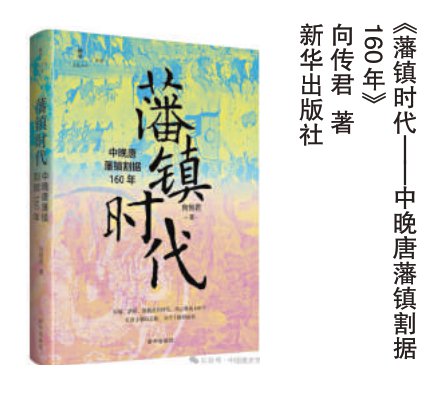
中晚唐藩镇割据的百年风云
Xin Lang Cai Jing· 2026-02-26 21:46
Core Viewpoint - The book "The Era of Regional Governors" focuses on the formation, expansion, and conclusion of the "regional governor" phenomenon during the late Tang Dynasty, providing insights into the political dynamics and institutional frameworks that led to both fragmentation and reunification in Chinese history [2] Summary by Sections - The narrative centers on the "Three Towns of He Shu," namely Wei Bo, Cheng De, and You Zhou, while also addressing over ten other powerful regional governors such as Zi Qing, Huai Xi, Xuan Wu, and Zhao Yi, covering a time span of 160 years from the An Lushan Rebellion to Zhu Wen's usurpation of the Tang Dynasty [2] - The author employs a combination of chronological and thematic writing styles to present various aspects such as territorial division, marriage alliances, wars of annexation, and the rise of self-proclaimed kings and emperors, culminating in Zhu Wen's takeover [2] - The book integrates official histories, inscriptions, and notes, quantifying military organization and fiscal revenues, while analyzing the hereditary nature of regional governors, the rise and fall of military leaders, the central government's efforts to diminish regional power, and fiscal reforms [2] - It reveals the tripartite struggle among regional governors, the central government, and foreign tribes, explaining why the Tang Dynasty's state capacity was exhausted despite military victories, thus providing a framework for understanding China's long-term fragmentation and subsequent reunification [2]

五代幽燕雄关沉浮
Xin Lang Cai Jing· 2026-02-12 09:13
Core Viewpoint - The historical evolution of Youzhou City (now Beijing's southwest) reflects the transition from the Tang Dynasty to the chaotic Five Dynasties period, highlighting the region's strategic importance and the impact of local warlords on its governance and economy [1][2][3][4][5]. Group 1: Historical Context - After the fall of the Tang Dynasty, Youzhou was controlled by the Lulong Jiedushi Liu Ren'gong, who established a semi-independent regime characterized by extravagance and oppressive policies [2]. - Liu Ren'gong's son, Liu Shouguang, declared himself emperor of the short-lived Great Yan, leading to a brutal regime that resulted in widespread suffering and eventual conquest by the Jin Kingdom [2][3]. - The region's instability provided opportunities for the Khitan nomads to strengthen their power, leading to Youzhou's strategic significance in the subsequent power struggles [3]. Group 2: Political Developments - The political landscape shifted when Shi Jingtang, under pressure, pledged allegiance to the Khitan emperor in exchange for military support, leading to the cession of Youzhou and surrounding territories [4]. - Zhao Dejun, the Lulong Jiedushi at the time, attempted to secure Khitan support for his own ambitions but ultimately failed, resulting in his surrender to the Khitan forces [4]. Group 3: Administrative Changes - Following the formal cession of the Yanyun Sixteen Prefectures to the Khitan, Youzhou was elevated to the status of Nanjing Xijunfu, integrating into the Khitan's administrative system and marking a significant shift in governance [5]. - The coexistence of Khitan and Han officials in Youzhou led to a unique cultural and administrative blend, which persisted despite multiple attempts by later Chinese dynasties to reclaim the territory [5].
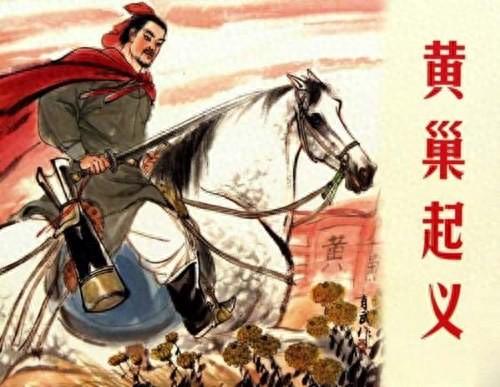
韩昇︱旧瓶新酿再说黄巢
Xin Lang Cai Jing· 2026-01-17 02:20
Group 1 - The core argument of the article emphasizes the significant impact of the Huang Chao rebellion on the Tang Dynasty, leading to the establishment of a fragmented power structure that ultimately contributed to the dynasty's decline and the emergence of the Five Dynasties and Ten Kingdoms period [1] - The rebellion, while not directly overthrowing the Tang Dynasty, catalyzed a shift towards regional warlordism, which became a defining characteristic of the late Tang period [1] - The historical significance of the Huang Chao rebellion is underscored as it initiated a transformation in China's political, economic, and social systems, paving the way for the Song Dynasty [1] Group 2 - The article discusses the evolution of Marxist historiography in China since the early 1950s, focusing on the study of social structures, land ownership, and peasant wars, with an emphasis on the importance of peasant uprisings in driving social progress [3] - It highlights the need for a nuanced understanding of various peasant uprisings throughout Chinese history, noting that many movements were not purely agrarian revolts but often involved leaders with different motivations [3] - The research on Huang Chao and the late Tang period has been significantly influenced by systematic studies conducted in the mid-20th century, which laid the groundwork for contemporary scholarship [4] Group 3 - The article stresses the importance of meticulous documentation and verification of historical sources in understanding the dynamics of the Huang Chao rebellion and its aftermath [6] - It points out that many historical issues arise from a lack of rigorous source analysis, advocating for a return to primary sources to clarify historical narratives [6] - The research on Huang Chao's governance and administrative practices reveals that his regime did not implement policies beneficial to peasants, challenging the notion of the rebellion as a purely agrarian uprising [7] Group 4 - The article notes that the aftermath of the Huang Chao rebellion did not lead to societal improvement; instead, it exacerbated the decline of the Tang Dynasty and solidified the power of regional warlords [8] - It discusses the classification of warlord factions and the political dynamics between the central government and local powers, emphasizing the complexity of these relationships [8] - The article suggests that the study of the late Tang period's political landscape requires a dynamic understanding of the shifting power relations and the roles of various factions [9]