血吸虫病防控

Search documents
中国援桑医疗卫生专家在当地开展世界艾滋病日主题社区健康教育暨义诊活动
人民网-国际频道 原创稿· 2025-12-02 08:52
Core Insights - The event held on December 1st in Zanzibar focused on the theme "Overcoming Barriers: Co-prevention of Schistosomiasis and AIDS" in conjunction with World AIDS Day, aiming to educate the community about the connection between the two diseases and promote health awareness [1][2] Group 1: Event Overview - The community health education and free clinic attracted over 200 local residents, healthcare workers, and government representatives [1] - The event was organized by a Chinese expert group and a medical team providing assistance in Zanzibar [1] Group 2: Educational Content - Experts provided detailed explanations about the origins of World AIDS Day, AIDS prevention knowledge, the relationship between AIDS and schistosomiasis, and the risks associated with contaminated water [1] - The medical team discussed the current status of pediatric AIDS infections, symptoms, prevention methods, testing processes, and treatment pathways [2] Group 3: Community Impact - Local community leader Yakub Msaba noted that residents gained a more scientific and systematic understanding of both diseases, leading to an increase in health awareness [2] - Health officials emphasized the importance of integrating dual prevention of schistosomiasis and AIDS into community education as a significant practice for enhancing public health awareness [2]


中国公共卫生专家完成桑给巴尔首张血吸虫病传病媒介分布图绘制
人民网-国际频道 原创稿· 2025-10-29 09:00
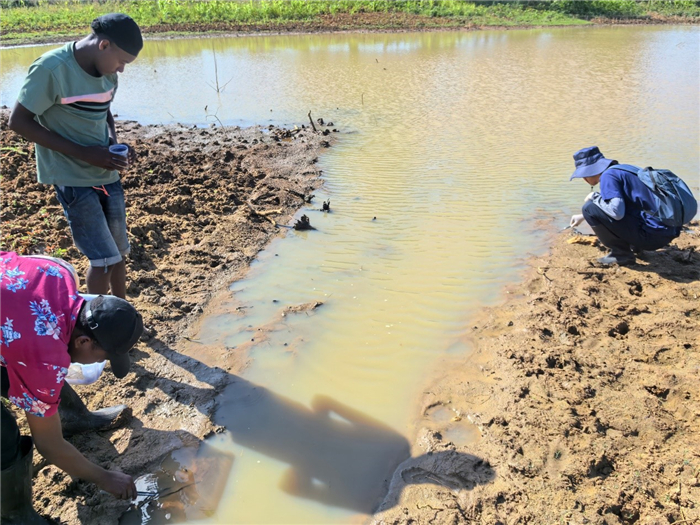
Core Insights - The Chinese expert group has completed a systematic survey of 320 key water bodies in Zanzibar for schistosomiasis transmission, marking a significant step in disease control efforts [1][2][4] Group 1: Disease Overview - Schistosomiasis is a major tropical disease transmitted by snails, classified as one of the five key parasitic diseases by the World Health Organization, posing long-term health threats and hindering socio-economic development in Africa [2] - The primary vector for schistosomiasis in Zanzibar is the water snail, which is widely distributed in freshwater environments such as ditches, ponds, and rice fields [2] Group 2: Research Methodology - The expert group utilized the World Health Organization's recommended 15-minute collection method to conduct the survey, gathering data on snail distribution, density, and infection rates [2] - Over 40,000 snail samples were collected and identified, providing comprehensive data on the local snail population's distribution, density, ecological characteristics, and infection status [2] Group 3: Findings and Implications - The expert group created Zanzibar's first schistosomiasis vector distribution map, highlighting geographical distribution patterns and high-risk areas for the disease [4] - This mapping provides essential scientific evidence for future monitoring, environmental management, and health education initiatives in Zanzibar, facilitating optimized resource allocation and targeted intervention measures [4] - The Zanzibar Ministry of Health acknowledged the significance of this systematic data collection, which establishes a monitoring technology system for snail populations and supports public health goals for schistosomiasis elimination [4]
中国医疗卫生专家在桑开展“全球洗手日”健康教育暨义诊
人民网-国际频道 原创稿· 2025-10-16 03:10
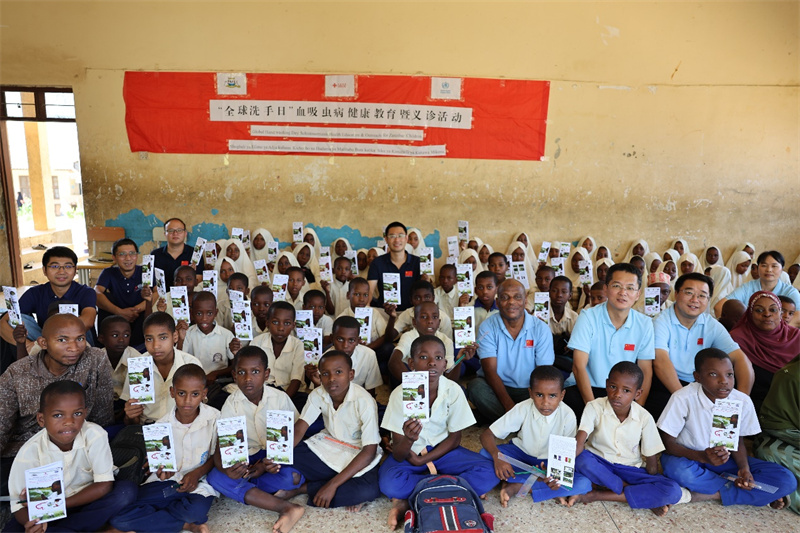
Core Viewpoint - The event on October 15, marking the 18th "Global Handwashing Day," aimed to promote scientific handwashing methods and enhance health awareness among students and teachers in Zanzibar, Tanzania, through a collaborative effort by Chinese experts and medical teams [1][2]. Group 1 - The Chinese experts provided education on the transmission, dangers, and prevention of schistosomiasis, emphasizing the importance of avoiding contact with contaminated water sources and the principles of "early prevention, early detection, early treatment" [2]. - A demonstration of the "seven-step handwashing method" was conducted, highlighting the critical points of each step and the role of proper handwashing in preventing parasitic and infectious diseases [2]. - Health consultations and physical examinations were offered to students and teachers, addressing daily hygiene and disease prevention questions, along with the distribution of hand sanitizers and educational materials [4].
中国标准助力桑给巴尔消除血吸虫病危害
Xin Hua She· 2025-10-15 04:58
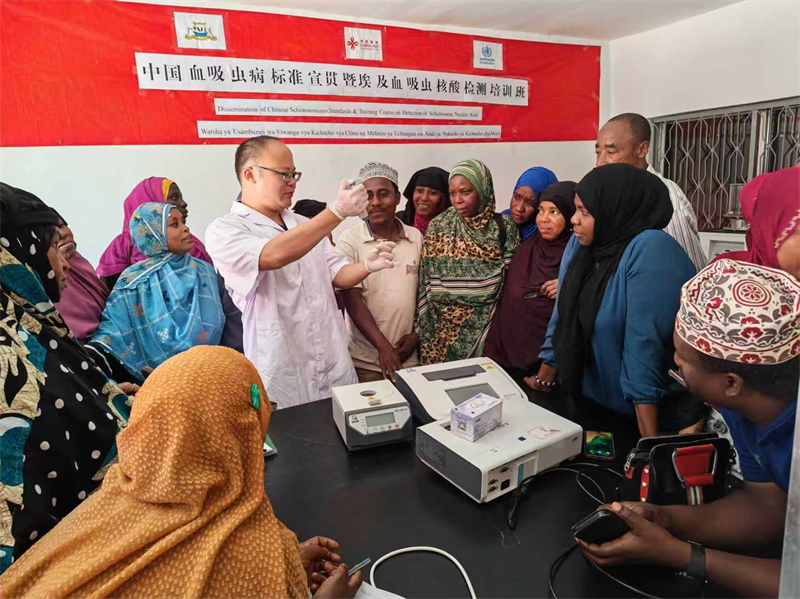
Core Points - The event on October 14, World Standards Day, featured a training session on schistosomiasis prevention and control standards in Zanzibar, Tanzania, organized by a Chinese expert group [1] - The training included a systematic explanation of multiple Chinese standards for schistosomiasis prevention and control, along with a demonstration of nucleic acid testing technology for Egyptian schistosomiasis [1] - Over 60 health professionals from various health departments in Zanzibar participated in the training, aimed at enhancing their technical capabilities and promoting standardized and scientific practices in schistosomiasis control [1]
中国标准助力桑给巴尔加快消除血吸虫病危害
人民网-国际频道 原创稿· 2025-10-15 02:30
Core Viewpoint - The training program for schistosomiasis control in Zanzibar, Tanzania, aims to enhance the professional skills of local public health personnel and standardize the prevention efforts against schistosomiasis, leveraging China's successful experiences in the field [1][2]. Group 1: Training Program Details - The training session included over 60 local technical personnel who participated in the Chinese schistosomiasis standard dissemination and training on Egyptian schistosomiasis nucleic acid detection [1]. - The expert group provided systematic explanations of various Chinese standards related to schistosomiasis management, including patient management, egg detection methods, and chemical treatment protocols [2]. - Practical demonstrations of nucleic acid detection techniques were conducted, covering sample collection, DNA extraction, and result interpretation, allowing participants to engage in hands-on practice [2]. Group 2: Impact and Future Applications - Participants expressed that the training deepened their understanding of schistosomiasis control standards and equipped them with advanced nucleic acid detection techniques [2]. - The knowledge gained from the training is expected to be applied in their future work, contributing to the standardization of schistosomiasis prevention workflows and supporting the goal of eliminating the disease [2].
河塘边的“健康哨兵”:中国经验助力桑给巴尔阻断血吸虫病传播
人民网-国际频道 原创稿· 2025-08-07 03:00
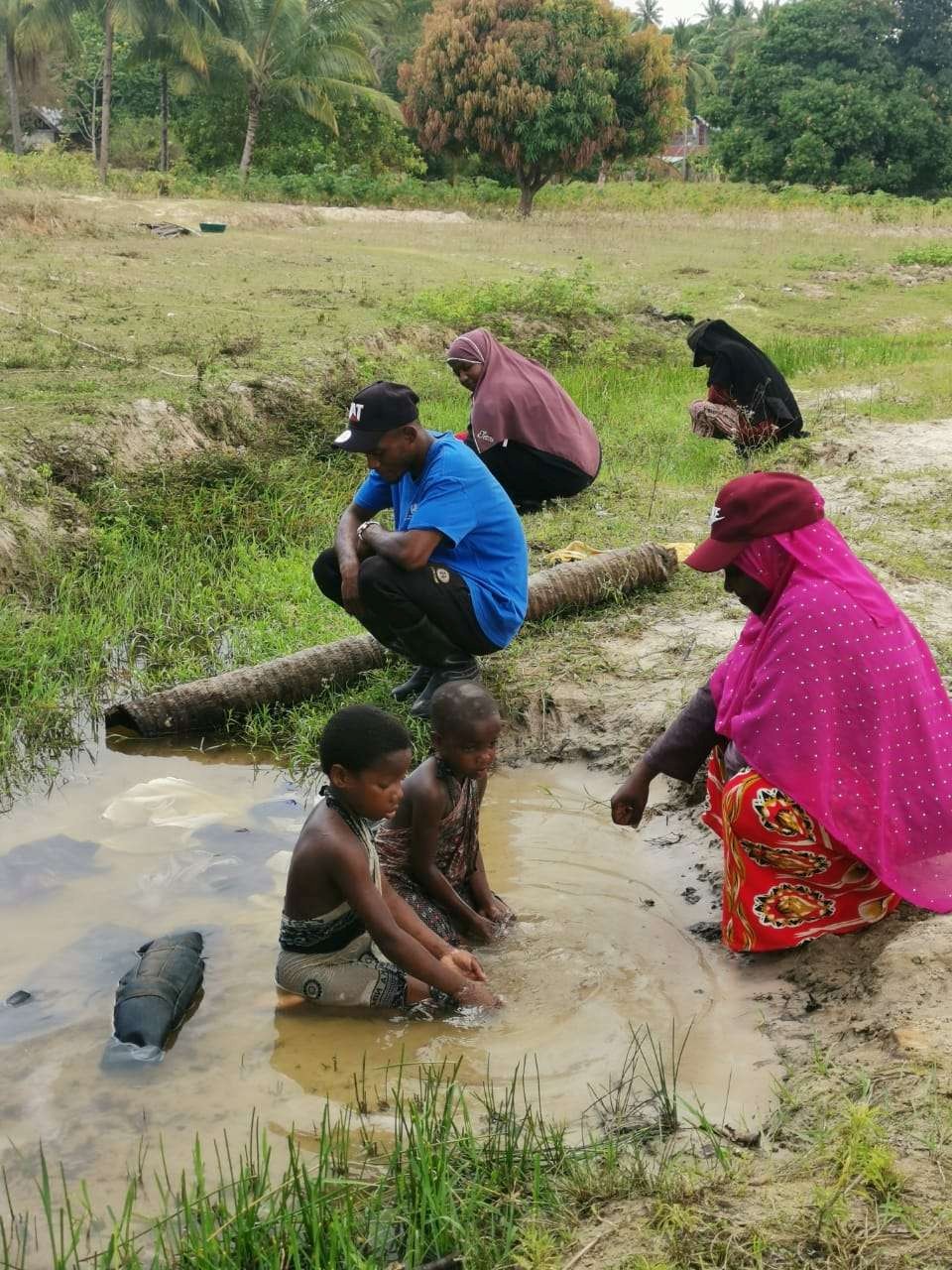
Core Insights - The article highlights the importance of preventive measures against schistosomiasis in Zanzibar, Tanzania, particularly through the use of voice warning systems to alert residents about contaminated water [1][4]. Group 1: Health Risks and Preventive Measures - Schistosomiasis is a significant health threat in Zanzibar, particularly in areas where people frequently come into contact with water that may contain the schistosomiasis-causing larvae [1]. - The local population, including women and children, often engages in activities like washing clothes and swimming in potentially contaminated waters, increasing their risk of infection [1][3]. Group 2: Implementation of Voice Warning Systems - The Chinese expert team has installed voice warning systems in two villages, Papani and Mavengua, to provide continuous alerts to residents about the dangers of contaminated water [2][4]. - These voice warning systems have been localized and modified to better suit the community's needs, aiming to raise health awareness among villagers [2][3]. Group 3: Impact and Future Plans - The implementation of the voice warning systems has led to positive changes in health awareness among the local population, as reported by the expert team [2][4]. - The expert team plans to continue installing these warning systems near other key water bodies to further enhance public health safety in Zanzibar [4]. Group 4: Collaboration and Experience Sharing - The initiative is part of a broader collaboration between China and Tanzania, which began with a memorandum of understanding signed in 2014 to combat schistosomiasis [4]. - The Chinese expert team has been applying successful public health practices from China to the local context in Zanzibar, emphasizing community involvement and coordinated efforts in disease prevention [4].