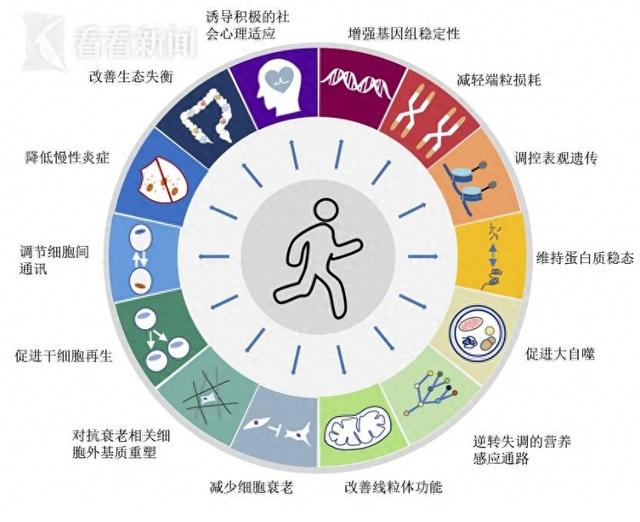
衰老信号

Search documents
运动抗衰老?从“细胞层面”有了说法!
Xin Lang Cai Jing· 2025-12-28 17:21
Core Insights - A recent study published in the journal "Sports and Health Sciences" by Shanghai University reveals how exercise can fundamentally help slow down aging at the molecular level [1][3] - The research identifies 14 biological markers related to exercise and anti-aging, providing a scientific basis for personalized health management through tailored exercise prescriptions [3] Group 1: Aging Mechanisms - Aging leads to a decline in bodily functions, characterized by factors such as decreased cell repair ability, reduced mitochondrial efficiency, and increased chronic inflammation [1][3] - These aging issues accumulate over time, similar to "rust" within the body, resulting in various age-related diseases [1] Group 2: Exercise Benefits - Regular exercise positively impacts nearly all known key aging processes, acting as a comprehensive "body maintenance" mechanism [3] - Exercise enhances cell stability, aids in cell damage repair, protects genetic material, improves waste clearance and resource recycling (autophagy), and maintains efficient mitochondrial function [3] - It also helps reduce the accumulation of senescent cells, which secrete harmful substances, and lowers chronic inflammation, a common underlying factor for many age-related diseases [3] Group 3: Future Implications - The study's value lies in its systematic confirmation of multiple biological markers associated with exercise and anti-aging, paving the way for personalized exercise recommendations based on individual blood indicators [3] - This approach could lead to new intervention strategies for individuals unable to engage in conventional exercise due to health reasons [3]