
运动抗衰老

Search documents
运动抗衰老?从“细胞层面”有了说法!
Xin Lang Cai Jing· 2025-12-28 17:21
Core Insights - A recent study published in the journal "Sports and Health Sciences" by Shanghai University reveals how exercise can fundamentally help slow down aging at the molecular level [1][3] - The research identifies 14 biological markers related to exercise and anti-aging, providing a scientific basis for personalized health management through tailored exercise prescriptions [3] Group 1: Aging Mechanisms - Aging leads to a decline in bodily functions, characterized by factors such as decreased cell repair ability, reduced mitochondrial efficiency, and increased chronic inflammation [1][3] - These aging issues accumulate over time, similar to "rust" within the body, resulting in various age-related diseases [1] Group 2: Exercise Benefits - Regular exercise positively impacts nearly all known key aging processes, acting as a comprehensive "body maintenance" mechanism [3] - Exercise enhances cell stability, aids in cell damage repair, protects genetic material, improves waste clearance and resource recycling (autophagy), and maintains efficient mitochondrial function [3] - It also helps reduce the accumulation of senescent cells, which secrete harmful substances, and lowers chronic inflammation, a common underlying factor for many age-related diseases [3] Group 3: Future Implications - The study's value lies in its systematic confirmation of multiple biological markers associated with exercise and anti-aging, paving the way for personalized exercise recommendations based on individual blood indicators [3] - This approach could lead to new intervention strategies for individuals unable to engage in conventional exercise due to health reasons [3]

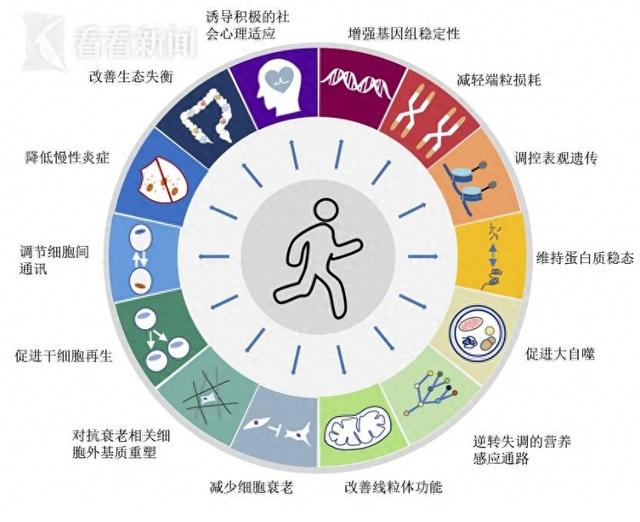
研究发现运动抗衰老的关键因子
Ke Ji Ri Bao· 2025-07-03 01:10
Core Insights - The research reveals the different responses of the human body to single and long-term exercise, identifying a key "exercise-mimicking molecule" called betaine [1][2] - The study establishes that exercise can delay aging by regulating rhythm factors, promoting vascular regeneration, and suppressing systemic inflammation [1] - A significant breakthrough is the identification of the kidneys as a core organ responding to the health benefits of exercise, with long-term exercise significantly increasing betaine levels in the kidneys [2] Group 1 - The research team conducted a study involving 13 healthy male volunteers and cross-species research between mice and humans to detail the body's response to exercise [1] - Single intense exercise is characterized as a "survival stress test," leading to metabolic storms and oxidative damage, while long-term regular exercise rebalances multiple body systems [1] - Long-term exercise improves metabolism, rejuvenates the immune system, reduces inflammation, enhances antioxidant capacity, and optimizes gut microbiota [1] Group 2 - Betaine, derived from choline in the kidneys, is synthesized through a key enzyme activated post-exercise, which is crucial for its health benefits [2] - In cellular studies, betaine treatment significantly improves the aging state of various human aging cells, while in animal studies, it extends the healthy lifespan of elderly mice and improves various health metrics [2] - Betaine acts on a natural immune kinase called TBK1, inhibiting its activity and blocking pro-inflammatory signaling pathways, thereby reducing inflammation levels in tissues [2]