西太副高

Search documents
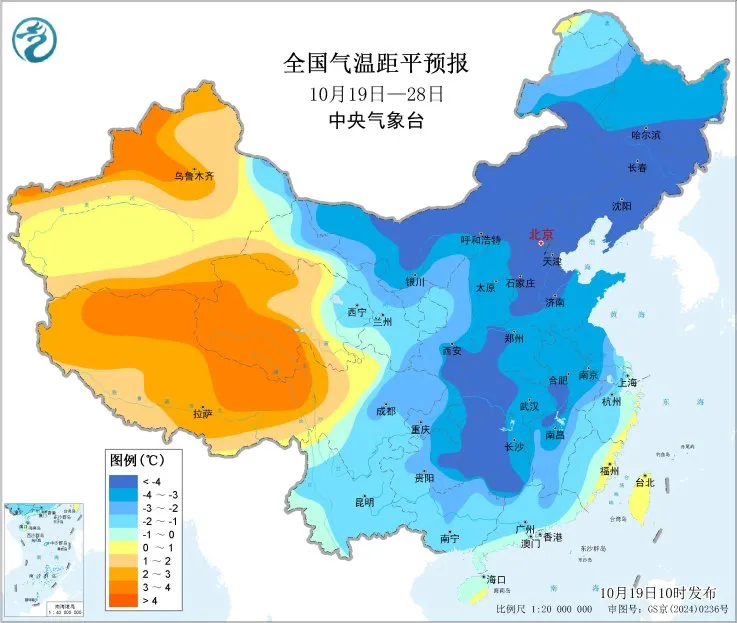
近期北方是否比常年同期更冷?
Ren Min Ri Bao· 2025-10-22 06:49
Summary of Key Points Core Viewpoint - The recent cold wave affecting northern China is attributed to changes in atmospheric pressure in the Arctic and mid-latitudes, leading to significant temperature drops across various regions. Group 1: Temperature Changes - As of October 19, the average temperature in 16 northern regions, including Beijing and Tianjin, was 10.4 degrees Celsius, close to the normal level of 10.2 degrees Celsius for this time of year [1] - On October 20, temperatures in parts of Shaanxi, Shanxi, and Henan dropped by 4 to 8 degrees Celsius compared to the previous day [1] - The Central Meteorological Observatory predicts that temperatures in most northern regions will remain low until October 24 [3] Group 2: Causes of Temperature Drop - The direct cause of the temperature drop in northern regions is linked to the Arctic Oscillation, which shifted from a positive to a negative phase, allowing cold air to move southward [2] - The presence of a blocking high over the Ural Mountains has facilitated the southward movement of cold air into northern China [2] Group 3: Agricultural Impact - The cold wave and accompanying frost are expected to adversely affect agricultural production, particularly in northeastern regions and Inner Mongolia, where temperatures may be 4 to 6 degrees Celsius below normal [5] - Farmers are advised to expedite the autumn harvest and take measures to protect crops from low temperatures and frost [5][7]