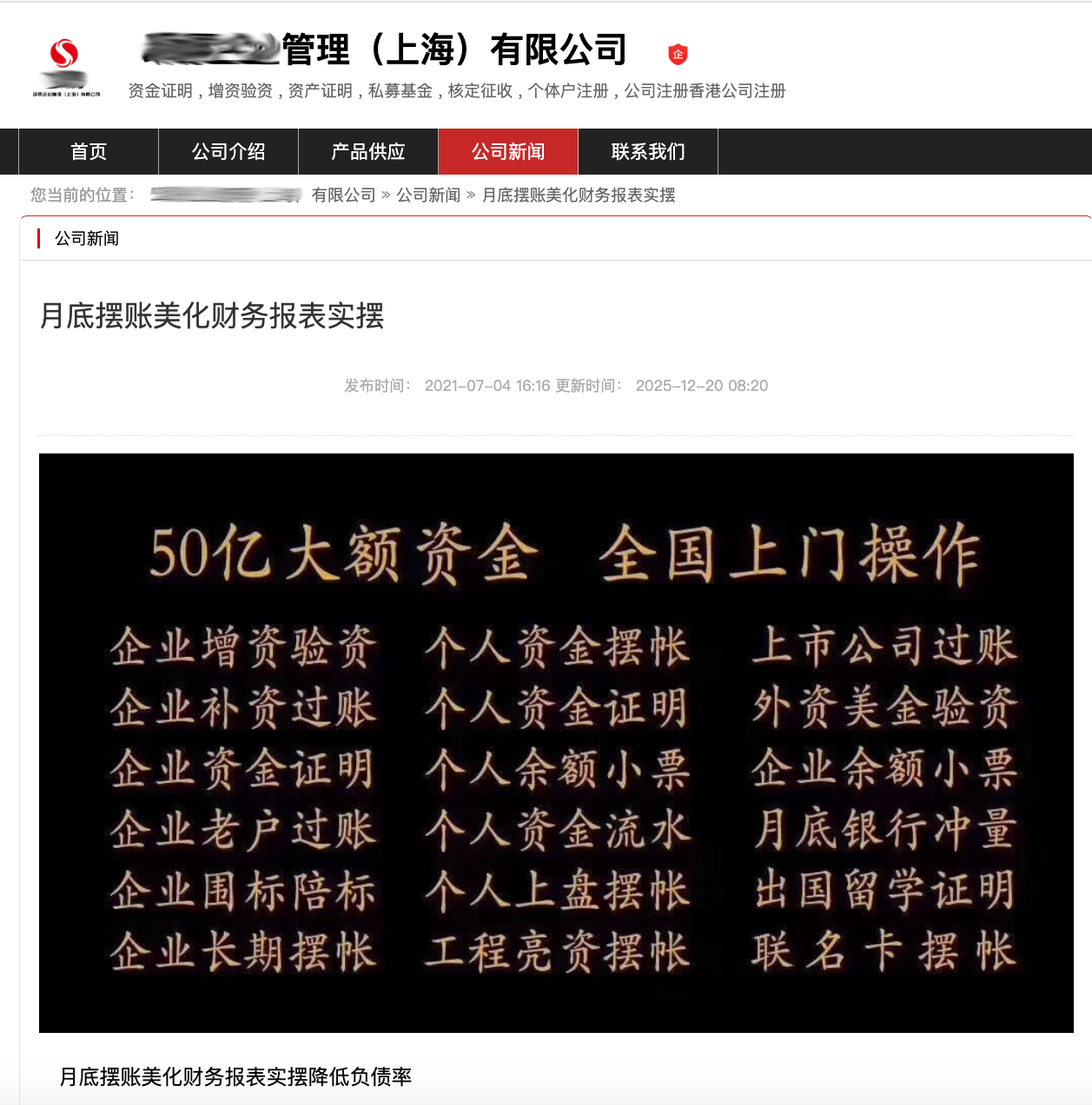
财报美化

Search documents
年末业绩压力催生“财报美化”业务 资金中介提供高息资金拆借或成造假“帮凶”
Mei Ri Jing Ji Xin Wen· 2025-12-24 07:45
Core Viewpoint - The article highlights the alarming rise of "financial statement beautification" services among listed and pre-IPO companies, where funds are manipulated to enhance financial metrics without real business backing, raising significant legal and ethical concerns [1][2][18]. Group 1: Nature of the Business - "Financial statement beautification" involves short-term fund borrowing services provided by intermediaries, allowing companies to artificially inflate revenue and cash flow through circular fund transfers without genuine trade [1][12]. - The service is marketed openly in investment groups and online platforms, targeting a wide range of companies, including small-cap and large-cap firms, with claims of significant fund sizes reaching up to ten billion [2][3]. Group 2: Operational Mechanism - The beautification process typically involves a structured operation where companies design a clear fund flow path, and intermediaries facilitate the transfer of funds across multiple accounts [14][15]. - The funding process includes signing dual agreements for confidentiality and operational terms, with companies required to provide various documentation and pay a deposit to secure the funds [14][15]. Group 3: Financial Implications - The cost of these services is exorbitant, with interest rates reaching as high as 73% annually, significantly burdening companies already facing financial difficulties [16][17]. - The high costs and risks associated with these operations can exacerbate the financial strain on companies, particularly those attempting to avoid delisting [16]. Group 4: Legal Risks - The actions of both the companies seeking beautification and the intermediaries providing funds are likely to violate securities laws, with potential legal repercussions for all parties involved [17][18]. - Regulatory bodies maintain a strict stance against financial fraud, indicating that any attempts to manipulate financial statements will be met with severe penalties [18].

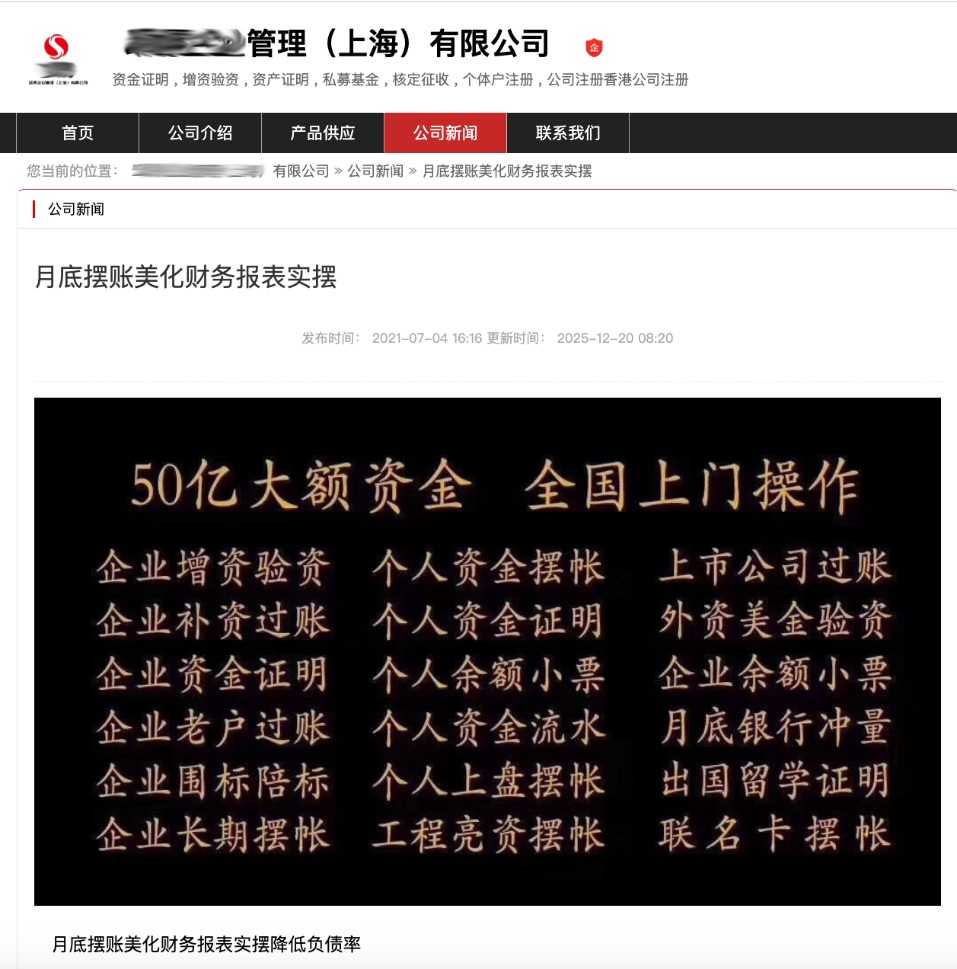
年末业绩压力催生“财报美化”业务,资金中介提供高息资金拆借或成造假“帮凶”
Mei Ri Jing Ji Xin Wen· 2025-12-24 01:45
Core Viewpoint - The article highlights the growing underground business of "financial statement beautification" among listed and pre-IPO companies, where short-term fund borrowing is used to artificially enhance financial metrics without real business backing [1][2][19]. Group 1: Business Operations - The core of the "year-end financial statement optimization" business involves financial intermediaries providing short-term fund borrowing services, allowing companies to manipulate key financial indicators like revenue and cash flow through circular fund transfers [1][2][12]. - Service providers openly promote their offerings in various financial communities and platforms, claiming to cover all sectors of the A-share market, with individual transactions reaching up to 10 billion [2][3]. - The operational process is standardized, involving the signing of dual agreements for confidentiality and fund management, with funds typically transferred in a manner that ensures rapid turnover [14][15]. Group 2: Legal and Regulatory Risks - The actions of financial intermediaries and companies involved in this practice are likely to violate securities laws, as they knowingly assist in financial fraud, which could lead to criminal liability [18][19]. - Regulatory bodies maintain a "zero tolerance" policy towards financial fraud, emphasizing strict enforcement and the potential for severe legal consequences for both companies seeking to beautify their financial statements and the intermediaries providing the funds [19]. - The high costs associated with these services, including interest rates that can exceed 70% annually, pose significant financial risks to companies already in distress [17][18].
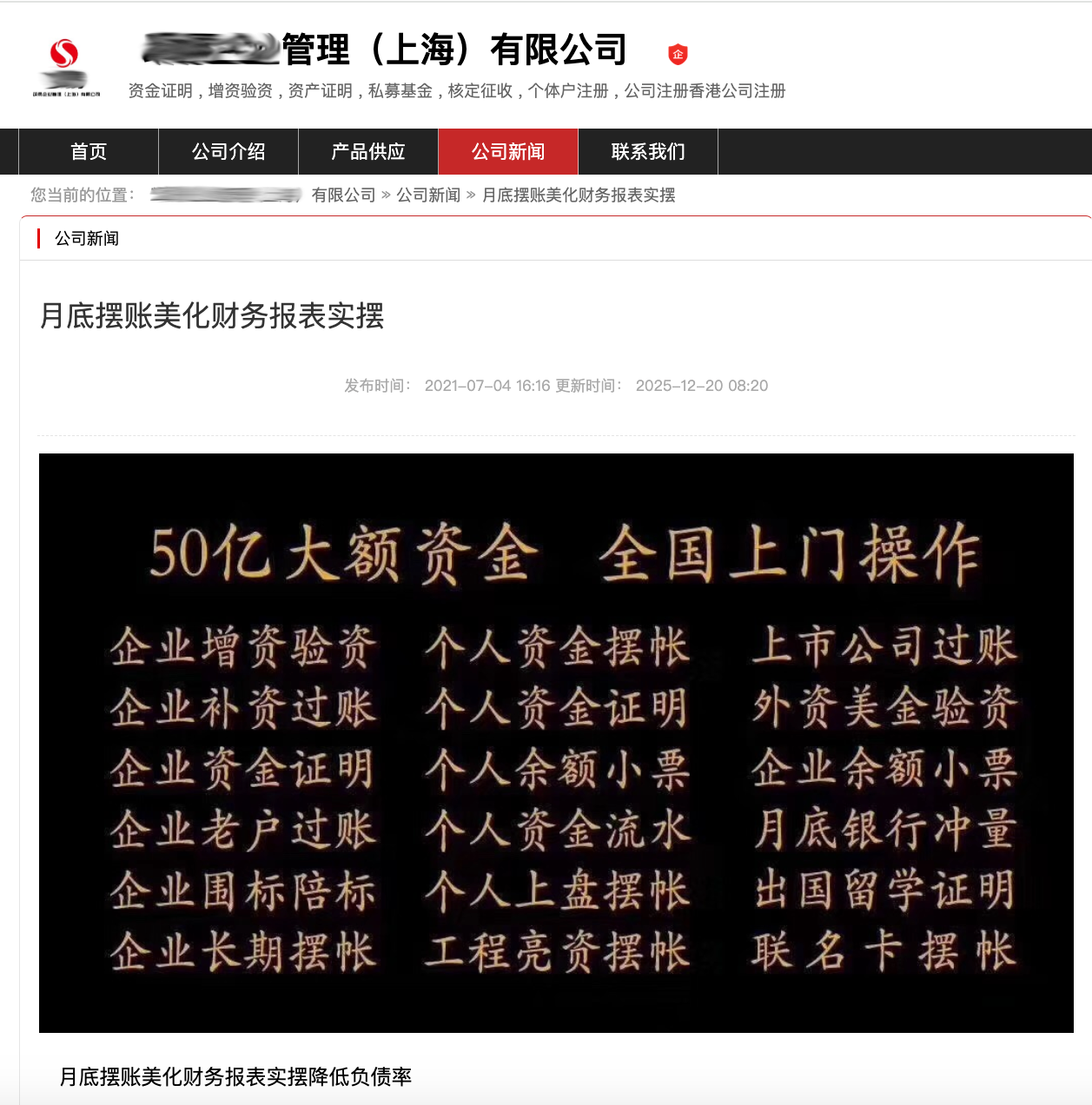
调查 | 年末业绩压力催生“财报美化”业务,资金中介提供高息资金拆借或成造假“帮凶”
Mei Ri Jing Ji Xin Wen· 2025-12-24 01:41
Core Viewpoint - The article highlights the growing underground business of "financial statement beautification" among listed and pre-IPO companies, where funds are manipulated to enhance financial metrics without real business backing [1][3][18]. Group 1: Business Operations - The core of the "year-end financial statement optimization" business involves short-term fund lending services provided by financial intermediaries, which facilitate the circulation of funds among designated accounts to superficially improve key financial indicators [1][12]. - Financial intermediaries openly promote services for various stock exchanges, claiming to optimize financial statements for companies of all sizes, with individual transactions reaching up to ten billion [3][4]. - The process involves signing dual agreements, including a confidentiality clause, and requires companies to provide various documentation for fund transfers, which are often conducted in major financial cities [14][15]. Group 2: Legal and Regulatory Implications - The actions of financial intermediaries, aware that their funds are used for financial fraud, may constitute complicity in false statements, violating securities laws and potentially leading to criminal liability [2][18]. - The high costs associated with these services, with annualized interest rates exceeding 70%, pose significant financial burdens on companies already in distress [17]. - Regulatory bodies maintain a strict stance against financial fraud, emphasizing that both companies seeking to beautify their financial statements and the intermediaries providing funds will face severe legal consequences [19][18].