财政事权和支出责任划分改革

Search documents
中央财政支出比重提高,未来五年怎么做| 解读“十五五”
Di Yi Cai Jing· 2025-11-23 13:26
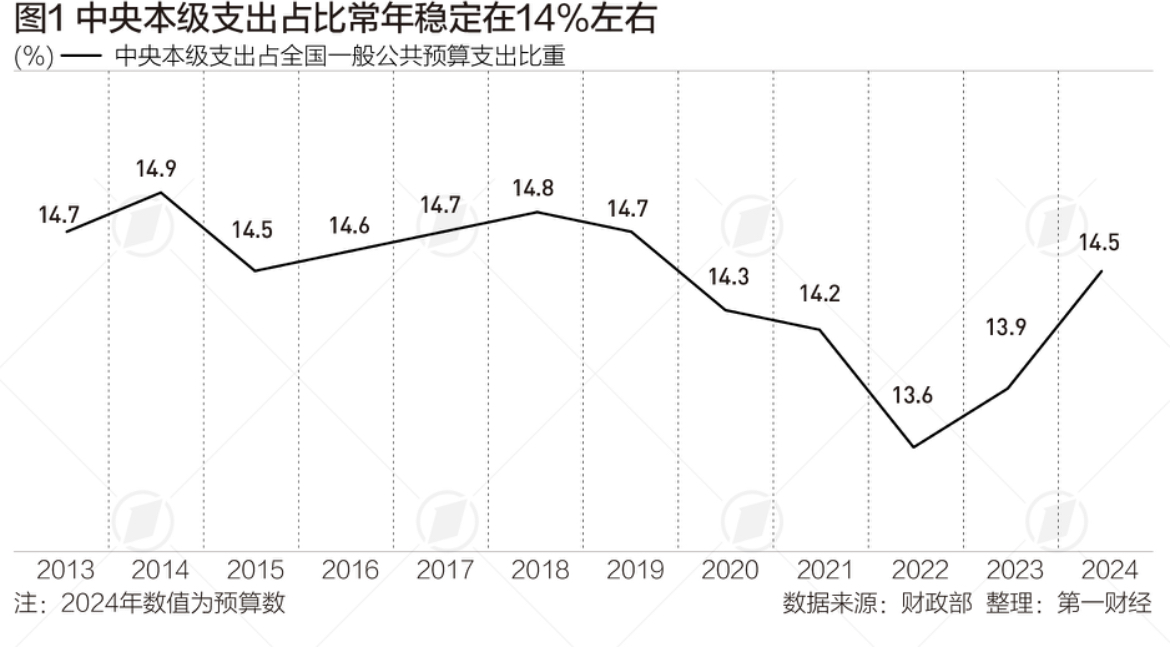
Core Viewpoint - The central government will increase its fiscal expenditure proportion to alleviate local fiscal pressure and promote high-quality economic development, as outlined in the recent guidelines for the 15th Five-Year Plan [1][2][4]. Group 1: Central and Local Fiscal Relations - The current fiscal structure shows a low proportion of central government expenditure, with central fiscal expenditure accounting for about 14% of the national general public budget, expected to rise to 14.5% in 2024 [4][15]. - Local governments face significant fiscal challenges, having to manage over 80% of expenditures while only receiving about half of the national general public budget revenue, leading to heavy reliance on central transfers and debt [7][12]. - The need for reform is emphasized, with calls to clarify the division of responsibilities between central and local governments, as well as to increase the central government's fiscal responsibilities [9][10][14]. Group 2: Proposed Reforms - Key reforms include enhancing local fiscal autonomy and expanding local tax sources while simultaneously increasing central government responsibilities and expenditure [2][3]. - The central government is expected to take on more responsibilities, reducing the need for extensive transfer payments to local governments, thereby alleviating local fiscal burdens [7][13]. - Experts suggest that the central government's expenditure proportion should ideally increase to 30%-40% by 2030 to improve governance efficiency and address local government challenges [12][13]. Group 3: Specific Areas for Central Responsibility - Areas such as social security, public health, and education are highlighted as suitable for central government responsibility due to their nationwide implications [12][14]. - The need for a clear delineation of shared responsibilities is stressed, particularly in sectors like social insurance, where local management has led to inconsistencies and lower standards [10][12]. - The ongoing reforms since 2016 have not yet resulted in a significant increase in central expenditure proportion, indicating the necessity for concurrent administrative reforms [13][14].