资产盘活利用

Search documents
全国机关事务工作会议在京召开
Ren Min Ri Bao· 2025-12-25 00:50
Core Insights - The national government affairs work conference was held in Beijing on December 23-24, focusing on asset management and cost-saving measures across various government departments [1] Group 1: Asset Management and Savings - The national public property warehouse application service platform has covered over 80 central departments and more than 18,000 affiliated units, achieving the activation of 382,300 assets and saving 2.166 billion yuan [1] - In 2025, government affairs departments will implement the revised regulations on frugality and waste reduction, focusing on managing office space, official vehicles, and public institution energy efficiency [1] - The National Administration of Government Affairs has activated 51,100 square meters of idle housing and planned the utilization of 479,900 square meters of land throughout the year [1] Group 2: Energy Management and Efficiency - The government will promote market-oriented mechanisms for energy saving and carbon reduction, with over 380 new energy cost management projects signed, amounting to over 18 billion yuan, covering more than 3,000 public institutions [1] - The energy-saving rate of these projects has significantly improved, successfully meeting the energy consumption control targets for the 14th Five-Year Plan [1] Group 3: Future Focus - In 2026, the national government affairs system will continue to focus on asset, service, and funding sectors, utilizing legal, standardized, and digital management tools to enhance high-quality development in government affairs work [2]
地方审计这笔国资闲置、违规处置等问题,央地已“出招解决”
Di Yi Cai Jing· 2025-08-20 07:29
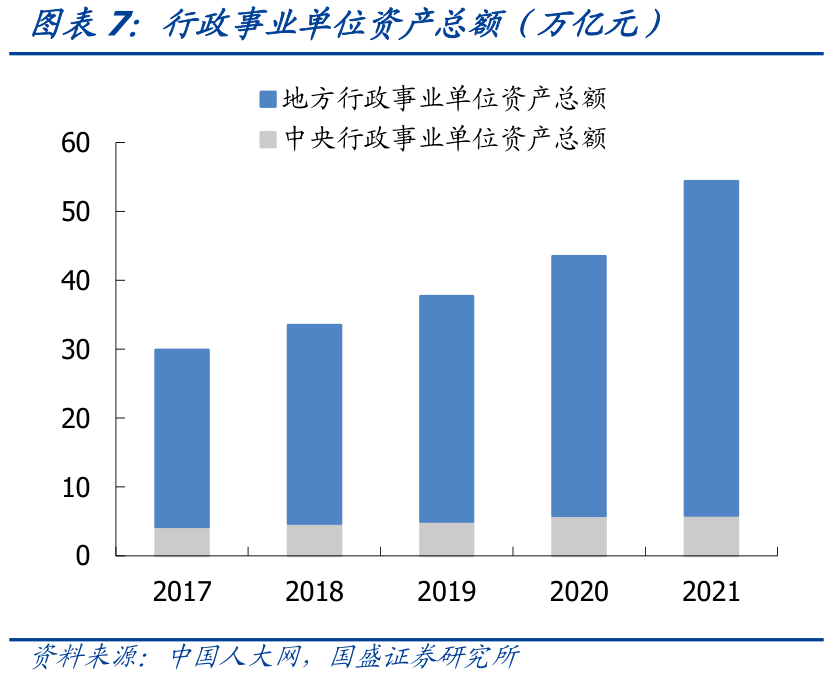
Core Viewpoint - The management of administrative and public assets in China is facing significant challenges, prompting government action to enhance asset management efficiency and effectiveness [1][2][3] Group 1: Current Issues in Asset Management - There are prevalent issues in asset allocation, management, and disposal, including violations of asset allocation standards and ineffective utilization of assets [1][6][9] - Audit reports from various provinces reveal that many units have over-allocated assets, with specific examples including the allocation of 2,248 office devices beyond standards in Tianjin [6][7] - Inefficient asset usage is highlighted, with significant amounts of assets remaining idle, such as 1.33 billion yuan worth of medical and office equipment in Hebei [8][9] Group 2: Government Response and Regulations - The government has recognized these issues and is implementing measures to improve asset management, including the issuance of a notification by the Ministry of Finance to strengthen the execution of existing regulations [2][17] - Recent regulations from various provinces aim to enhance the management and supervision of public assets, with Guangdong's new management methods emphasizing asset sharing and prioritizing existing assets over new acquisitions [14][17] - The introduction of a national asset sharing platform aims to facilitate cross-departmental and cross-regional asset allocation, maximizing asset efficiency [17][18] Group 3: Financial Data and Trends - As of the end of 2023, the total value of administrative and public assets in China reached 64.2 trillion yuan, marking a 7% year-on-year increase, while liabilities grew by 3% to 12.8 trillion yuan [3] - The net assets increased by 8% to 51.4 trillion yuan, indicating a growing asset base amidst ongoing management challenges [3]