运动服行业价格传导机制

Search documents
2025年中国运动服价值链分析:采购原材料是运动服产品生产的主要成本
Qian Zhan Wang· 2025-07-14 06:36
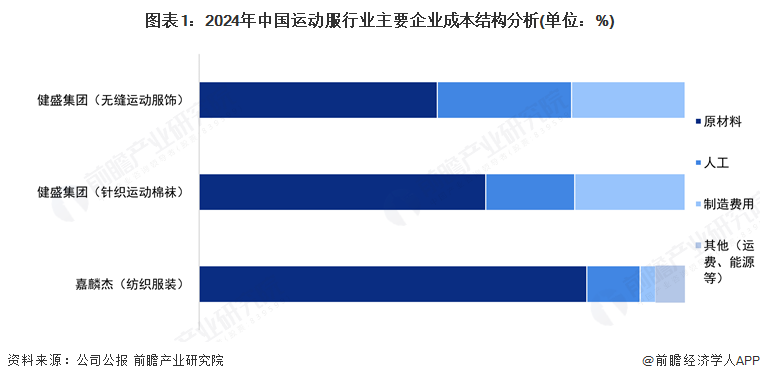
Core Insights - The article discusses the cost structure and pricing mechanisms in the Chinese sportswear industry, highlighting the trends in material costs, labor costs, and the overall value chain [1][2][6]. Cost Structure - In the production of sportswear, raw materials constitute the largest cost component, although their proportion has been declining in recent years. For instance, in 2024, the raw material cost for seamless sportswear from Jian Sheng Group is projected to be 49.01%, while for knitted cotton socks, it is 58.97%. Additionally, Jia Lin Jie reports a raw material cost proportion of 79.8% [1][2]. - Labor costs represent the second-largest expenditure, fluctuating between 10% and 30%, while manufacturing expenses range from 3% to 25% [1]. Pricing Mechanism - The pricing of sportswear in China is influenced by the supply side, manufacturing side, value-added premiums, and consumer demand elasticity. The cost prices on the supply side include material, equipment, technology, and labor costs, which are then transformed into production costs at the manufacturing level. These costs, along with supply-demand premiums, R&D costs, and corporate profits, determine the "manufacturing price" that is transmitted through distribution channels to the end market [6]. Value Chain - The value chain of the Chinese sportswear industry exhibits a "low-middle, high-both-ends" trend. The upstream consists of textile raw materials and equipment suppliers, while the midstream involves the production of various sportswear. The downstream primarily includes sales through online platforms and offline stores [8]. - The production process begins with designers creating concepts based on market demand and trends, followed by sourcing raw materials for production. While well-known brands often produce in-house, many opt to use authorized professional factories for manufacturing, which are then sold through specialized channels. High-end brands typically enjoy higher pricing and profit margins, whereas traditional textile manufacturers face tighter margins due to rising labor costs [10].