Qian Zhan Wang

Search documents
魏建军:长城汽车固态电池仍处于技术开发和验证阶段,具备商业价值上车至少需要五年【附固态电池行业技术发展情况】
Qian Zhan Wang· 2026-03-19 01:52
3月18日,长城汽车董事长魏建军发布视频,对近期市场热炒的长城固态电池欧洲认证及准入消息予以澄 清。他表示,这个消息并不准确。长城的固态电池处于技术开发及验证阶段,当前重点是进行材料及体系的 开发和验证,他预测固态电池具备商业价值上车至少也需要五年。同时,他也指出,固态电池是一项新技 术,希望大家理性看待它的发展。 魏建军用了一个形象的比喻解释技术难度:传统动力电池的锂离子传导如同"人在水里游泳",而固态电池要 让离子在固态物质中移动,必须找到特殊的固态电解质。这看似简单的介质转换,实则涉及材料科学、电化 学、制造工艺等多维度的系统性重构。 魏建军指出,目前行业内主要有硫化物、氧化物、聚合物三种技术路线。以主流的硫化物为例,它遇水会释 放剧毒的硫化氢,在空气中极不稳定,制备需要全程无水环境,生产成本极高,且安全问题还没有突破。除 此之外,固态电池还存在固固界面阻抗、寿命、高压运行等许多核心问题有待攻关。 不过,魏建军也强调,固态电池相比液态电池理论上具有更高的能量密度和安全性,是行业公认的下一代动 力电池技术。长城汽车在固态电池领域以硫化物路线为主,在材料、工艺设备方面坚持自研与合作并行。 2023年长城已经 ...


承认中国皮卡存在竞争力!福特CEO法利:我们把比亚迪皮卡拆开之后,还是不知道他们怎么赚钱【附皮卡行业市场分析】
Qian Zhan Wang· 2026-03-17 08:32
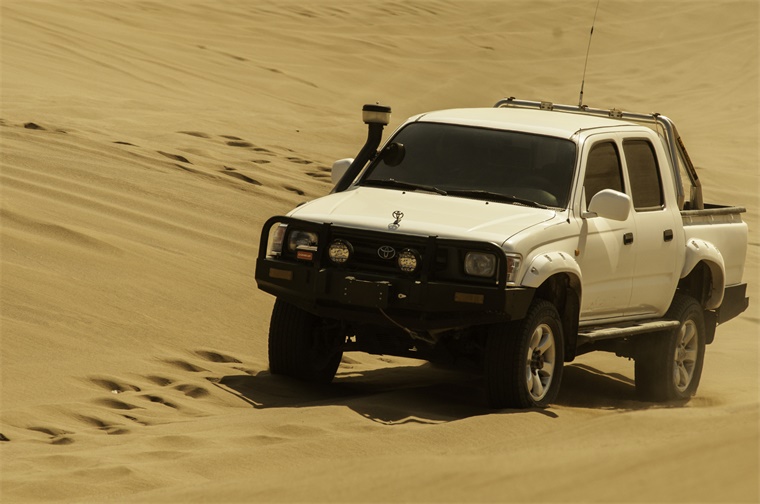
(图片来源:摄图网) 近日,福特CEO吉姆·法利在澳大利亚为期三天的出访行程中,亲自试驾了两款中国插电混动皮卡:比亚迪 Shark 6和长城炮Alpha(国内称"山海炮")。与此同时,他还对比测试了丰田兰德酷路泽LC70、福特Ranger、 丰田Hilux等经典硬派车型。 近年来,中国皮卡在技术、设计和市场定位上不断创新突破。以比亚迪Shark 6和长城山海炮为例,它们搭 载了先进的插电混动技术,既拥有皮卡车型的强大动力和载货能力,又具备电动车的节能环保和智能科技优 势。在外观设计上,它们摒弃了传统皮卡的粗犷风格,更加时尚大气,符合现代消费者的审美需求。 法利在试驾后坦率承认,中国皮卡具备可观的市场竞争力,但强调它们与传统燃油皮卡属于完全不同的类 型。在他看来,比亚迪Shark和长城山海炮精准适配了"有皮卡使用需求、追求电动化属性,但无高频重载、 重型拖拽使用场景"的消费群体。长城山海炮更是被法利视为进入该细分市场的一款强劲竞争产品。 不过,法利也强调福特和丰田等传统汽车巨头仍然拥有明显优势。因为这些公司在工作型皮卡领域拥有数十 年经验积累,在底盘技术、拖拽性能、载重适配等核心领域具备短期内难以被复刻的优势。 ...


比加油还快!比亚迪发布第二代刀片电池:从10%充至97%仅需9分钟,极寒充电少于12分钟【附比亚迪企业分析】
Qian Zhan Wang· 2026-03-06 08:05
Core Insights - BYD has launched its second-generation blade battery, significantly improving charging efficiency, with the ability to charge from 10% to 70% in just 5 minutes and to 97% in 9 minutes, setting a new record for charging speed [2][3] - The second-generation blade battery features a 5% increase in energy density compared to the first generation, utilizing lithium iron phosphate with manganese and silicon-carbon anodes, and has optimized voltage platform and internal resistance [5] Charging Performance - In a controlled environment in Shenzhen, all tested models achieved charging from 10% to 70% in 5 minutes and from 10% to 97% in 9 minutes, comparable to refueling a gasoline vehicle [3][4] - The battery can also charge from 20% to 97% in 12 minutes in extreme cold conditions, demonstrating its reliability in low temperatures [4] Market Position and Sales - BYD has become a leading player in the global electric vehicle market, achieving sales of 1.8635 million electric vehicles in 2022, securing the title of the world's largest electric vehicle seller [9] - In 2025, BYD is projected to surpass Tesla in annual sales of pure electric vehicles, marking a significant milestone in the competitive landscape [11] Research and Development - BYD has consistently prioritized R&D, with 13 out of 14 years from 2011 to 2024 seeing R&D investments exceed net profits, and a 53% year-on-year increase in R&D spending in the first half of 2025, reaching 30.9 billion yuan [7][8] - The company is building a comprehensive battery ecosystem, covering upstream materials to recycling, and is advancing the development of semi-solid and all-solid-state batteries [7]
【干货】固态电池产业链全景梳理及区域热力地图
Qian Zhan Wang· 2026-02-28 03:09
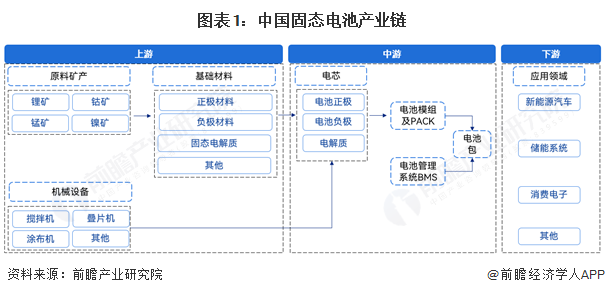
Core Insights - The solid-state battery industry in China is characterized by strong vertical integration among manufacturers, with a diverse range of companies involved in various stages of the supply chain, including raw materials, battery production, and automotive applications [3][6]. Industry Overview - The solid-state battery supply chain is similar to that of liquid lithium batteries, with upstream components including raw materials, machinery, and basic materials. The main differences lie in the types of anode materials and electrolytes used, while the cathode materials are largely consistent [6]. - The downstream applications for solid-state batteries encompass electric vehicles, energy storage systems, and consumer electronics [6]. Market Players - Key listed companies in the solid-state battery sector include BYD, SAIC Motor, NIO, CATL, Aulton Technology, and Guoxuan High-Tech [1]. - BYD leads the market with a revenue of 566.27 billion yuan and a gross margin of 17.87%, leveraging its vertical integration to advance solid-state battery technology [11]. - CATL, a major player in battery manufacturing, reported a revenue of 283.07 billion yuan with a gross margin of 25.31%, highlighting its leadership position in the industry [11]. Investment Landscape - BYD is investing over 20 billion yuan to establish a 100GWh solid-state battery production base in Chongqing, with the first phase of 20GWh expected to be operational by 2026 [12][15]. - SAIC Motor is collaborating with Qingtao Energy to develop a solid-state battery production line, aiming for mass production in the near future [12][15]. - CATL has launched a 5GWh solid-state battery pilot line in Hefei, with plans to scale up to 100GWh by 2027 [12][15]. Barriers to Entry - The solid-state battery industry faces significant entry barriers, including customer resource barriers, technical and process barriers, talent barriers, and administrative licensing barriers [8][10]. - Establishing customer relationships requires lengthy processes involving identification, testing, and certification, making it difficult for new entrants to gain traction [10]. - The complexity of production processes and the need for specialized technical expertise further complicate entry for new companies [10].





投资合肥 | 一文看懂合肥市新能源汽车发展现状与投资机会前瞻(附新能源汽车产业现状、空间布局、投资机会分析等)
Qian Zhan Wang· 2026-02-28 02:15
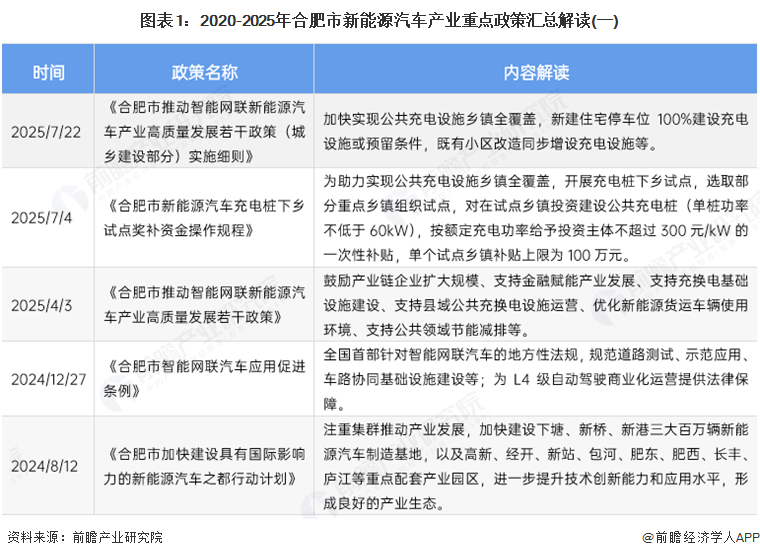
Group 1: Core Insights - Hefei has become a national highland for the development of the new energy vehicle (NEV) industry, with production and sales expected to rank among the top in the country by 2024, aiming for a trillion-level industrial cluster [1] - The local industrial policy provides a comprehensive support system covering R&D innovation, industrial chain cultivation, market promotion, infrastructure, and intelligent networking, continuously optimizing the development environment for the NEV industry [1] - The policy framework is designed to create a globally influential NEV hub through systematic top-level design and ongoing financial support [1] Group 2: Regional Policy Overview - As of November 2025, Hefei's regional policies for the NEV industry exhibit a dual-driven model of "industry support" and "consumer promotion," establishing a leading national NEV industrial cluster [2] - Future policies will focus on industrial chain collaboration, innovation capability enhancement, and application scenario expansion to elevate the industry to a mid-to-high-end position in the global value chain [2] Group 3: Industry Chain Structure - Hefei has established a complete industrial chain covering upstream components, midstream vehicle manufacturing, and downstream aftermarket services [5][6] - The city hosts over 300 core component suppliers, six major vehicle manufacturers, and more than 400 aftermarket service enterprises, with a charging infrastructure of 282,000 units, achieving a vehicle-to-charger ratio of approximately 1.58:1 [6][11] Group 4: Industry Scale and Growth - The NEV industry in Hefei is projected to reach a total output value of 260 billion yuan in 2024, with a production volume of 1.376 million vehicles, marking a year-on-year increase of 84.5% [10][11] - The northern regions dominate in vehicle and battery material manufacturing, while the southern areas are transitioning towards intelligent networking and high-end foreign investment [14] Group 5: Company Landscape - Hefei has gathered 703 enterprises in the NEV supply chain, covering the entire industry from vehicle manufacturing to components and aftermarket services [16] - By November 2025, the city is home to 26 national-level specialized "little giant" enterprises and over 100 companies with a capital of over 100 million yuan [18] Group 6: Financing Analysis - The NEV industry financing in Hefei has been active from 2022 to 2025, with a significant number of early-stage financing rounds indicating strong growth potential [24] - Large-scale financing, typically around 100 million yuan, has facilitated a sustainable development mechanism through a cycle of investment and returns [26] Group 7: Investment Opportunities - Hefei's NEV industry is positioned as a primary industry, with a focus on innovation and collaboration across the industrial chain [28] - The city has established major manufacturing bases and key supporting industrial parks to enhance technological innovation and application levels [28][32]
前瞻全球产业早报:中国手机厂商或将集体涨价
Qian Zhan Wang· 2026-02-27 10:43
Group 1 - The core viewpoint of the news highlights the significant growth in foreign trade import and export values in the Beijing-Tianjin-Hebei region, which increased by 25.7% over 12 years, reaching 4.7 trillion RMB by 2025 from 3.74 trillion RMB in 2014 [2] - Guangzhou is planning to establish a 10 square kilometer deep cooperation zone for the horse industry with Hong Kong, aiming to create a world-class horse industry hub and tapping into the high-end consumer market potential of the Guangdong-Hong Kong-Macau Greater Bay Area [2] - The German Chancellor visited Yushu Technology, emphasizing the potential for collaboration between German companies and the Chinese robotics industry, particularly in smart robotics and AI [3] Group 2 - Zhejiang Province aims to enhance support for technology finance, targeting a technology loan balance exceeding 4.2 trillion RMB by 2026, while promoting innovation and the establishment of various technology platforms [3][4] - The smartphone industry is expected to see a collective price increase due to rising costs of memory and storage chips, with procurement costs reportedly up over 80% compared to the previous year [4] - The launch of the first model from the high-end intelligent electric vehicle brand "Qijing" is anticipated in June 2026, with the first model already completing critical performance tests [5][6] Group 3 - Tencent's virtual currency "Yuanbao" has returned to the top 10 in the Apple App Store, with monthly active users reaching 114 million and daily active users exceeding 50 million [7] - Samsung Electronics plans to cease production of 2D NAND flash memory by March, transitioning its production line to focus on 1c nm DRAM memory manufacturing [7] - Google has re-integrated its robotics software subsidiary Intrinsic into its main operations, marking a strategic shift towards a more focused investment in physical AI [8][9]
唏嘘!魅族宣布关停手机业务,“我们尽全力拼搏,内存价格暴涨让新品商业化变成不可为”【附智能手机行业市场】
Qian Zhan Wang· 2026-02-27 10:37
Core Viewpoint - Meizu Technology announced a strategic shift on February 27, 2023, stating it will "suspend domestic smartphone new product self-research hardware projects" due to soaring memory prices, marking its exit from the mainstream smartphone market despite denying rumors of bankruptcy and business suspension [2][10]. Company Overview - Founded in 2003 by Huang Zhang in Zhuhai, Meizu started as an MP3 player manufacturer and launched its first self-developed smartphone, M8, in 2009, achieving sales of over 500 million yuan within five months [2][10]. - Meizu was once a leading player in the domestic smartphone market alongside Xiaomi, OPPO, and Vivo, known for its Flyme system's minimalist design and smooth user experience [2][10]. - The company's decline began in 2017 with the PRO 7 series, leading to a drop in sales below 10 million units in 2019, and by 2023, global sales were approximately 2.8 to 3 million units, with a market share of less than 0.3% [2][10]. Market Conditions - The domestic smartphone market has become increasingly competitive, with major players like Vivo, Apple, OPPO, and Xiaomi dominating, accounting for 80.8% of the market concentration (CR5) in Q2 2024 [3][11]. - The procurement cost of smartphone storage chips has risen over 80% compared to the previous year, exacerbating the challenges for Meizu, which already faced low sales and thin profit margins [3][11]. Profitability Landscape - The profitability among smartphone manufacturers is highly polarized, with Apple leading the market with a net profit of 840 billion yuan, capturing 83% of the global smartphone market's profits despite only having a 20% shipment share [7][16]. - In contrast, domestic brands like Xiaomi, OPPO, and Vivo adopt a low-margin, high-volume strategy, with Xiaomi projected to ship 43.8 million units in 2025, holding a market share of 15.4% [7][16]. - Meizu's projected sales for 2025 are only 800,000 to 980,000 units, highlighting its struggles in a fiercely competitive environment [7][16]. Future Outlook - According to Gartner, global smartphone shipments are expected to decline by 8.4% in 2026, reaching the lowest level in a decade, driven by rising DRAM and SSD prices due to increased investments in AI infrastructure [8][17].
全球首款“治疗男童发育不良新药”获批临床,长春高新股价应声上涨【附生物医药行业市场分析】
Qian Zhan Wang· 2026-02-27 09:16
Core Viewpoint - Changchun High-tech Industry (Group) Co., Ltd. announced that its subsidiary, Changchun Jinsai Pharmaceutical Co., Ltd., received approval from the National Medical Products Administration (NMPA) for the clinical trial application of GenSci141 ointment, the world's first specific treatment for children's micropenis, marking a historic breakthrough in a long-neglected area of standard drug treatment [2][3]. Company Summary - The approval of GenSci141 ointment represents a shift from empirical medication to precision treatment for children's micropenis, providing the first clinically validated standard treatment option [3]. - The stock price of Changchun High-tech reacted strongly to the news, closing at 97.26 yuan per share on February 25, and reaching a peak of 108 yuan on February 26, with a cumulative increase of over 12% in two days, pushing the total market value beyond 40 billion yuan [2]. - The company maintains a cautious stance regarding the project, indicating that it is still in the early stages and that the drug has only received approval for clinical trials, with no confirmed timeline for market launch [3][4]. Industry Summary - The biopharmaceutical industry is a core component of China's strategic emerging industries, essential for public health, technological innovation, and enhancing the country's self-sufficiency in medicine [4]. - The Chinese biopharmaceutical market is projected to grow from 345.7 billion yuan in 2020 to 524.2 billion yuan by 2024, with expectations to exceed 800 billion yuan by 2028, maintaining an annual growth rate of 10%-12% [4]. - The industry value chain consists of upstream raw materials, midstream research and production, and downstream distribution and consumption, with the midstream segment holding the highest profit margins due to its technological barriers [6][8].


德国总理率团参访宇树科技!奔驰宝马高管围观机器人,纷纷掏出手机记录【附人形机器人行业市场分析】
Qian Zhan Wang· 2026-02-27 09:11
Group 1 - The core message of the news highlights the rapid rise of China's humanoid robot industry, showcasing its potential to lead globally in this sector [3][10][12] - German Chancellor Merz's visit to Yushu Technology, accompanied by high-profile executives from major German companies, signifies Germany's strategic interest in collaborating with Chinese firms in the context of a new industrial transformation [2] - Yushu Technology holds a dominant position in the quadruped robot market with a 70% market share and offers humanoid robots at a cost significantly lower than competitors like Boston Dynamics, indicating a competitive edge in technology and cost efficiency [2][5] Group 2 - Over 220 humanoid robot manufacturing companies exist globally, with more than 110 based in China, representing over 50% of the total, while the U.S. and Japan account for 20% and 10% respectively [3] - China possesses a complete humanoid robot industry chain, which includes components like harmonic reducers and servo motors, enabling a cost advantage of 50-80% compared to Western counterparts and a faster iteration speed of 3-5 times [5] - The humanoid robot market in China is projected to grow at a compound annual growth rate (CAGR) of approximately 93.6% from 2024 to 2029, potentially reaching a market size of 75 billion yuan by 2029, thus becoming the largest market globally [10]


【行业深度】洞察2025:中国涂料行业竞争格局及市场份额(附市场集中度、市场份额等)
Qian Zhan Wang· 2026-02-27 06:09
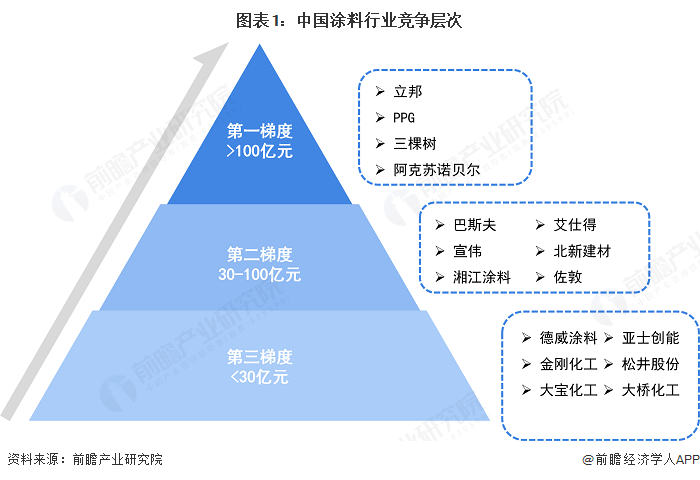
Core Insights - The Chinese paint industry is characterized by a fragmented competitive landscape with varying levels of market concentration and significant competition among established players [12][15]. Group 1: Competitive Landscape - The top tier of the Chinese paint industry includes companies with sales exceeding 10 billion yuan, such as Nippon Paint, PPG, and Skshu Paint, while the second tier includes companies with sales between 3 billion and 10 billion yuan, such as BASF and North New Building Materials [1]. - The sales rankings for 2024 show Nippon Paint leading with 25.1 billion yuan, followed by PPG and Skshu Paint with 10.8 billion yuan and 10.32 billion yuan respectively [8]. - The market share for the leading companies in 2024 indicates that Nippon Paint holds 6.14%, PPG 2.74%, and Skshu Paint 2.52% of the total market [10]. Group 2: Regional Distribution - The majority of paint industry enterprises are concentrated in Guangdong Province, with 5,931 companies, along with significant numbers in Shandong, Zhejiang, Jiangsu, and Shanghai [3][4]. - Representative companies are primarily located in the eastern regions of China, including Shanghai, Zhejiang, and Anhui, as well as provinces like Fujian and Guangdong [4]. Group 3: Market Concentration - The market concentration metrics for the Chinese paint industry in 2024 show a CR3 of 11.4%, CR7 of 18.8%, and CR10 of 21.7%, indicating a low overall market concentration [12]. Group 4: Company Profiles - Nippon Paint's business encompasses a wide range of products including decorative paints, industrial coatings, and protective coatings [14]. - PPG offers a diverse product line including automotive coatings, industrial coatings, and architectural coatings [14]. - Skshu Paint focuses on providing integrated solutions in the construction sector, including interior and exterior wall paints and waterproof materials [14]. - AkzoNobel specializes in high-performance coatings, including automotive and aerospace coatings [14].