进口清关

Search documents
日本回流瓷器杂项清关指南
Sou Hu Cai Jing· 2026-02-09 07:18
Core Viewpoint - The article provides a comprehensive overview of the import customs clearance process at Shanghai Port, detailing the necessary steps and typical timelines for various types of goods. Group 1: Import Customs Clearance Process - The import customs clearance process includes declaration, inspection, taxation, and release of goods [3][4][5][6] - Declaration involves submitting relevant information and documents to customs, including the declaration form, import contract, invoice, and packing list [3] - Customs has the authority to inspect imported goods to verify the authenticity of the declaration and the quality and quantity of the goods [4] Group 2: Taxation and Release - Customs will levy taxes on imported goods according to relevant tax laws and regulations [5] - After inspection and taxation, goods that meet the requirements will be released for transfer to the domestic market for sale or use [6] Group 3: Commonly Imported Products - Commonly imported products through Shanghai Port include machinery parts, electronic components, household appliances, and various consumer goods [7][8] - Specific categories of goods include 3C products, ceramics, crafts, furniture, miscellaneous goods, and food items [8][9] Group 4: Clearance Timelines - General goods and miscellaneous items typically take 1-2 working days for clearance [8] - First-time imports of food and cosmetics may take 5-10 working days, while subsequent imports can be cleared within a week [8] - Used equipment generally takes 1-3 working days, and frozen seafood and meat may take around one week [8] Group 5: Special Clearance Procedures - The clearance process for antique porcelain includes steps such as document exchange, inspection, declaration, tax payment, release, and delivery [11][12][13][14][15] - Proper documentation is crucial, including the import contract, commercial invoice, packing list, and bill of lading, with additional requirements for porcelain items [16]


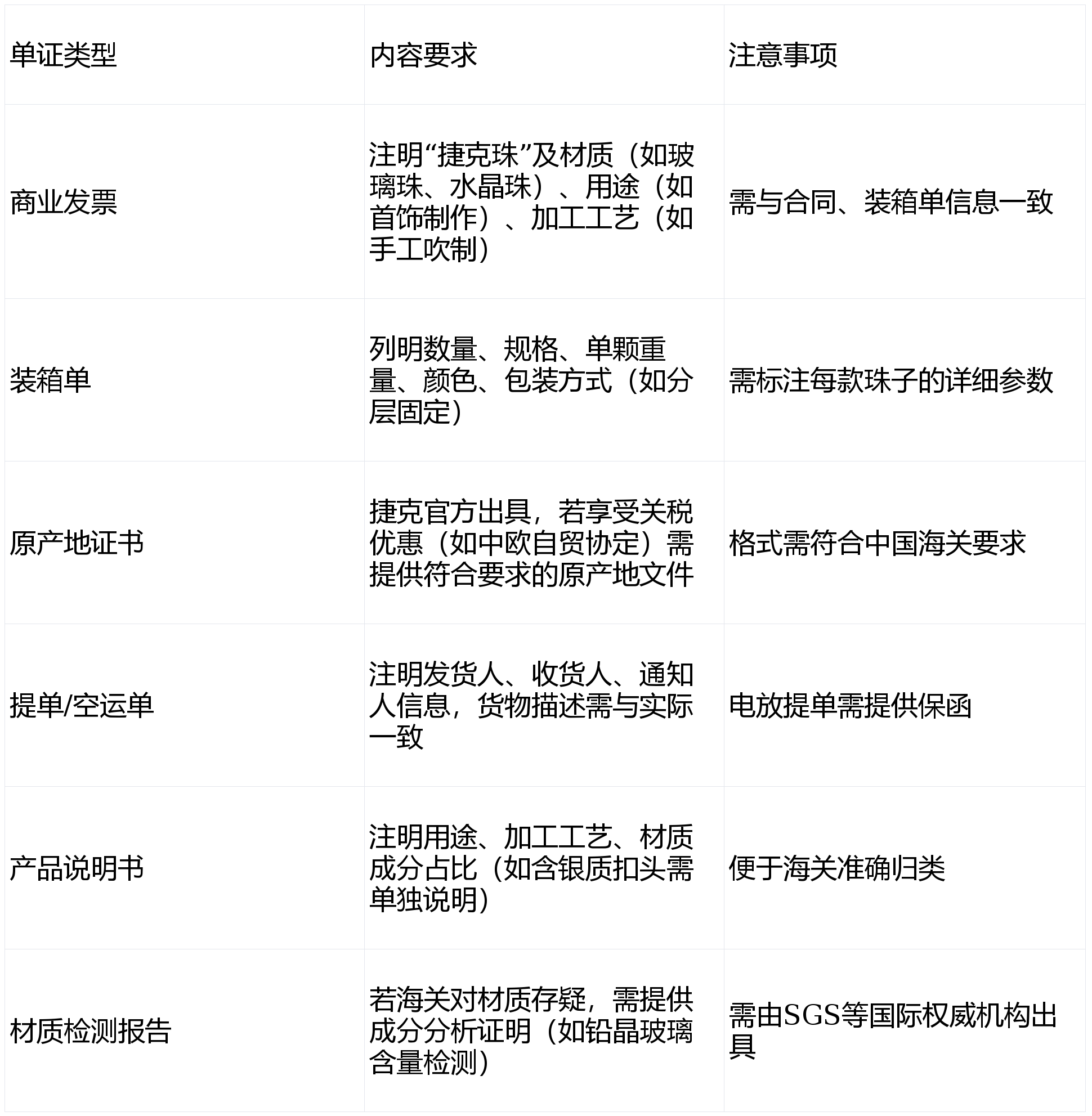
捷克珠进口清关全流程解析:从单证准备到税费缴纳的合规指南
Sou Hu Cai Jing· 2026-01-12 04:15
Core Qualifications - Import and export operation rights require possession of the "Foreign Trade Operator Registration Form" and the Customs Registration Certificate for Consignors and Consignees [1] - If a customs broker is appointed, an electronic customs declaration authorization must be signed through the "International Trade Single Window," with a preference for AEO-certified enterprises, especially those with experience in jewelry category operations [1] Customs Code and Tax Rate Analysis - Common HS codes and their corresponding tax rates are outlined [3] Customs Clearance Process and Operational Key Points - Key steps include document exchange and declaration, customs review and inspection, tax payment, and release [4] - The customs inspection probability is approximately 20%, with checks on the consistency of goods and documents, as well as the appearance and specifications of the jewelry [5] Transportation and Risk Prevention - Sea freight is suitable for large quantities of goods, with a transit time of about 30-40 days from nearby ports like Hamburg to Chinese ports [4][5] - Air freight is more appropriate for small, high-value shipments, with a faster transit time of about 3-5 days but at a higher cost [4][5] - Insurance for transportation is recommended to cover risks of theft and damage, with rates around 0.3%-0.5% [4][5] Compliance and Risk Control - Regular checks on Czech customs policy updates are necessary, such as changes in the "2026 Import and Export Tariff Explanations" [5] - All documents must be retained for at least three years for potential customs audits [5]
天津港旧日本瓷器进口清关公司
Sou Hu Cai Jing· 2025-12-15 06:11
Core Viewpoint - The article outlines the detailed process of import customs clearance in Shanghai, emphasizing its importance as one of China's largest import ports. Group 1: Customs Clearance Process - The first step involves declaring customs, where importers must submit relevant information about the goods, including name, weight, and value, along with necessary documents like contracts and invoices [4]. - After successful declaration, importers are required to pay customs duties based on the classification and statutory tax rates of the imported goods [5]. - Customs will conduct inspections to verify the quantity, specifications, and quality of the goods after receiving proof of duty payment [6]. - Following inspection, importers must calculate and pay value-added tax (VAT) and consumption tax based on the actual situation of the imported goods [6]. - Certain goods require additional inspection and quarantine procedures after passing customs inspection [7]. Group 2: Required Documentation - Essential documents for import customs clearance include packing lists, invoices, contracts, shipping documents, and a customs declaration form [10]. - Importers must ensure that all documents accurately reflect the actual goods being imported, including consistency in product names and weights across all documents [11].

上海化妆品进口清关代理公司
Sou Hu Cai Jing· 2025-08-09 08:40
Group 1 - The core viewpoint of the article emphasizes the increasing demand for imported cosmetics in Shanghai and the essential role of professional import clearance agencies in facilitating smooth customs processes and saving time and costs for businesses and individuals [1][2]. Group 2 - The primary responsibilities of Shanghai's cosmetic import clearance agencies include assisting businesses in preparing necessary documentation, communicating with customs and relevant departments, ensuring compliance with domestic regulations, coordinating inspection and quarantine processes, and completing customs clearance procedures [2][3]. Group 3 - Advantages of these agencies include: - Professional process management and accumulated experience, allowing them to navigate complex regulations and avoid potential risks [4]. - Efficient customs clearance speed due to established relationships with customs and inspection agencies, enabling quick responses to inspection requirements [5]. - Time and effort savings for businesses, as agencies handle extensive documentation and coordination, allowing companies to focus on market promotion [6]. - Reduction of legal and policy risks by staying updated on regulatory changes and ensuring compliance [7]. - Cost control and optimization, as efficient operations can lower overall costs despite the service fees [8]. Group 4 - The specific process of cosmetic import clearance includes: - Demand confirmation and documentation preparation, where agencies verify compliance with regulations and prepare necessary documents [10]. - Declaration and submission of documents to customs and inspection agencies, emphasizing the importance of completeness and accuracy [11]. - Inspection and quarantine, ensuring products meet domestic standards [12]. - Payment of tariffs and other fees, with agencies assisting in the process [13]. - Customs release, where agencies notify businesses for pickup or delivery [17]. - Post-clearance management, including record-keeping and label management to ensure ongoing compliance [18]. Group 5 - The industry position and future development of these agencies indicate that while many exist, high-quality companies with professional teams and experience become trusted partners for businesses. They continuously improve service systems and adopt digital management platforms to enhance efficiency [19]. - Future trends suggest that these agencies will need to adapt to evolving regulations and incorporate advanced technologies, with a growing emphasis on green and environmentally friendly solutions in the import process [19]. Group 6 - When selecting a suitable import clearance agency, businesses should consider factors such as professional qualifications, industry experience, service scope, response speed, price transparency, and customer reviews to ensure a smooth import process [19].
台湾啤酒进口清关进口食品进口清关服务中文标签审核贴标整改报关
Sou Hu Cai Jing· 2025-06-06 05:12
Group 1 - The core viewpoint is that importing Taiwanese beer requires companies to have the necessary qualifications and prepare relevant documentation while following the prescribed procedures [1][11] Group 2 - Company qualifications include having legal import and export rights, completing customs registration, and registering as an importer of food products [1][3] - Specific documentation required for import includes a trade contract, invoice, packing list, bill of lading, certificate of origin, health certificate, ingredient analysis report, and label-related materials [3][4][5][6][7][8][9][10] Group 3 - The customs clearance process involves several steps: preparation of domestic import qualifications, shipment of goods, exchange of documents upon arrival, customs inspection and declaration, payment of taxes, and final release of goods after inspection [11][12][13][14][15]