量子化

Search documents
我学者提出新型量子磁传感器方案
Huan Qiu Wang Zi Xun· 2026-01-22 01:08
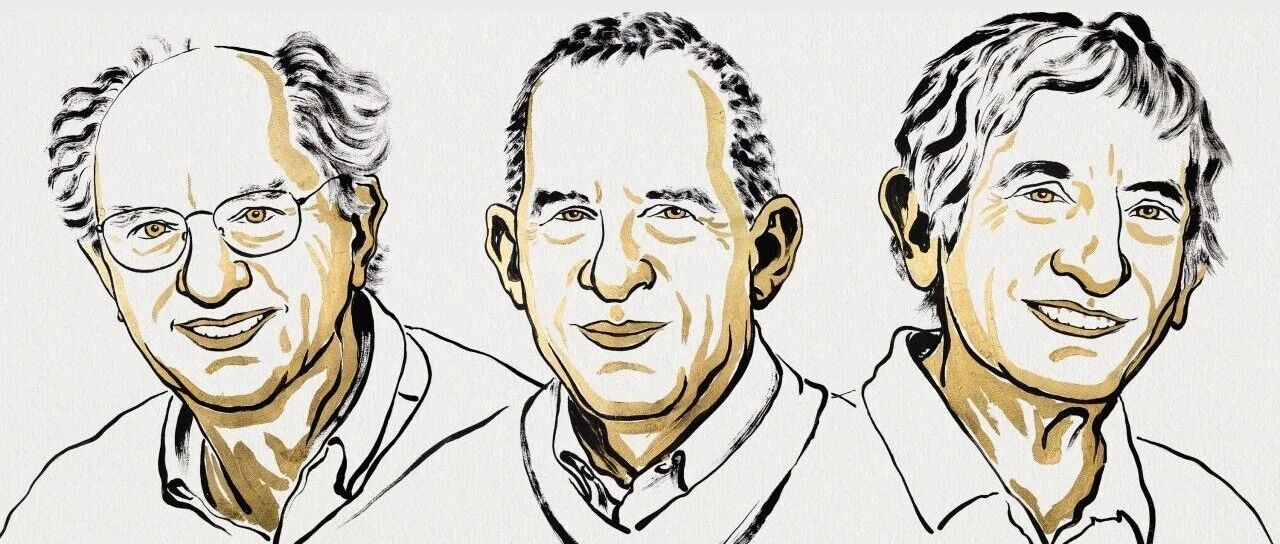
Core Viewpoint - A research team led by Shanxi University has made significant breakthroughs in the quantum field, discovering a new mechanism for the quantization of the ratio of electric displacement vector to magnetic field in a large-angle twisted bilayer graphene system, and successfully observing a quantized "Chinese knot" pattern at the Landau level crossing point, which has led to the proposal of a new principle magnetic sensor suitable for low-temperature strong magnetic field environments [1][4]. Group 1 - The quantization phenomenon in low-dimensional systems presents a "jump-like" discrete feature of electron motion, which is fundamental to modern quantum metrology and supports cutting-edge technologies like quantum computing [3]. - The research team aims to explore new quantum physical systems to deepen the understanding of fundamental physics and innovate precision measurement technologies [3]. - The experimental process involved precise stacking of two layers of graphene at a 20°-30° angle using mechanical exfoliation and dry transfer techniques, followed by encapsulation with high-quality hexagonal boron nitride to construct micro-nano devices [3][4]. Group 2 - The unique interlayer weak coupling effect triggered in a strong magnetic field environment led to the formation of the quantized "Chinese knot" pattern, which is uniform in size and resembles a traditional "Chinese knot" [4]. - The formation of this pattern is based on a theoretical calculation revealing that the quantized "Chinese knot" arises from an electric field-driven interlayer charge transfer phase transition, influenced by the competition between interlayer polarization and Coulomb interaction [4]. - A new low-temperature magnetic sensing scheme has been proposed, utilizing the strict linear relationship between the distance between characteristic peaks in the "Chinese knot" pattern and magnetic field strength, allowing for precise magnetic field measurements [4][5]. Group 3 - Compared to existing technologies, the new scheme addresses critical pain points in low-temperature strong magnetic field detection, where traditional nuclear magnetic resonance methods require high uniformity of the magnetic field, making precise detection challenging in complex environments [5]. - The new approach leverages the quantum characteristics of micro-nano devices, transforming vague "blurry outline" measurements into precise "high-definition map" measurements at the microscopic level, significantly enhancing detection accuracy in complex magnetic field environments [5]. - The research team plans to advance the technology towards on-chip array integration to achieve high-density and high-resolution calibration of complex magnetic fields, supporting research and applications in quantum technology and precision instruments [5].

2025诺贝尔物理学奖花落宏观量子隧穿:他们在实验中「造出」了薛定谔的猫
机器之心· 2025-10-07 10:53
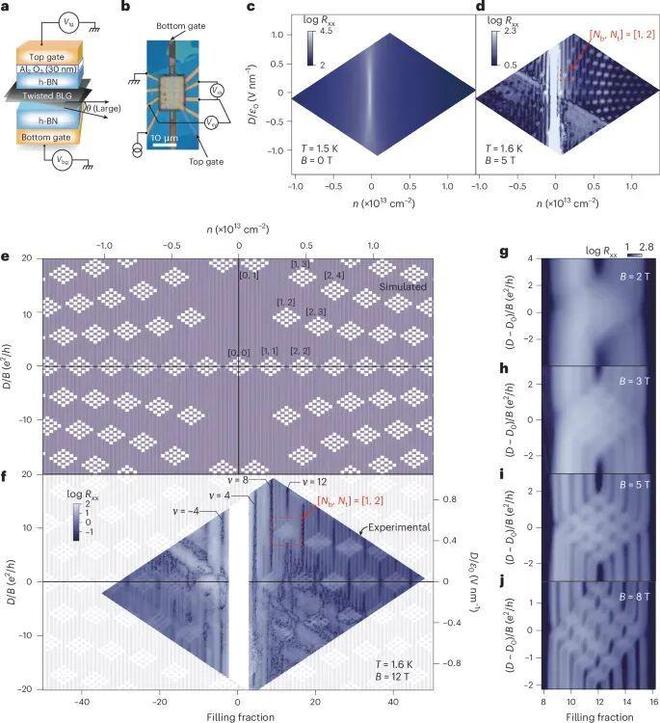
Core Viewpoint - The 2023 Nobel Prize in Physics was awarded to John Clarke, Michel H. Devoret, and John M. Martinis for their groundbreaking work demonstrating macroscopic quantum tunneling and energy quantization in superconducting circuits, paving the way for next-generation quantum technologies [2][5][11]. Group 1: Experimental Achievements - The laureates conducted a series of experiments in the 1980s that showcased how quantum tunneling effects can be observed at a macroscopic scale, specifically in superconducting circuits [11][12]. - They created a circuit with two superconductors separated by an insulating layer, demonstrating that charged particles in superconductors behave collectively as if they were a single particle [11][12]. - Their experiments confirmed that the superconducting system could escape a zero-voltage state through tunneling, producing measurable voltage and demonstrating quantized energy levels [12][28]. Group 2: Theoretical Implications - The experiments provide significant insights into quantum mechanics, illustrating how macroscopic phenomena can arise from the collective behavior of many microscopic particles [31][33]. - The work draws parallels to Schrödinger's cat thought experiment, suggesting that macroscopic quantum states can exist and be measured, challenging traditional views of quantum mechanics [31][33]. - The findings have implications for the development of quantum technologies, including quantum computing, by utilizing the principles of energy quantization demonstrated in their research [35][37]. Group 3: Future Applications - The research opens new avenues for experimental exploration of quantum phenomena, potentially leading to the creation of artificial atoms that can be used in quantum technology applications [35]. - John Martinis's subsequent work on quantum computers leverages the principles established by the Nobel laureates, indicating a direct application of their findings in advancing quantum computing technology [35].