
长沙模式

Search documents
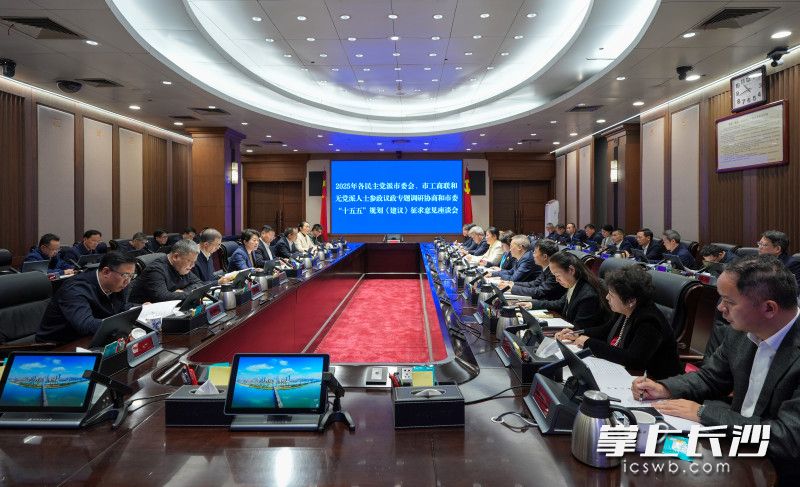
吴桂英主持召开各民主党派市委会、市工商联和无党派人士座谈会
Chang Sha Wan Bao· 2025-12-04 03:30
Core Viewpoint - The meeting emphasized the importance of integrating the spirit of the 20th Central Committee's Fourth Plenary Session and the 12th Provincial Committee's Ninth Plenary Session into the preparation of the "15th Five-Year" plan, aiming for high-quality development and modernization in Changsha [3][4]. Group 1 - The meeting on December 3 focused on soliciting opinions for the "15th Five-Year" plan and included representatives from various democratic parties, the Federation of Industry and Commerce, and non-party individuals [3]. - The meeting reported on the adoption of research results from the 2024 annual consultation by democratic parties and the Federation of Industry and Commerce, highlighting the importance of these findings for the 2025 planning [3]. - Wu Guiying called for unity in thought and action to align with the decisions of the Central Committee and the requirements of the Provincial Government, emphasizing the need for high-level planning to guide Changsha's development [3][4]. Group 2 - Chen Bozhang highlighted the "Changsha Model" of collaboration among party committees, united front coordination, party research, government adoption, departmental application, and feedback as a valuable experience for promoting development [4]. - The city government aims to support the planning process with a more open attitude, practical style, and effective mechanisms, ensuring that the research and suggestions from the meeting are utilized [4].

遗传性罕见病综合防控有了新模式
Ke Ji Ri Bao· 2025-10-24 01:12
Core Insights - The article discusses the establishment of a comprehensive prevention and control model for hereditary rare diseases in Changsha, China, led by the reproductive and genetic team at the CITIC Xiyuan Reproductive and Genetic Specialist Hospital, which has been published in the international journal "Human Genetics and Genomics Advances" [1][2]. Group 1: Project Overview - The project, initiated in 2021, was commissioned by the Changsha Municipal Health Commission and involved collaboration with various local health institutions to implement a comprehensive health project for hereditary rare diseases [2]. - From January 2022 to June 2023, the project team conducted online family lineage surveys for 85,391 couples planning for pregnancy or in early pregnancy, and genetic testing for 1,414 high-risk couples [2]. - The results indicated that 562 couples were at high risk of having children with rare diseases, with a positive rate of 39.75% [2]. Group 2: Impact and Findings - The project successfully provided reproductive interventions for 319 families in Changsha, preventing the birth of 141 children with rare diseases [2]. - Genetic testing led to 25.09% of participating couples optimizing their reproductive decisions, and 32.74% of families altered their reproductive plans, significantly reducing the birth rate of children with rare diseases [2]. - The team discovered that "simultaneous testing of three family members" was a key factor in improving diagnostic rates, while individual testing could lead to missed diagnoses, providing critical insights for future testing strategies [2]. Group 3: Changsha Model - The project introduced the "Changsha Model" for the prevention and control of hereditary rare diseases, characterized by a government-led approach involving public participation, family lineage surveys, genetic testing, and reproductive interventions [3]. - This model aims for comprehensive coverage of reproductive populations starting from pre-marital and prenatal screenings, effectively identifying high-risk families and providing reproductive guidance to prevent intergenerational transmission of hereditary rare diseases [3]. - The findings indicate that this model is well-suited to China's context and addresses the gaps in diagnosis and management of hereditary rare diseases in resource-limited areas, contributing a "Chinese solution" to global rare disease prevention [3].