闰正月

Search documents
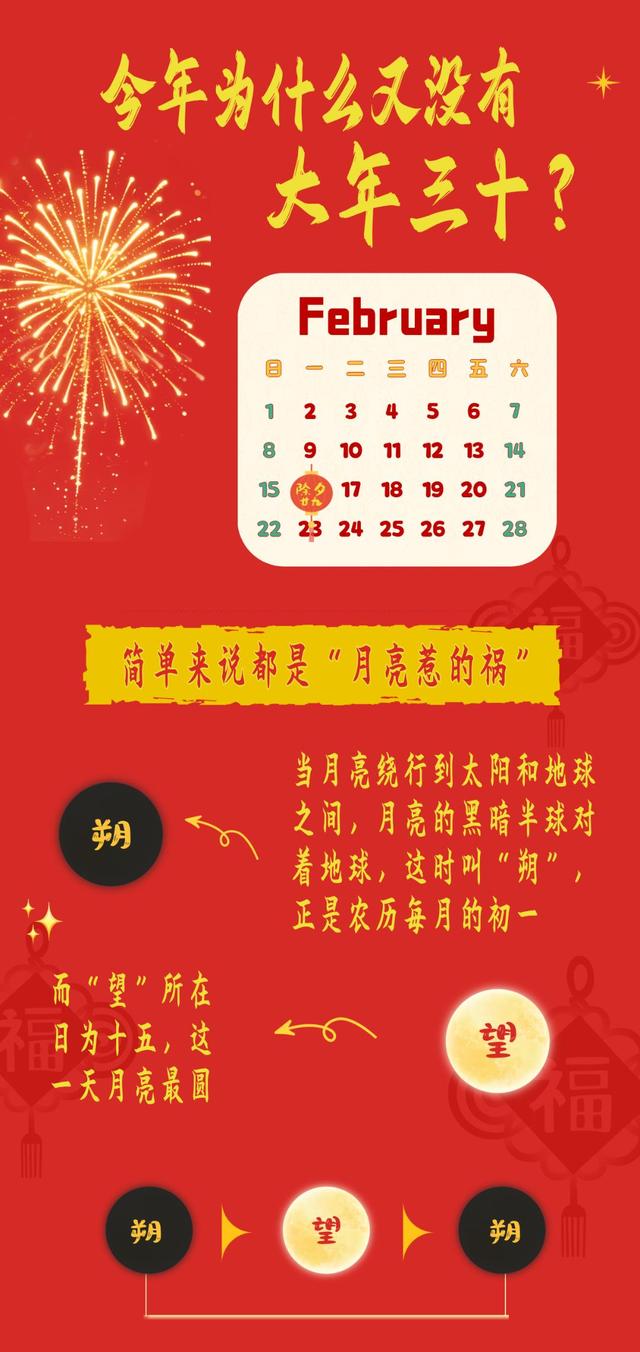
为什么近几年没有大年三十?
Xin Lang Cai Jing· 2026-02-15 23:23
Group 1 - The absence of "New Year's Eve" (大年三十) this year is due to the lunar calendar's structure, where the last month (腊月) is a small month with only 29 days [4][11] - This phenomenon of not having a "New Year's Eve" occurs approximately every 3-5 years, with recent examples in 2016 and 2022 [4] - The lunar calendar's average month length is 29.53 days, leading to variations between large months (30 days) and small months (29 days) [3] Group 2 - The delay of the Spring Festival this year is attributed to the upcoming leap June in 2025, resulting in a total of 384 days in the lunar year, pushing the Spring Festival back by 18 days [5] - The coordination between the lunar and solar calendars is essential to prevent significant seasonal shifts in the timing of the Spring Festival [5] - A rare occurrence of a "leap January" (闰正月) is expected in 2262, which will feature two "New Year's Days," but this will not result in additional holidays [8] Group 3 - From 2025 to 2029, the lunar calendar will consistently have small months, leading to the continued absence of "New Year's Eve" for five consecutive years [10][11] - The next occurrence of "New Year's Eve" will be in 2030, although "New Year's Eve" as a term will still apply to the last day of the lunar year, regardless of whether it falls on the 29th or 30th [12]