朔望月

Search documents
为什么近几年没有大年三十?
Xin Lang Cai Jing· 2026-02-15 23:23
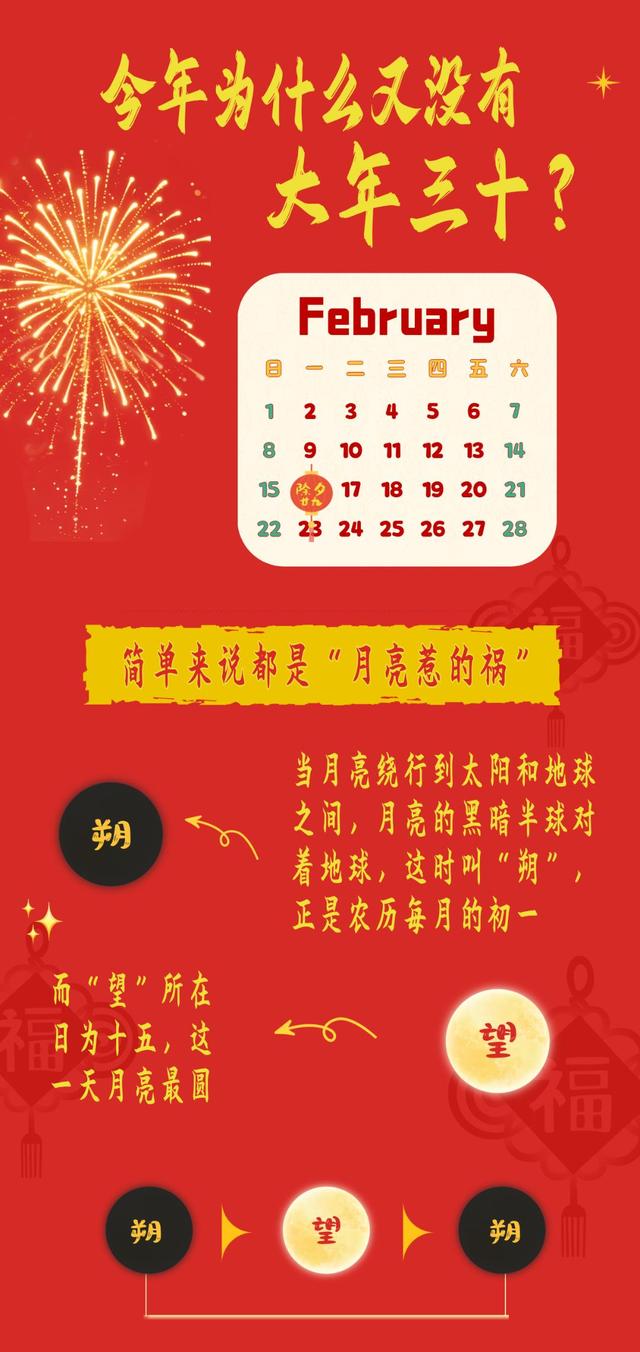
着地球,这时叫"朔", 正是农历每月的初一 t 而"望"所在 日为十五,这 一天月亮最圆 主要 在 视 一期一望再一期 就是农历完整的一个月 ((((0)))) 朔望月的平均周期是29.53天 因此农历月份有大月(30天) 和小月(29天)之分 今年腊月是小月 所以没有大年三十 12 这种现象常见吗? 没有大年三十的情况 并不罕见 平均每3-5年就会出现一次 例如2016年、2022年 只是连续几年腊月 都是小月的情况相对少见 但完全符合农历历法规律 属于正常天文现象 BE 今年过年为啥这么晚? 家人们注意啦! 今年除夕又双叒叕没有大年三十啦 腊月廿九直接接棒当 "年最后一天" 为啥大年三十总爱 "凭空消失"? 今天,就跟随我们解锁这个天文小知识 看完秒懂历法里的趣味小秘密 在历法规则下 确实会出现极其罕见的"闰正月" 比如2262年就会出现"润正月" 那一年会有两个"正月初一" 被很多人戏称为"一年两个春节 但是,不会因此放两次假 也不会多收一份压罗钱噢 8 大年三十还要缺席多久? 从2025年开始 直到2029年的腊月 都恰好是小月 所以接下来连续5年的 "大年三十"都"消失"了 一次大年三十 将会在20 ...

丙午马年没有“年三十”?别慌,这真不是日历印错了!
Xin Lang Cai Jing· 2026-02-15 15:55
封面新闻记者 张峥 2026年是农历丙午马年,很多人已经注意到:这一年没有"年三十",除夕落在了腊月二十九。更令人意 外的是,从2025年到2029年,连续五年都没有"年三十"! 2026年,是农历丙午马年——也就是大家常说的"马年"。翻开2026年的日历你会发现,2026年2月16日 (星期一)是除夕,对应农历腊月二十九;第二天2月17日就是正月初一。腊月三十这一天,在日历上 根本不存在。 那么问题来了:为什么2026年马年也没有"年三十"? 没"年三十",年味不减 民俗专家强调,"除夕"指的是农历一年的最后一天晚上,无论这天是腊月二十九还是三十。2026年2月 16日(腊月二十九)作为除夕,依然是全家吃年夜饭、守岁、看春晚、迎新年的时刻。正如老话所 说:"三十晚上熬一宿,二十九照样守岁迎新春!" "朔望月":月亮决定月份长短 部分文字田AI输助生成 @ 人民日报 6 @人民日报 上海天文馆网络科普部部长、上海市天文学会副秘书长施韡介绍,我国现行农历是阴阳合历,其中月份 安排严格依据月相变化周期,即"朔望月"。 "朔"指新月(月亮位于太阳与地球之间,不可见),定为农历每月初一;从一个"朔"到下一个"朔"的平 ...
今年为何没有“大年三十”?
证券时报· 2026-02-14 07:32
再过几天就是春节了,在置办年货、打扫屋子的忙碌间隙,很多人发现, 今年的除夕 不是年三十,而是腊月二十九。 为何今年没有"大年三十"呢? "年三十"时有时无 与农历编算规则有关 在农历中,每个月的初始日,即农历初一被称为朔日。从一个朔到下一个朔之间的间隔就是 农历的一个月,被称为朔望月。 朔望月的长度并不是固定的,它的平均周期大约为29.53天。 因此农历月分为大月和小月, 大月是30天,小月是29天。 如果腊月正巧碰上农历小月,就是29天,也就没有我们说习惯 了的"年三十"。 大小月,并不是一大一小有规律地交替排列。 从2025年初的腊月开始,一直到2029年初,连续五年的腊月都是小月,都没有"年三十", 要到2030年的腊月才有"大年三十"。 实际上, 假期并没少,还多了一天! 2026年的春节假期 , 2月15日(农历腊月二十八、周 日)至23日(农历正月初七、周一)放假调休, 共9天 。2月14日(周六)、2月28日(周 六)上班。 虽然没有"年三十",但 过年的味道还是一样的。不管是腊月二十九还是腊月三十,虽然大年 三十有时会"消失",但我们的传统节日除夕一直都在! 来源: 央视新闻 责编:叶舒筠 ...
今年为何没有“大年三十”?
Huan Qiu Wang· 2026-02-14 05:03
再过几天就是春节了,在置办年货、打扫屋子的忙碌间隙,很多人发现,今年的除夕不是年三十,而是腊月二十九。为何今年没有"大年三十"呢? "年三十"时有时无 与农历编算规则有关 在农历中,每个月的初始日,即农历初一被称为朔日。从一个朔到下一个朔之间的间隔就是农历的一个月,被称为朔望月。 朔望月的长度并不是固定的,它的平均周期大约为29.53天。因此农历月分为大月和小月,大月是30天,小月是29天。如果腊月正巧碰上农历小月,就是 29天,也就没有我们说习惯了的"年三十"。 2026年没有"年三十" 但春节多了1天假 没有"年三十",春节假期是否会有影响? 实际上,假期并没少,还多了一天!2026年的春节假期,2月15日(农历腊月二十八、周日)至23日(农历正月初七、周一)放假调休,共9天。2月14日 (周六)、2月28日(周六)上班。 虽然没有"年三十",但过年的味道还是一样的。不管是腊月二十九还是腊月三十,虽然大年三十有时会"消失",但我们的传统节日除夕一直都在! 大小月,并不是一大一小有规律地交替排列。 从2025年初的腊月开始,一直到2029年初,连续五年的腊月都是小月,都没有"年三十",要到2030年的腊月才 ...

今年为何没有“年三十”?
Xin Lang Cai Jing· 2026-02-13 13:10
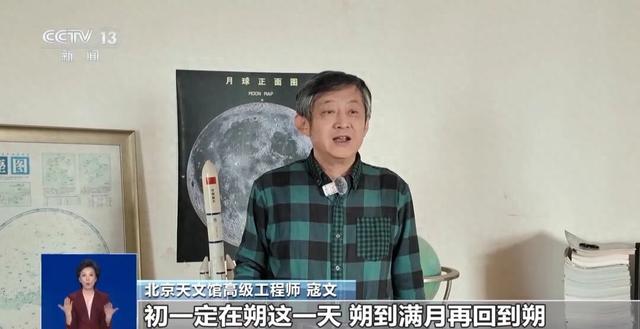
来源:央视网 再过几天就是春节了,在置办年货、打扫屋子的忙碌间隙,不知道你有没有发现一个细节,今年的除夕 不是年三十,而是腊月二十九。为何今年没有"大年三十"呢?专家介绍,这主要是和我国传统历法农历 的编算规则有关。 年三十时有时无 与农历编算规则有关 在农历中,每个月的初始日,即农历初一被称为朔日。从一个朔到下一个朔之间的间隔就是农历的一个 月,被称为朔望月。朔望月的长度并不是固定的,它的平均周期大约为29.53天。因此农历月分为大月 和小月,前者30天,后者29天。如果腊月正巧碰上农历小月,大年三十就会"缺席"。 北京天文馆高级工程师 寇文:初一定在朔这一天,朔到满月再回到朔,平均是29天半左右。既然想让 朔一定要落在初一,这一个月大月就是30天,小月就是29天,因为它不能有半天,所以就有大月,有小 月。 2025年到2029年 除夕都在腊月二十九 大小月,并不是一大一小有规律地交替排列。如果腊月赶上是个小月,那就是29天,也就没有我们说习 惯了的"年三十"。从2025年初的腊月开始,一直到2029年初,连续五年的腊月都是小月,都没有"年三 十",要到2030年的腊月才有"大年三十"。 北京天文馆高级工程 ...
今年为何没有“年三十”?答案是与农历编算规则有关
Yang Shi Wang· 2026-02-12 19:32
央视网消息:再过几天就是春节了,在置办年货、打扫屋子的忙碌间隙,不知道你有没有发现一个细节,今年的除夕不是年三十,而是腊月二 十九。为何今年没有"大年三十"呢?专家介绍,这主要是和我国传统历法农历的编算规则有关。 北京天文馆高级工程师 寇文:初一定在朔这一天,朔到满月再回到朔,平均是29天半左右。既然想让朔一定要落在初一,这一个月大月就是 30天,小月就是29天,因为它不能有半天,所以就有大月,有小月。 大小月,并不是一大一小有规律地交替排列。如果腊月赶上是个小月,那就是29天,也就没有我们说习惯了的"年三十"。从2025年初的腊月开 始,一直到2029年初,连续五年的腊月都是小月,都没有"年三十",要到2030年的腊月才有"大年三十"。 寇文:没有"大年三十"其实是正常的。按照月相的变化,差不多是一半的概率,只是连续出现就显得比较特殊。往后查年历,从2058年到2063 年,连续六年都是没有"大年三十"的。 在农历中,每个月的初始日,即农历初一被称为朔日。从一个朔到下一个朔之间的间隔就是农历的一个月,被称为朔望月。朔望月的长度并不 是固定的,它的平均周期大约为29.53天。因此农历月分为大月和小月,前者30 ...
公历日期不固定,农历春节有讲究(信息服务台)
Ren Min Ri Bao· 2026-02-07 00:44
又快过年了。 2026年的春节在2月17日,比2025年晚19天,为近年来最晚。再往后看,2027年的春节又比2026年提早 了11天。至于近年来最早的春节,则是2023年的1月22日。 春节为什么会忽早忽晚呢?这要从我们所用的历法说起。 当今主要有3种历法:依据太阳视运动的阳历,如公历、儒略历等;仅考虑月球视运动的阴历,如伊斯 兰教历、希腊历等;兼顾二者的阴阳合历,如中国现在还采用的农历、藏历等。 中国的农历自古用来指导农业生产,怎能不与季节密切相关? 其实,作为阴阳合历,农历有一个独特的阳历元素,就是二十四节气。节气严格依据回归年而编制,从 而可以指导农业生产。 既能反映月相,又能顺应时节,还能跟世界通行的阳历保持和谐,这是农历的独特优势,是中国人民伟 大智慧的一个体现。 (作者为中国科学院紫金山天文台副研究员张 旸,本报记者姚雪青采访整理) [ 责编:袁晴 ] 阳历的编制中,要求年长尽量接近"回归年",一年为365天(平年)或366天(闰年,多出1个闰日); 月长参照但并不拘泥于朔望月,人为设定大月31天、小月30天(二月例外),大小月基本间隔设置,具 体日期跟月相没有对应关系。 农历的编排中,要求月长 ...
今年为啥又没有大年三十?下次要等到……
Xin Lang Cai Jing· 2026-01-24 11:21
Core Viewpoint - The article discusses the phenomenon of "New Year's Eve" (大年三十) disappearing for five consecutive years, with the next occurrence not expected until 2030, due to the traditional lunar calendar's structure and the nature of lunar months [1]. Group 1: Lunar Calendar Explanation - The lunar calendar is often mistakenly referred to as the lunar calendar, but it is actually a lunisolar calendar that incorporates both lunar and solar cycles [2][4]. - Lunar months are based on the moon's phases, with an average month lasting approximately 29.53 days, leading to a lunar year of about 354 days [2][7]. - To align with the solar year, which is about 365 days, the lunar calendar adds an extra month approximately every 2-3 years, known as a leap month [5][7]. Group 2: Disappearance of New Year's Eve - The absence of "New Year's Eve" for five consecutive years is attributed to the lunar calendar's structure, where the last month of the lunar year (腊月) is consistently a short month (29 days) during this period [13][14]. - The phenomenon of having two New Year's Days can occur when a leap month is added after the first month, resulting in two occurrences of the lunar New Year [14]. Group 3: Cultural Significance - The lunar calendar has been integrated into daily life and reflects a time-honored wisdom that has been passed down through generations, emphasizing its cultural importance [20].

今年为啥又没有大年三十?
Xin Lang Cai Jing· 2026-01-24 11:21
Core Viewpoint - The phenomenon of "New Year's Eve" disappearing will occur again until 2030 due to the traditional lunar calendar's structure and the occurrence of "small months" in the lunar calendar [1][14]. Group 1: Lunar Calendar Explanation - The lunar calendar is not merely a lunar calendar but a lunisolar calendar, which incorporates both lunar and solar cycles [2][4]. - The lunar calendar is based on the phases of the moon, with an average month lasting approximately 29.53 days, leading to a lunar year of about 354 days [2][7]. - To reconcile the time difference with the solar year, a leap month is added approximately every 2-3 years, creating a leap year [5][9]. Group 2: Disappearance of New Year's Eve - The absence of "New Year's Eve" is attributed to the fact that from 2025 to 2029, the lunar month of December will consistently be a "small month," which has only 29 days [13][14]. - The lunar calendar's structure allows for flexibility in month lengths, resulting in the phenomenon of "New Year's Eve" not appearing in certain years [13][14]. Group 3: Cultural Significance - The lunar calendar reflects ancient wisdom, integrating both lunar and solar cycles to guide agricultural practices and seasonal activities [9][21]. - The concept of having two New Year's Days can occur when a leap month is added after the first month, leading to two occurrences of the lunar New Year [14].
为什么会有闰月?带你了解农历背后的时间智慧→
Yang Shi Xin Wen· 2026-01-22 03:16
Core Viewpoint - The article discusses the disappearance of "New Year's Eve" (大年三十) for five consecutive years, highlighting the complexities of the lunar calendar and its impact on traditional celebrations [1][13]. Group 1: Lunar Calendar Explanation - The lunar calendar, often confused with the lunar calendar, is based solely on the moon's phases, with a complete cycle called a "synodic month" averaging about 29.53 days [2][4]. - A lunar year typically consists of about 354 days, which is shorter than the solar year of approximately 365 days [4][6]. - The lunar calendar, known as a "lunisolar calendar," incorporates both lunar and solar cycles to guide agricultural activities, resulting in a system that adjusts for seasonal changes [6][8]. Group 2: Leap Month and Its Implications - To reconcile the difference between the lunar year and the solar year, a leap month is added approximately every 2 to 3 years, referred to as a "leap month" [8][9]. - The placement of the leap month is determined by the 24 solar terms, starting from the beginning of spring [8][9]. - In some years, a leap month may occur after the first month, leading to two occurrences of the lunar New Year, although only the first is recognized as the official Spring Festival [16]. Group 3: Recent Observations - The absence of "New Year's Eve" for five years is attributed to the lunar calendar's flexible month lengths, where the last month (lunar December) has been consistently shorter [13]. - The phenomenon of having two New Year celebrations can occur in rare cases when a leap month follows the first month, resulting in two lunar New Year's [16].