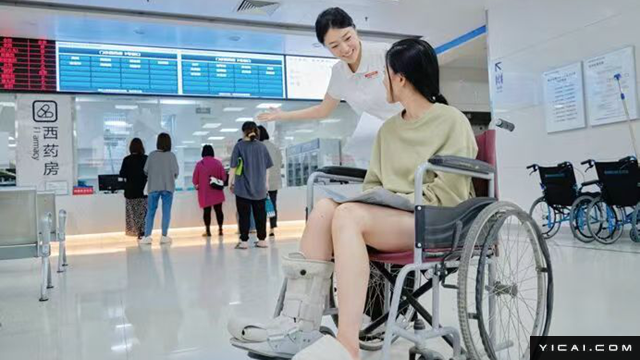
陪诊师职业发展

Search documents
老有所依|陪诊师月入十万?陪诊业需求井喷,平台抽成最高50%
Di Yi Cai Jing· 2025-12-28 07:25
Core Insights - The emerging profession of medical companions is experiencing growth due to an aging population and increasing demand for medical assistance, but it also faces significant challenges [2][3]. Industry Overview - The number of elderly individuals aged 60 and above in China is projected to reach 310 million by the end of 2024, accounting for 22% of the total population [4]. - The medical companion industry has evolved through five stages: 1. Emergence (post-2000) with individual companions and small agencies [4] 2. Exploration (post-2006) with initial services in major cities [4] 3. Expansion (post-2015) with overseas medical services [4] 4. Popularization (post-2019) due to increased awareness post-pandemic [4] 5. Current phase (2023-present) characterized by explosive growth and the need for regulation [4]. Market Growth - The number of medical companion agencies has increased from over 30 in 2015 to over 150 in 2022, and is expected to reach over 400 by 2024, with more than 1,400 registered agencies currently [5]. Service Demand - Medical companions provide essential services such as accompanying patients, assisting with medical procedures, and offering emotional support, particularly for elderly and out-of-town patients [9][11]. Income Potential - Income for medical companions varies widely, with some claiming monthly earnings of up to 100,000 yuan, but most earn significantly less, often between 1,000 to 3,000 yuan per month [11][12][13]. - The income disparity is influenced by factors such as client acquisition methods and the type of services provided [12][13]. Challenges and Risks - The industry lacks clear entry standards and regulations, leading to a mix of qualified and unqualified practitioners [15][16]. - Concerns about service quality, legal responsibilities, and patient safety are prevalent, particularly regarding the potential for exploitation and the lack of a unified certification system [20][21]. Regulatory Developments - Recent initiatives in Shanghai aim to develop a professional medical companion workforce through training and certification programs [19]. - Recommendations for establishing industry standards and a certification system have been made to enhance service quality and accountability [20].