
青瓦台魔咒

Search documents
国际观察丨尹锡悦被判无期,其未来命运如何?
Xin Hua Wang· 2026-02-21 01:21
Group 1 - The core viewpoint of the article is the sentencing of former President Yoon Suk-yeol to life imprisonment for the crime of insurrection, raising questions about his future and the implications for South Korean politics [1][2] - The Seoul Central District Court found Yoon guilty of insurrection, stating that his actions aimed to disrupt constitutional order and involved military deployment to paralyze the National Assembly [2][3] - The court did not impose the death penalty as requested by the special prosecution team, citing a lack of meticulous planning and the absence of direct violence [3] Group 2 - Yoon Suk-yeol is the first sitting president in South Korea to be prosecuted, and his case is compared to previous presidents who faced similar charges, with historical context provided regarding their sentences and eventual pardons [4][5] - There is skepticism regarding Yoon's potential for a presidential pardon due to his lack of remorse and ongoing legislative efforts to limit the scope of presidential pardons for serious crimes [5] - The case is expected to influence the political landscape, particularly with upcoming local elections, as it may affect the public perception of the opposition party and the ruling party's strategies [6][7]
尹锡悦被判无期,其未来命运如何?
Xin Lang Cai Jing· 2026-02-20 10:20
Core Viewpoint - The South Korean court sentenced former President Yoon Suk-yeol to life imprisonment for his role in an internal rebellion, highlighting systemic issues within South Korea's political landscape and the ongoing struggle between political parties [1][2]. Group 1: Court Sentencing Considerations - The Seoul Central District Court found Yoon guilty of internal rebellion, stating that his actions aimed to disrupt constitutional order and involved military deployment to paralyze the National Assembly [2][3]. - The court did not impose the death penalty as requested by the special prosecution team, citing a lack of meticulous planning in Yoon's actions and the absence of direct violence [3]. Group 2: Potential for Clemency - Historical context shows that former presidents in South Korea have often received reduced sentences or pardons, with no president serving more than five years in prison [4]. - Current political sentiment suggests that Yoon may struggle to receive a pardon due to his lack of remorse and ongoing legislative efforts to limit presidential pardon powers for serious crimes [5]. Group 3: Political Implications - Yoon's case is expected to remain a focal point in South Korean politics, particularly with upcoming local elections, potentially affecting the opposition party's dynamics and public perception [6]. - The concept of the "Blue House curse" reflects a pattern of misfortune among former presidents, indicating deeper systemic issues that necessitate political reform for stability [6].
热点问答|韩国总统府为何搬回青瓦台
Xin Lang Cai Jing· 2025-12-28 20:29
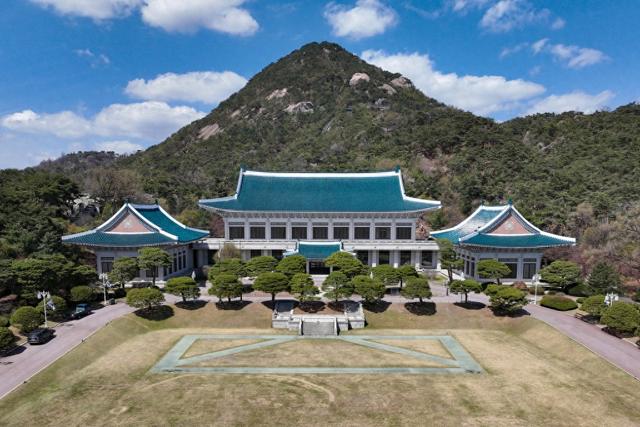
Core Viewpoint - The South Korean presidential office has officially relocated back to the Blue House after 3 years and 7 months, with the move aimed at addressing security concerns and improving communication with the public [1][3]. Reasons for Moving Back - The Blue House has served as the presidential residence since 1948, but issues such as insufficient office space, increased public complaints, and security risks prompted the move back after the previous relocation to the new presidential office in Yongsan [3]. - The current administration under President Lee Jae-myung initiated the move back to the Blue House to eliminate the "imperial-style presidency" image and enhance communication with citizens [3]. Reasons for Previous Move - The previous president, Yoon Suk-yeol, moved the office to Yongsan to better serve the public and fulfill campaign promises, citing the Blue House as a symbol of "imperial power" [5]. - The move faced criticism for being rushed and lacking thorough prior analysis, with some controversies surrounding discussions about the Blue House's "bad feng shui" [5]. "Blue House Curse" - The term "Blue House curse" refers to the unfortunate fates of several past presidents, including assassination, suicide, impeachment, and imprisonment [7]. - Despite moving away, Yoon Suk-yeol faced legal challenges and became the first sitting president in South Korea to be indicted, leading to his impeachment [7]. Future Relocation Plans - President Lee Jae-myung has indicated plans to eventually move the presidential office to Sejong City, approximately 120 kilometers southeast of Seoul, with a target completion date for the new office by 2030 [9]. - The establishment of Sejong City was initially proposed to alleviate congestion in the capital, but the plan for relocating the presidential office remains uncertain and may involve constitutional debates [9].

牛弹琴:他活成了世界的一个大笑话
Xin Lang Cai Jing· 2025-12-26 23:54
Group 1 - The core issue revolves around the legal troubles of South Korean President Yoon Suk-yeol, who faces multiple charges including obstruction of justice and abuse of power, with a request for a 10-year prison sentence from the independent prosecution team [39][40][41] - Yoon's wife, Kim Keon-hee, has also been indicted on charges of corruption related to selling positions [40] - The court is expected to announce Yoon's verdict on January 16, with further serious charges of "internal rebellion" anticipated to be addressed in February [41][43] Group 2 - The article discusses the "Blue House curse," which suggests that no South Korean president, except Moon Jae-in, has left office without scandal or imprisonment, highlighting a historical pattern of political downfall [45][48] - Yoon Suk-yeol's actions, including a failed self-coup attempt, are seen as a continuation of this curse, as he previously played a significant role in prosecuting former presidents [48][50] - The narrative emphasizes the cyclical nature of power and its consequences, suggesting that Yoon's refusal to reside in the Blue House was an attempt to escape this fate [50][52] Group 3 - Yoon has been criticized for blaming China for various issues, including national security threats, which reflects a strategy of externalizing blame rather than addressing internal failures [53][55][59] - His defense in court included absurd claims about Chinese activities threatening South Korea, which were quickly debunked by authorities [58][60] - This tactic of scapegoating is viewed as a sign of political weakness and a failure to confront domestic challenges [60][62] Group 4 - The article highlights the dramatic events surrounding Yoon's emergency declaration, which was intended to consolidate power but resulted in a farcical situation where he could not enforce his will [62][67] - Yoon's emotional ties to his wife, who is also facing legal scrutiny, are portrayed as a significant factor in his decision-making, leading to his political downfall [65][68] - The narrative concludes with reflections on the implications of Yoon's presidency and the broader political landscape in South Korea, suggesting that the cycle of power and accountability continues [70][72]
挑战“魔咒”?李在明、高市早苗最近都要搬家
Xin Lang Cai Jing· 2025-12-25 01:00
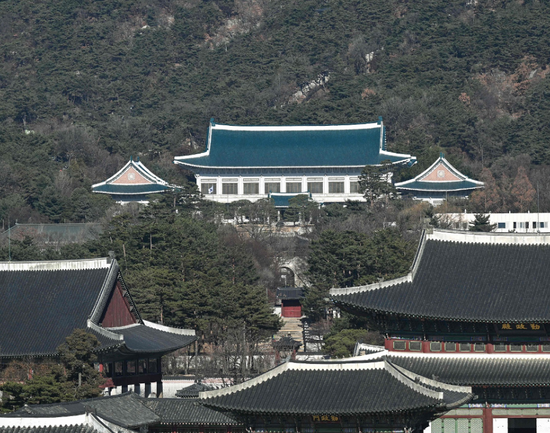
Group 1 - The South Korean presidential office will lower the "Phoenix Flag" at the Dragon Mountain Presidential Office on December 29, while the "Phoenix Flag" will be raised at the Cheong Wa Dae, indicating the completion of the presidential office's relocation [2][9] - Cheong Wa Dae has been the official residence and office of South Korean presidents since the establishment of the Republic of Korea in 1948, originally known as Gyeongmudae before being renamed due to the color of its roof [8][9] - The current president, Lee Jae-myung, announced the return to Cheong Wa Dae after the previous president, Yoon Suk-yeol, moved the office to a new location in May 2022 [9] Group 2 - Japanese Prime Minister Sanna Takashi announced plans to move into the Prime Minister's official residence, emphasizing the importance of crisis management and proximity to work [2][10] - The Prime Minister's residence is a four-story reinforced concrete building with a total area of approximately 7,000 square meters, where the Prime Minister can live for free according to Japanese law [3][10] - Criticism arose regarding Takashi's delay in moving from her current residence, which is about 500 meters from the official residence, raising concerns about crisis management and safety [10][11] Group 3 - The Prime Minister's residence has a historical background, with notable events such as the assassination of Prime Minister Inukai Tsuyoshi in 1932 and the misidentification of a secretary during the 1936 incident, leading to ghost stories associated with the building [11] - There is a belief in Japan that moving into the Prime Minister's residence may indicate a short tenure, as six out of seven former Prime Ministers who lived there served only about one year [5][11]
韩国发布最终调查结果:尹锡悦提前一年多筹备紧急戒严,军政界24人被提起诉讼
Xin Lang Cai Jing· 2025-12-15 04:31
Group 1 - The Special Investigation Team in South Korea has filed lawsuits against 24 individuals, including former President Yoon Suk-yeol, regarding the emergency martial law incident [1][5] - Investigations revealed that Yoon Suk-yeol and his associates attempted to use the military to suspend the political system and paralyze the National Assembly, aiming to replace it with an emergency legislative body to consolidate power [1][5] - The preparations for the emergency martial law were significantly intensified during military restructuring at the end of 2023, involving personnel appointments and operational planning [1][5] Group 2 - On December 3, 2024, Yoon Suk-yeol announced the emergency martial law, citing obstruction from the opposition party, but it ultimately failed, leading to his impeachment and a subsequent early election won by Lee Jae-myung from the Democratic Party [1][5] - The investigation also uncovered notes from former intelligence chief Ryu Sang-won suggesting plans to provoke North Korea into an attack, which would provide a pretext for the emergency martial law [1][5] - Public confidence in state institutions has been gradually recovering following the crisis caused by the emergency martial law incident [6] Group 3 - In July, the National Assembly passed an amendment to the Martial Law Act, explicitly prohibiting military and police from entering the National Assembly without permission, and proposed that public officials, including military personnel, could refuse illegal orders [7] - The new civilian Defense Minister An Gyeong-beom has begun restructuring the military's upper echelons, while Lee Jae-myung has proposed constitutional amendments to change the presidential term from a single five-year term to two four-year terms [7] - The presidential office is expected to relocate back to Cheong Wa Dae, with surrounding areas remaining accessible to the public [7]
从钢琴教师到第一夫人:金惠景的青瓦台之路
首席商业评论· 2025-06-10 03:49
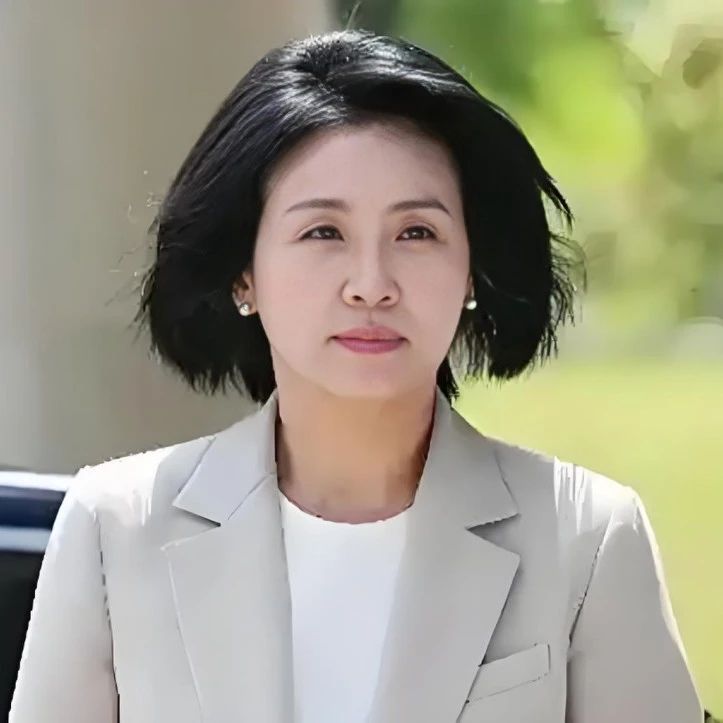
Core Viewpoint - The article discusses the rise of Kim Hye-kyung as the First Lady of South Korea following her husband Lee Jae-myung's election as president, highlighting her background, transformation, and the challenges she faces in the political landscape [3][5][20]. Group 1: Background and Transformation - Kim Hye-kyung was born in 1966 into a middle-class family in Seoul and initially pursued a career as a piano teacher after graduating from Sookmyung Women's University [7]. - Her life took a turn in 1990 when she met Lee Jae-myung, who later became a prominent political figure. They married in 1991 and have two sons [8][10]. - Initially, Kim Hye-kyung had no political aspirations and focused on family life, but as her husband entered politics, she began to support him behind the scenes [10][12]. Group 2: Political Involvement and Public Image - Kim Hye-kyung started appearing publicly during Lee Jae-myung's presidential primary campaign in 2017, participating in various political events and gaining public recognition [13]. - She has been portrayed as a supportive partner, often providing policy suggestions and emotional support to her husband during his political career [12][20]. - Despite facing controversies, including allegations related to misuse of public funds, Kim Hye-kyung has maintained a low profile and focused on her role as First Lady [16][18]. Group 3: Future Aspirations and Initiatives - As the new First Lady, Kim Hye-kyung aims to leverage her position to advocate for marginalized groups, including organizing concerts for disabled children and forming a policy advisory team focused on women's employment and rights [20]. - Her approach contrasts with her predecessor, emphasizing a more traditional and approachable image, which has resonated positively with the public [18][20].
韩国又创造了历史,对中国是一个小小惊喜
Bei Jing Ri Bao Ke Hu Duan· 2025-06-04 03:47
Group 1 - The core point of the article is the historical significance of the recent South Korean presidential election, which saw a record voter turnout of 79.4%, the highest since 1997, and the immediate transition of power to the new president, Lee Jae-myung, without any transition period [1][2][3] - The election was characterized as the fastest and most efficient in South Korean history, largely due to the political vacuum created by the impeachment of former President Yoon Suk-yeol [2][3] - The change in leadership is seen as a potential shift in South Korea's foreign policy towards China, as the new president has indicated a desire for a more pragmatic approach to international relations, contrasting with the previous administration's antagonistic stance [4][9] Group 2 - The article highlights the negative impact of Yoon Suk-yeol's presidency on South Korea-China relations, which deteriorated significantly during his term due to his pro-U.S. and pro-Japan policies [5][6] - Lee Jae-myung's election is viewed as a small surprise for China, as he has expressed intentions to stabilize and improve relations with China, recognizing it as an important trade partner and a key player in regional security [9][10] - The article also discusses the historical context of South Korean presidents facing significant challenges, often leading to imprisonment or other dire outcomes, suggesting that Lee Jae-myung will face similar scrutiny and challenges during his term [12][14]
“青瓦台魔咒”难逃?韩国前总统文在寅父女被指涉嫌受贿
Jie Mian Xin Wen· 2025-03-26 03:42
Core Viewpoint - The investigation into former South Korean President Moon Jae-in and his daughter, Woon Do-hye, for alleged bribery marks a significant development in South Korea's political landscape, following a history of corruption scandals involving past presidents [1][2]. Group 1: Investigation Details - Woon Do-hye is under investigation for alleged bribery linked to her ex-husband, Seo, who held a position at Thai airline Eastar Jet, with accusations suggesting that Lee Sang-jik, a former lawmaker, bribed the Moon family [1][2]. - The investigation was initiated after a social group filed a complaint against Woon Do-hye, leading to a probe by the Jeonju District Prosecutors' Office [1]. Group 2: Background and Context - Lee Sang-jik, who was appointed as the head of the Small and Medium Business Corporation by Moon Jae-in, is alleged to have facilitated bribes in exchange for his position [1][2]. - The investigation into Moon Jae-in began last year, with prosecutors raiding Woon Do-hye's residence as part of the inquiry into the bribery case [2]. Group 3: Political Reactions - The Democratic Party of Korea has condemned the investigation, claiming it is politically motivated to distract from other scandals involving the current administration [2]. - Moon Jae-in expressed regret over his decision to appoint Yoon Seok-youl as the Prosecutor General, indicating a shift in his political reflections [2].