非洲储能市场

Search documents
50GWh!这一储能“金矿”,又3企掘金
行家说储能· 2026-02-11 09:17
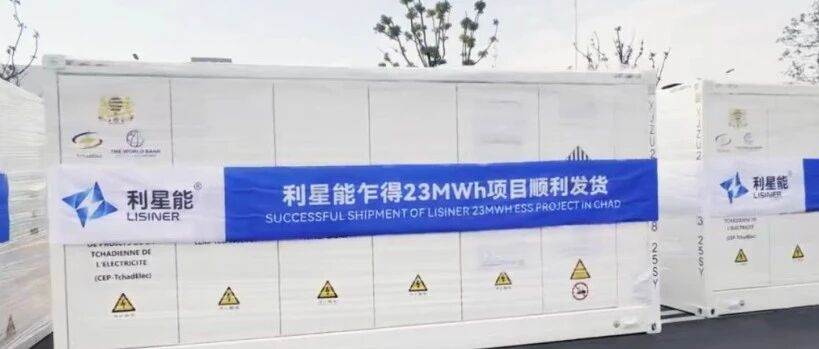
Core Viewpoint - Africa is emerging as a hotbed for energy storage, with significant growth expected in the sector, driven by increasing demand and clear application scenarios [2][12]. Group 1: Market Growth and Potential - The World Bank and AFDB project that Africa's cumulative energy storage capacity could exceed 50GWh by 2030, indicating a substantial growth trajectory [2][12]. - In 2024, Africa's energy storage capacity is expected to reach 1.64GWh, representing a nearly tenfold year-on-year increase [2]. - The African energy storage market is characterized by diverse projects, with over 18GWh of storage projects currently under development, including grid-level and mining applications [14]. Group 2: Company Activities and Developments - Lixin Energy has shipped a 23MWh energy storage project to Chad, which will support a UN-backed solar-storage integration project, potentially meeting the annual electricity needs of 20,000 households [3][5]. - Tianneng Energy has launched its first liquid-cooled energy storage unit in South Africa, designed for high-temperature and dusty environments, and has signed a five-year procurement agreement to supply 2,000 units [6][9]. - Boreton has signed a procurement contract worth approximately 3.2 billion yuan for energy storage systems to support a microgrid project in the Democratic Republic of Congo [10]. Group 3: Strategic Moves by Chinese Companies - Chinese energy storage companies are actively expanding into the African market through project deliveries, order acquisitions, and local manufacturing [12][14]. - Companies like Chuangneng New Energy and Zhiguang Electric have secured significant contracts in Africa, indicating a robust interest in the region [14][16]. - The establishment of a battery energy storage system manufacturing plant in Egypt by Sungrow aims to produce 10GWh annually, further solidifying China's presence in the African energy storage sector [14].

非洲储能掘金者生存图鉴:40%暴利,杀猪盘与极致博弈
投中网· 2026-01-21 06:47
Core Viewpoint - The article highlights the lucrative opportunities in the African renewable energy market, particularly in energy storage, while also addressing the significant risks and challenges faced by investors in this region [5][8][10]. Group 1: Market Potential - Africa's energy storage market is experiencing rapid growth, with installed capacity reaching 1.64 GWh in 2024, a nearly tenfold increase year-on-year [12][14]. - The extreme electricity shortages in Africa, exemplified by Zambia experiencing up to 20 hours of power outages daily, create a pressing demand for energy solutions [20][21]. - The profit margins for energy storage projects in Africa can reach 40% to 50%, significantly higher than in domestic markets [11][19]. Group 2: Investment Challenges - The primary challenge for investors in Africa is securing financing, as local financial systems are weak and expensive, with interest rates for loans often between 15% and 18% [41][39]. - Cultural barriers and a general distrust of loans complicate the financing landscape, making it difficult for projects to secure necessary funding [43][40]. - The lack of a standardized pricing mechanism for electricity in Africa adds to the investment risk, as contracts are often negotiated on a case-by-case basis [62]. Group 3: Innovative Financing Solutions - Companies are exploring innovative financing methods, such as installment payments and barter systems, to navigate the local market's challenges [49][52]. - The establishment of investment funds that involve partnerships with local and international financial entities is a strategy being employed to secure capital for projects [46][47]. - The integration of energy projects with local mining operations allows for creative financing solutions, linking electricity payments to mineral outputs [52]. Group 4: Operational Challenges - Establishing a local team in Africa poses significant challenges due to cultural differences and high operational costs [56][57]. - Companies must adopt meticulous management practices to ensure project success, as local employees may have different work habits and expectations [60][58]. - The political and economic instability in various African regions can pose additional risks to project execution and profitability [61][64]. Group 5: Future Outlook - Despite the challenges, there is a strong belief among industry players that Africa represents a vast market opportunity, particularly as global demand for renewable energy solutions continues to grow [66][68]. - The shift from merely supplying equipment to providing comprehensive solutions and local operational management is seen as essential for success in the African market [69][68].