非粮生物基橡胶

Search documents
2025·我的年度账本丨一个新材料项目的“升级账”
Qi Lu Wan Bao· 2026-01-06 03:42
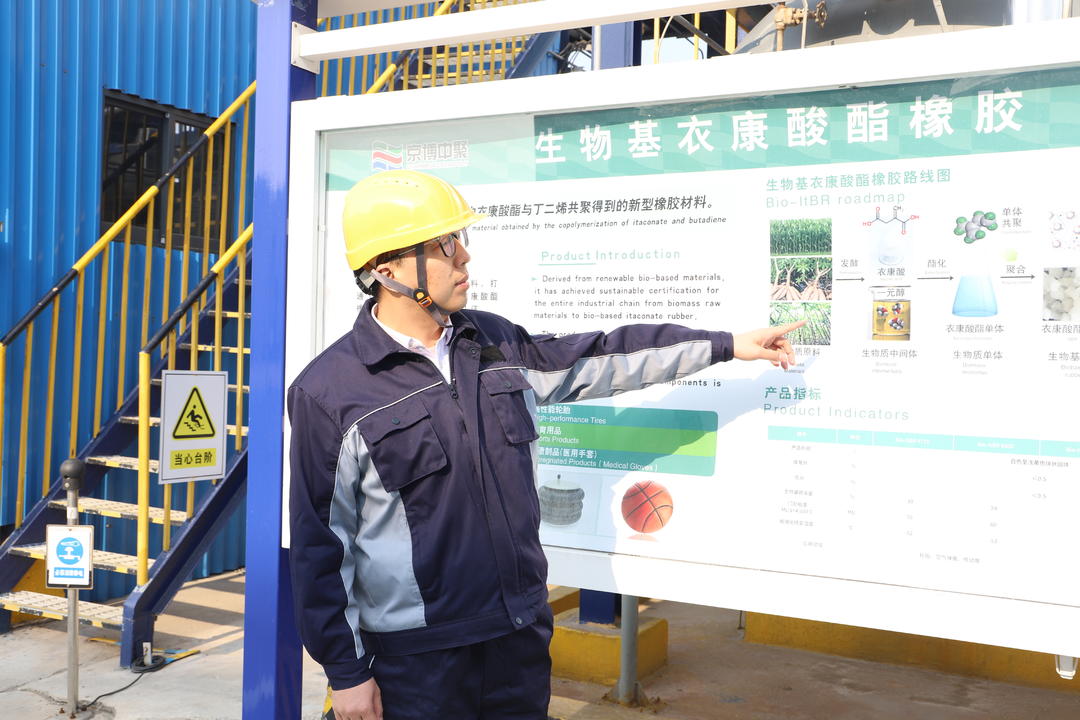
Core Viewpoint - The article discusses the commercialization of non-food bio-based rubber derived from agricultural waste, particularly corn straw, highlighting its potential to transform the rubber industry and contribute to green development [1][3]. Group 1: Industry Development - The non-food bio-based rubber is transitioning from industrialization to commercialization, with some products already being used in shoe materials and tires [3]. - The first production line for non-food bio-based rubber with a capacity of 10,000 tons per year has been approved for construction, marking a significant step towards large-scale industrialization [3]. - The technology for bio-based rubber has taken 13 years to develop from laboratory to production, indicating a long-term commitment to innovation in the industry [3]. Group 2: Role of Pilot Platforms - The pilot platform, led by Shandong Jingbo Petrochemical Co., plays a crucial role in bridging the gap between innovation and market application, facilitating the transition of technology to commercial use [4]. - The platform has been recognized as a national-level manufacturing pilot platform, being the only one in the petrochemical sector led by a private enterprise [4]. - The platform has established approximately 380,000 square meters of experimental space and modular pilot lines, significantly reducing the cost of pilot testing from millions to tens of thousands [5]. Group 3: Economic Impact - The integration of over 100 engineering transformation experts and more than 400 specialists has supported the industrialization of over 50 research achievements, generating additional output value exceeding 2 billion [5]. - The development of new products, including bio-based rubber, has led to the cultivation of four specialized and innovative enterprises [5]. - The platform's efforts have resulted in the optimization of product characteristics, enhancing performance metrics such as slip resistance and stability compared to natural rubber [6]. Group 4: Future Prospects - The year 2025 is identified as a critical year for the market introduction of non-food bio-based rubber products, with ongoing enhancements in product performance being a focus [7]. - The company aims to reduce production costs while increasing output, addressing a common challenge faced by the industry regarding the high costs of bio-based rubber [7].