非遗技艺与科技创新融合

Search documents
青神“以竹代塑”竹编培训开班匠艺赋能产业 科技筑基未来
Zhong Guo Jing Ji Wang· 2025-10-15 13:17
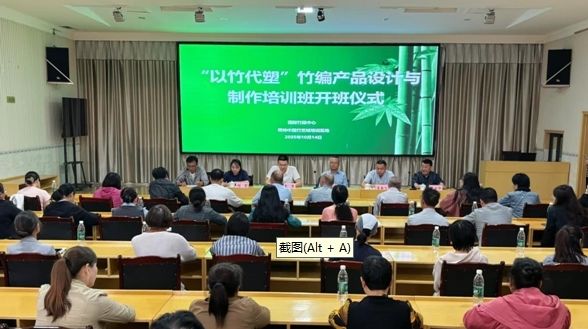
Core Insights - The training program for bamboo weaving products, titled "Using Bamboo Instead of Plastic," commenced in Qingshen County, attracting 30 participants from various bamboo-producing regions in China [1][3]. Group 1: Training Program Details - The training employs a comprehensive teaching model that includes theoretical lectures, hands-on practice, discussions, and cultural experiences, covering essential techniques such as flat bamboo weaving, three-dimensional bamboo weaving, and porcelain bamboo weaving [3]. - The program also extends to practical courses on product design, market development, and brand building, aimed at enhancing the overall capabilities of the participants [3]. Group 2: Expert Involvement and Cultural Significance - The training features renowned experts, including Chen Yunhua, a national-level intangible cultural heritage representative and master craftsman, who will provide hands-on instruction to the participants [3]. - This initiative not only focuses on skill transmission but also represents a full industry chain exploration from traditional craftsmanship to biodegradable bamboo-based products, emphasizing the cultural and ecological significance of bamboo [4]. Group 3: Technological Integration and Future Prospects - The establishment of the "Bamboo Resource Protection and Development Utilization Key Laboratory" in Qingshen marks a significant advancement, being the first provincial-level laboratory in Sichuan dedicated to the full industry chain protection and high-value utilization of bamboo resources [3]. - The laboratory aims to inject technological momentum into the bamboo weaving industry, promoting the development of high-performance new materials and high-value bamboo products, with a goal of creating a billion-level industrial park for bamboo fiber utilization [3][4]. - The training program exemplifies the deep integration of intangible cultural heritage and technological innovation, with plans to further develop the "intangible cultural heritage + industry + ecology" model to enhance the reputation of Qingshen as "the hometown of Chinese bamboo weaving" [4].