韩日领土争端

Search documents
韩国强硬批驳高市早苗“独岛”言论 韩媒分析
Huan Qiu Shi Bao· 2025-12-10 22:55
Core Viewpoint - The ongoing territorial dispute over Dokdo (known as Takeshima in Japan) between Japan and South Korea has intensified, with Japanese Prime Minister Sanna Marin reaffirming Japan's claim, prompting a strong response from the South Korean government, which emphasizes its historical and legal ownership of the territory [1][2]. Group 1: Political Statements and Responses - Japanese Prime Minister Sanna Marin reiterated that Dokdo is an inherent part of Japan's territory based on historical facts and international law, aiming to communicate this stance both domestically and internationally [2]. - The South Korean government, through the presidential office and the Gyeongsangbuk-do Education Office, firmly rejected Japan's claims, asserting that Dokdo is historically, geographically, and legally South Korean territory, and emphasized the need for responsible handling of historical and territorial issues [2][3]. Group 2: Diplomatic Context - The territorial dispute arises as Japan and South Korea are preparing for a summit meeting scheduled for January 2024, with concerns that such statements could disrupt the cooperative atmosphere between the two nations [1][3]. - There are indications that Japan is seeking to strengthen its relationship with South Korea amid tensions with China, highlighting the importance of maintaining improved relations despite the ongoing disputes [3]. Group 3: Historical and Ideological Background - The Japanese right-wing's persistent claims over Dokdo reflect a broader historical narrative that has been solidified since the Imjin War and the Edo period, with some factions propagating the belief that "the more Korea is suppressed, the more obedient it becomes" [5][6]. - Analysts suggest that the current political climate in Northeast Asia is becoming increasingly unstable, with Prime Minister Marin's comments potentially exacerbating tensions and complicating the diplomatic landscape [7].
韩国硬刚高市早苗
第一财经· 2025-12-09 14:08
Core Viewpoint - The article discusses the ongoing territorial dispute between Japan and South Korea over the islet known as Takeshima in Japan and Dokdo in South Korea, highlighting recent statements from both governments that reinforce their claims to the territory [3][4]. Group 1: Recent Developments - On December 9, Japanese Prime Minister Suga Yoshihide asserted in the National Diet that Takeshima is Japan's inherent territory, citing historical and international law [3]. - The South Korean presidential office responded firmly, stating that there is no territorial dispute over Dokdo, which they claim as their own [3]. - Tensions have escalated recently, with South Korea suspending a planned joint military exercise with Japan due to the ongoing dispute over the islet [3]. Group 2: Diplomatic Responses - On November 14, the South Korean Foreign Ministry issued a strong protest against Japan's claims regarding the islet and summoned the Japanese ambassador to express their discontent [4]. - Following this, on November 16, South Korea officially changed the order of its diplomatic references to East Asian countries to "Korea, China, Japan," indicating a shift in its diplomatic stance [4]. - Japan's territorial issues minister reiterated on November 18 that Takeshima is clearly Japan's territory under international law, prompting further protests from South Korea [4].


爆发冲突!韩方通知日本暂停
Huan Qiu Shi Bao· 2025-11-17 07:33
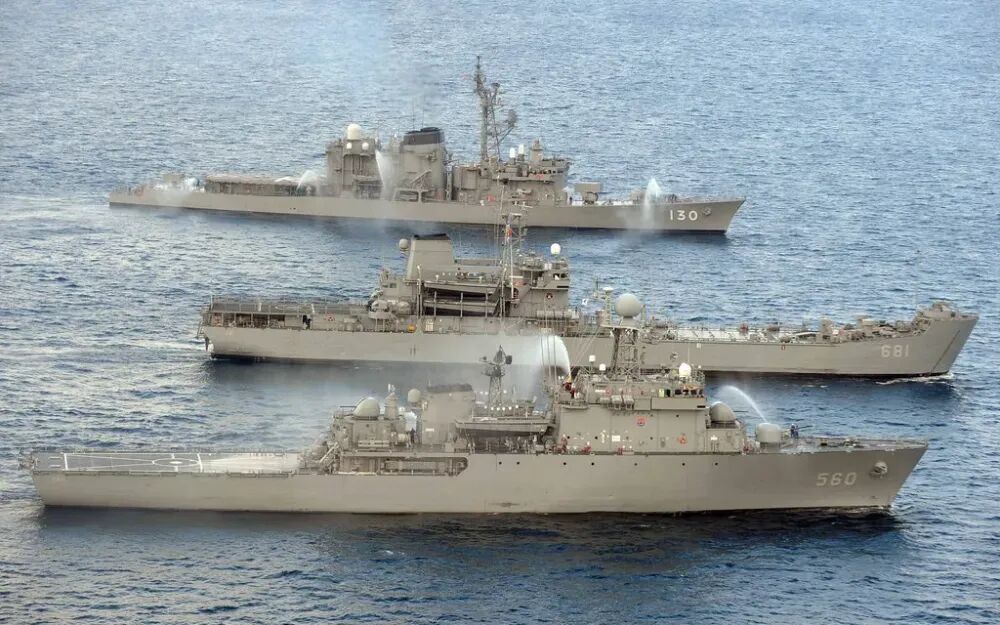
Group 1 - The joint military exercise between South Korea and Japan, originally scheduled for this month, has been suspended due to recent disputes over the sovereignty of Dokdo (referred to as "Takeshima" by Japan) [1][2] - The joint exercise, which focuses on maritime search and rescue, has been held 10 times from 1999 to 2017 but was long suspended after a conflict between the South Korean Navy and the Japanese Self-Defense Forces in 2018 [2] - The planned resumption of the exercise in November was halted following renewed tensions regarding the Dokdo issue, with South Korea expressing strong dissatisfaction over Japan's refusal to provide mid-air refueling assistance to South Korea's "Black Hawk" aerobatic team [2]