
韩日合作

Search documents
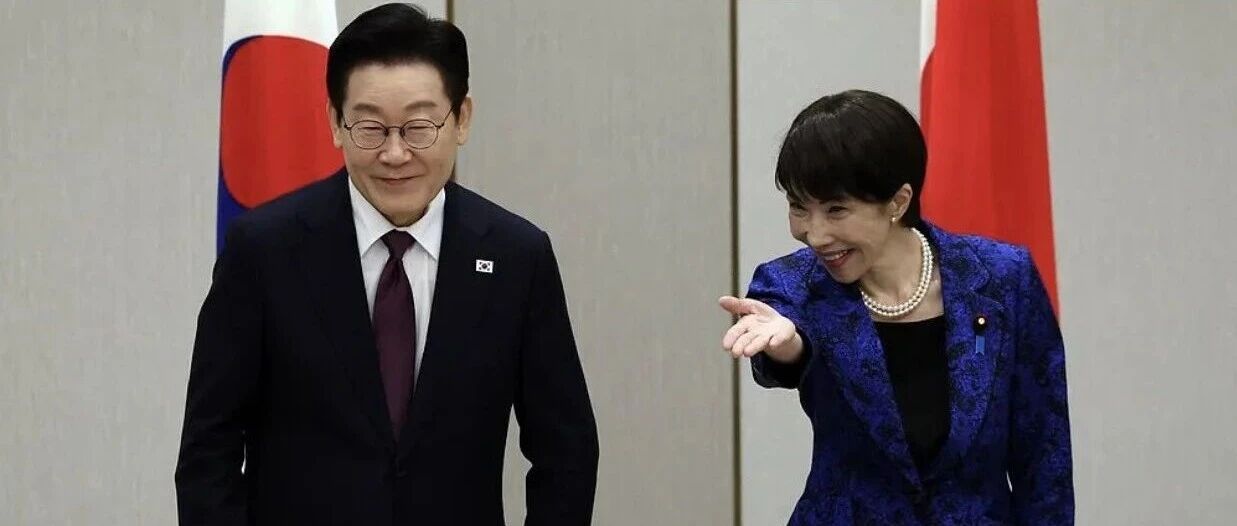
高市早苗竭力展示与韩“亲近”,韩媒关注双方表态微妙不同
Huan Qiu Shi Bao· 2026-01-13 23:07
Group 1 - The core viewpoint of the meetings between South Korean President Lee Jae-myung and Japanese Prime Minister Suga Yoshihide is to strengthen bilateral relations, particularly in economic and technological cooperation [1][2] - The meeting took place in Nara Prefecture, which is significant as it is Suga's hometown, highlighting a strategic move to showcase closeness with South Korea and avoid political isolation [1] - There is a focus on South Korea potentially joining the Comprehensive and Progressive Agreement for Trans-Pacific Partnership (CPTPP), which could enhance trade diversification and strengthen supply chains, although domestic resistance in South Korea regarding Japanese agricultural imports poses a challenge [1] Group 2 - After the meeting, both leaders emphasized the importance of cooperation between South Korea and Japan, as well as trilateral cooperation with the United States [2] - There was a notable difference in their statements, with Lee mentioning the need for cooperation among South Korea, China, and Japan, while Suga did not address this aspect, focusing solely on South Korea-Japan and South Korea-U.S.-Japan cooperation [2]
李在明与高市早苗会谈,提到中国
第一财经· 2026-01-13 10:35
Core Viewpoint - The meeting between South Korean President Yoon Suk-yeol and Japanese Prime Minister Fumio Kishida emphasizes the importance of South Korea-Japan cooperation in the face of a complex international landscape, marking a significant moment in their bilateral relations as they look towards the future [3][4]. Group 1: Meeting Significance - President Yoon highlighted that despite historical grievances, the normalization of relations has reached a significant milestone, suggesting a new beginning for the next 60 years of bilateral relations [3]. - The meeting took place in Nara, the hometown of Prime Minister Kishida, symbolizing historical ties between Japan and the Korean Peninsula [5]. Group 2: Regional Cooperation - Yoon stressed the necessity for trilateral cooperation among South Korea, China, and Japan, particularly in light of recent tensions between China and Japan [4]. - Both leaders acknowledged the coexistence of positive and negative factors in their relationship, advocating for the maximization of benefits while managing challenges [3].

韩国强硬批驳高市早苗“独岛”言论 韩媒分析
Huan Qiu Shi Bao· 2025-12-10 22:55
Core Viewpoint - The ongoing territorial dispute over Dokdo (known as Takeshima in Japan) between Japan and South Korea has intensified, with Japanese Prime Minister Sanna Marin reaffirming Japan's claim, prompting a strong response from the South Korean government, which emphasizes its historical and legal ownership of the territory [1][2]. Group 1: Political Statements and Responses - Japanese Prime Minister Sanna Marin reiterated that Dokdo is an inherent part of Japan's territory based on historical facts and international law, aiming to communicate this stance both domestically and internationally [2]. - The South Korean government, through the presidential office and the Gyeongsangbuk-do Education Office, firmly rejected Japan's claims, asserting that Dokdo is historically, geographically, and legally South Korean territory, and emphasized the need for responsible handling of historical and territorial issues [2][3]. Group 2: Diplomatic Context - The territorial dispute arises as Japan and South Korea are preparing for a summit meeting scheduled for January 2024, with concerns that such statements could disrupt the cooperative atmosphere between the two nations [1][3]. - There are indications that Japan is seeking to strengthen its relationship with South Korea amid tensions with China, highlighting the importance of maintaining improved relations despite the ongoing disputes [3]. Group 3: Historical and Ideological Background - The Japanese right-wing's persistent claims over Dokdo reflect a broader historical narrative that has been solidified since the Imjin War and the Edo period, with some factions propagating the belief that "the more Korea is suppressed, the more obedient it becomes" [5][6]. - Analysts suggest that the current political climate in Northeast Asia is becoming increasingly unstable, with Prime Minister Marin's comments potentially exacerbating tensions and complicating the diplomatic landscape [7].