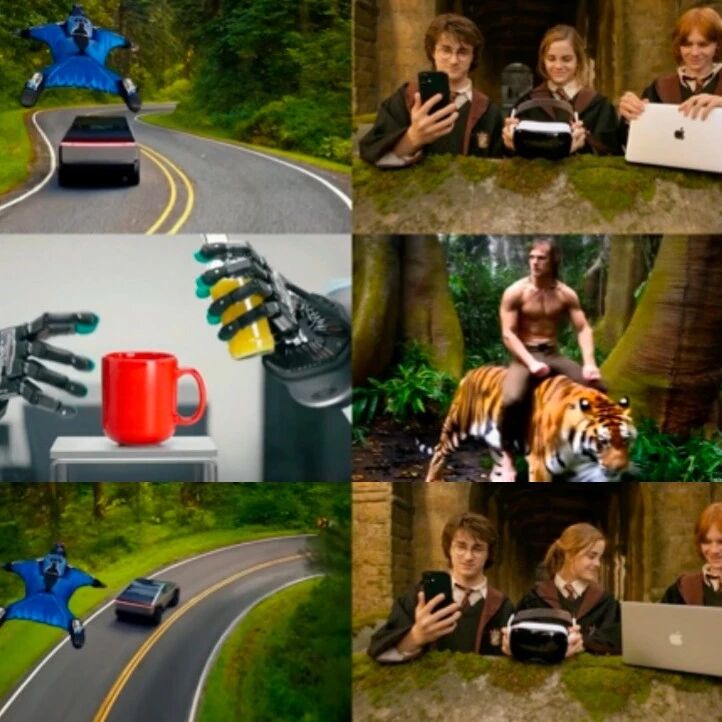
首帧作为概念记忆体

Search documents
首帧的真正秘密被揭开了:视频生成模型竟然把它当成「记忆体」
机器之心· 2025-12-05 04:08
Core Insights - The first frame in video generation models serves as a "conceptual memory buffer" rather than just a starting point, storing visual entities for subsequent frames [3][9][48] - The research highlights that video generation models can automatically remember characters, objects, textures, and layouts from the first frame and reuse them in later frames [9][10] Research Background - The study originates from a collaborative effort by research teams from UMD, USC, and MIT, focusing on a phenomenon in video generation models that had not been systematically studied [5][8] Methodology and Findings - The proposed method, FFGo, allows for video content customization without modifying model structures or requiring millions of training samples, needing only 20-50 carefully curated examples [18][21] - FFGo can achieve state-of-the-art (SOTA) video content customization with minimal data and training time, demonstrating significant advantages over existing methods like VACE and SkyReels-A2 [21][29] Technical Highlights - FFGo enables the generation of videos with multiple objects while maintaining identity consistency and action coherence, outperforming previous models that were limited to fewer objects [22][31] - The method utilizes Few-shot LoRA to activate the model's memory mechanism, allowing it to leverage existing capabilities that were previously unstable and difficult to trigger [30][44] Implications and Future Directions - The research suggests that video models inherently possess the ability to fuse multiple reference objects, but this potential was not effectively utilized until now [39][48] - FFGo represents a paradigm shift in how video generation models can be used, emphasizing smarter usage over brute-force training [52]